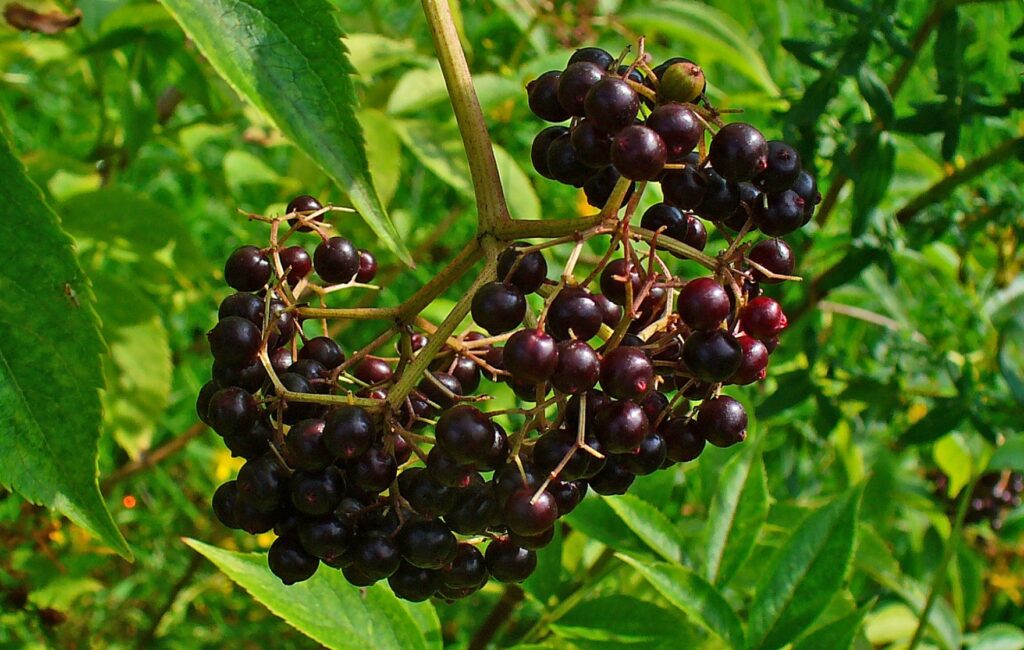
The American elderberry is a deciduous shrub with arching stems, compound leaves, and large flowers with black fruit. Matures American elderberry can create a thicket of shrubs that lend structure to the landscape environment. Leaves are composed of a number of leaflets on central stems and have a distinctive appearance. It produces large clusters of creamy-white flowers in late spring and early summer followed by an abundance of berries. Deep root systems encourage soil stabilization and vigorous growth.
Why Is American Elderberry a Pollinator Magnet?
Flowering is an important component of local biodiversity and attracts numerous pollinators. Bees, butterflies, flies and other insects frequently visit the nectar-rich blooms. The berries provide valuable nutrition for birds and mammals during late summer and autumn.
It is tolerant of seasonal flooding, moderate drought and a variety of soil types, provided there is adequate moisture. Natural distribution includes riverbanks, woodland edges, meadows, wetlands, roadsides and open habitats throughout much of North America.
How Does it Benefit Wildlife and Ecosystems?
Another amazing feature is the shrub’s ability to regenerate quickly after disturbance. Birds require dense vegetation for nesting and mammals consume fruit and use the shrub for cover. Fungi and soil microbes associate with roots and help cycle nutrients and help overall ecosystem health. The shrub reproduces by flowering, pollination, seed production and vegetative spread from root systems. Birds are important for seed dispersal as they consume ripe berries. Natural regeneration often produces large colonies throughout suitable habitat.
Threats to this species are habitat loss, introduction of invasive species, disease outbreaks and environmental changes affecting moisture availability. Conservation measures are significant; including protection of native habitats and encouraging restoration planting efforts. The American Elderberry is appreciated for its ecological importance, versatility and benefit to animals. Native shrubs produce an abundance of flowers and fruits and can also provide a habitat for many organisms. This shows that there is a need for conserving native shrub species.