Bermuda Grass
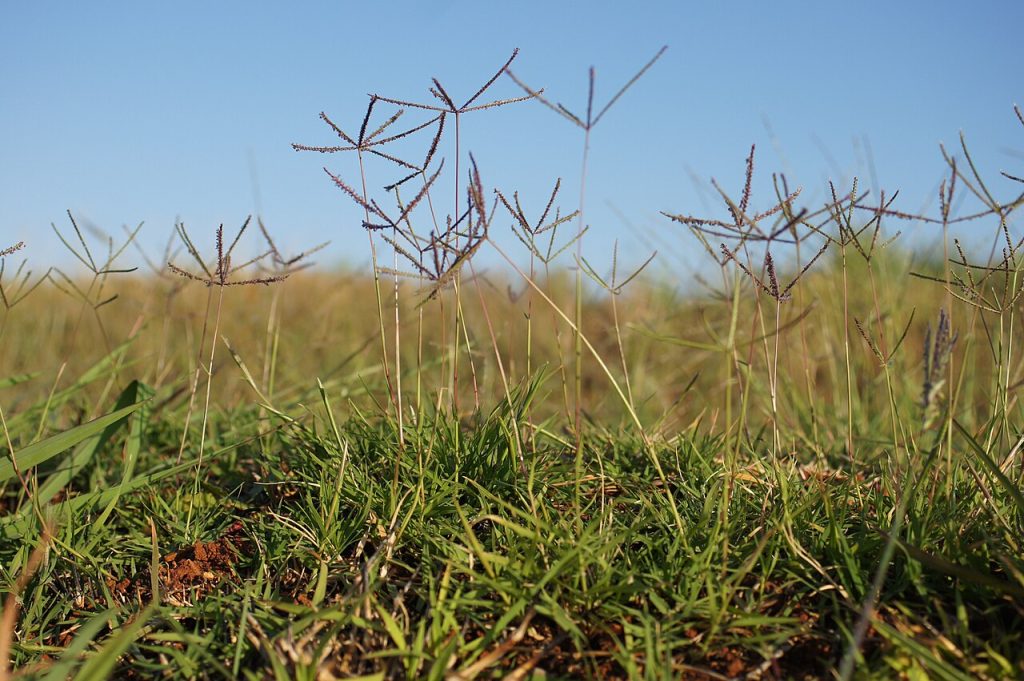
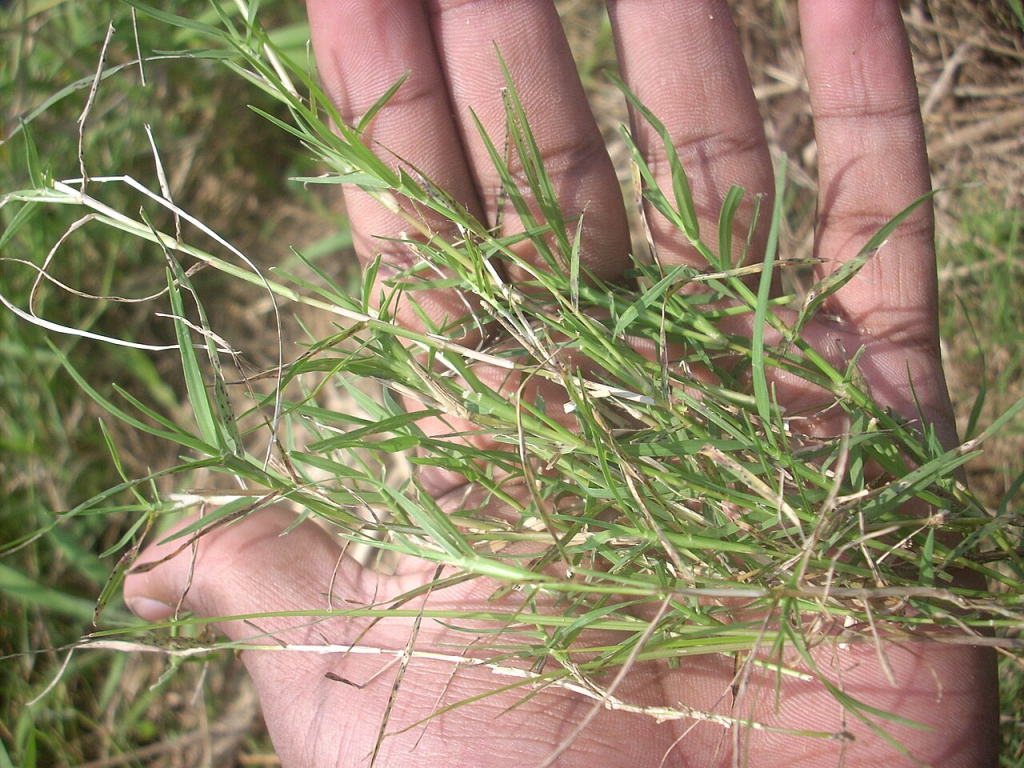
Bermuda grass is a low-growing perennial grass with a dense green turf and spreading habit. Slender stems rise from underground rhizomes and horizontal surface stolons that spread across the ground. The stems normally reach 8–40 cm (3–16 inches) tall, varying with growing conditions. Narrow leaf blades measure about 1–12 centimeters long and remain green during active growth. Dry conditions cause the leaves to become shorter and more folded. This helps the plant save water.
The flower arrangement is distinctive, with several slender spikes clustered like fingers at the end of each stalk. The spikes usually bear a whorl of two to six branches. The spikes have small spikelets. Bermuda grass produces small grains, called caryopses, but vigorous vegetative spread plays an especially important role in increasing the population.
The Growth Pattern of Bermuda Grass
Bermuda grass is very versatile; it grows in tropical and warm temperate areas worldwide. It grows naturally in open ground, grasslands, roadsides, cultivated fields, disturbed areas, and seasonally dry landscapes.
Bermuda grass does well in warm temperatures and full sun. Once established, it can tolerate considerable drought. This growth strategy helps to stabilize exposed soil and reduce surface erosion. The thick turf provides shelter for small insects and contributes organic material as leaves and stems decay.
The name “Bermuda grass” does not mean that the species originated in Bermuda. Its exact naming history remains uncertain, although one historical explanation suggests that people may have introduced it to North America through Bermuda or the West Indies. The species itself has much older native distributions in parts of Africa and Asia.
Cultural Significance of Bermuda Grass
In India, Bermuda grass has a particularly strong religious association through its Sanskrit name Durva. People traditionally offer it to Lord Ganesha, and a bundle of 21 stems of Durva commonly forms part of Ganesha worship. The grass also appears in Hindu ritual traditions, and people have valued it for its symbolic and devotional importance for centuries. The plant has numerous regional names across India, reflecting its widespread cultural familiarity. These include Doob or Dub in Hindi, Durva or Niladurva in Sanskrit, Arugampul in Tamil, Garike or Garikehullu in Kannada, Karuka in Malayalam, and Durba in Bengali.
Internationally, people commonly call it Bermuda grass, Couch grass, Bahama grass, Dog’s Tooth grass, Dhub grass, Wiregrass, and Devil’s grass. In French, people know it as Chiendent pied-de-poule, while Spanish sources use names including Pasto bermuda and Grama.

Vegetative Reproduction and Regeneration
Bermuda grass is particularly effective at vegetative reproduction because both stolons and rhizomes can produce new rooted shoots. Even small viable stem fragments can sometimes establish new plants under suitable conditions, helping the grass recover rapidly after mowing, grazing, trampling, or disturbance.
People can successfully grow it in fertile or slightly infertile soils with adequate sunlight, and it can tolerate sandy, loamy, alkaline, and compacted sites. Regular moisture promotes rapid growth, while established plants can endure long dry periods via underground rhizomes.
Insect communities in grasslands, beetles, ants, caterpillars, and seed-eating birds can interact with Bermuda grass. Its flowers rely on wind for pollination, so the plant does not depend on bees or butterflies for reproduction. Seeds may form after flowering, but rhizomes and stolons produce genetically identical new shoots around established plants.
Uses of Bermuda Grass
Medical Use
People have traditionally used Bermuda grass in Indian systems of medicine in preparations for bleeding, digestive complaints, urinary conditions, and inflammation. Modern studies have identified flavonoids, phenolic compounds, and other constituents, but clinical evidence remains limited for specific treatments.
Lawn and Turf Use
Bermuda grass is widely used to establish lawns and durable turf because its dense growth forms a closely knit surface. It is particularly suited to warm, sunny conditions and can recover well from repeated mowing and heavy use.
Sports Grounds and Golf Courses
Bermuda grass is widely used on athletic fields, sports surfaces, golf-course fairways, and putting greens. Its tolerance of traffic, mowing, heat, and drought makes it valuable for intensively managed turf.
Fodder and Pasture
The grass also serves as an important forage and pasture species in warm regions. Its persistent growth and ability to withstand grazing make it useful as livestock feed, particularly in tropical and subtropical areas.
Soil Stabilization
Its dense network of rhizomes, stolons, and roots helps hold soil particles together. People therefore use Bermuda grass for erosion control, and it can help stabilize exposed soil, slopes, streambanks, and other vulnerable surfaces. Durable growth makes Bermuda grass an important component of lawns, pastures, soil stabilization, sports surfaces, and managed landscapes.
Invasiveness of Bermuda Grass
The same vigorous growth that makes Bermuda grass useful can also make it difficult to control. It can behave as an invasive or highly competitive weed outside managed turf, particularly in disturbed areas, agricultural fields, gardens, and other habitats where it can spread easily. Its invasive behavior varies by region and habitat. In some places, people intentionally cultivate it as a turf or forage grass, while elsewhere it can outcompete desirable plants and become difficult to remove once established.
Frequently Asked Questions
Cold temperatures or prolonged dryness can cause dormancy, making the grass appear dead while its underground rhizomes remain capable of producing new growth.
It has some tolerance to salinity, although its performance depends on the level of salt and other soil conditions.