Description
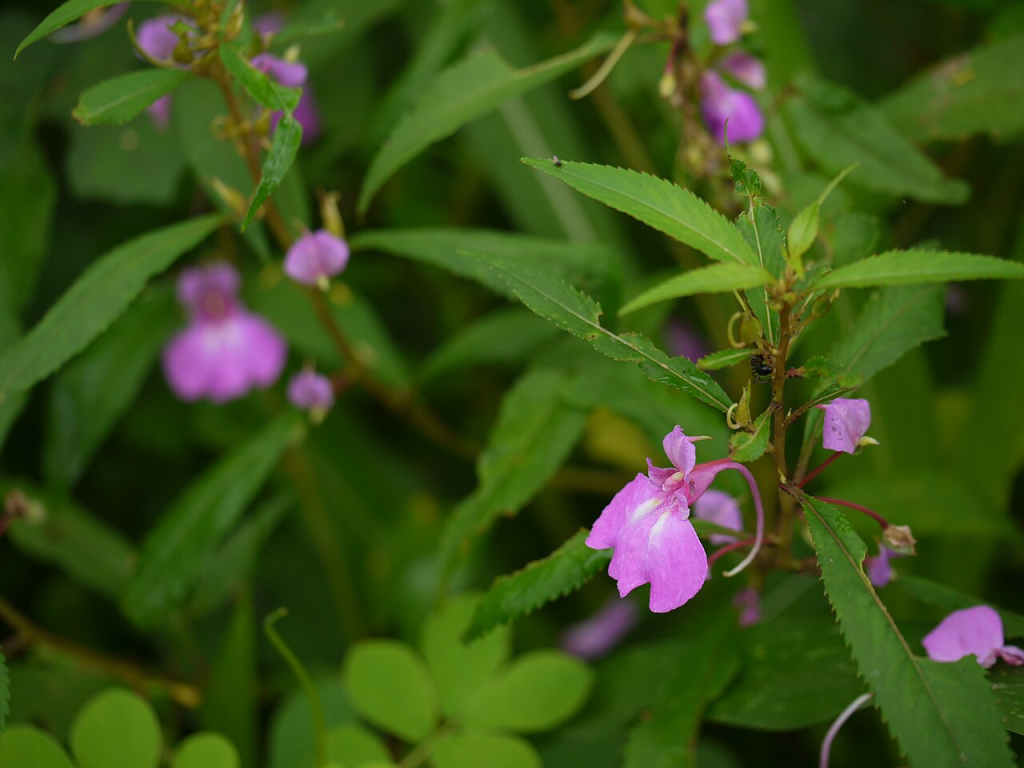
Garden balsam is an annual herb in the Balsaminaceae family. It usually grows 15–60 cm tall, though some plants can reach 80 cm. It has upright, soft stems that may grow alone or form a few branches. The plant has narrow, green leaves with toothed edges and pointed tips. It produces attractive flowers along the stems, usually singly or in small groups. The flowers are cup-shaped and can have single or double petals and grow closely along the main stem.
After flowering, the plant forms fleshy seed pods. When the pods mature, they burst open when touched and scatter the seeds. This action gives the plant its common name, “touch-me-not”. Garden balsam comes in many forms with different flower and leaf sizes. Gardeners grow several varieties, including double-flowered and dwarf types, mainly for their ornamental value.
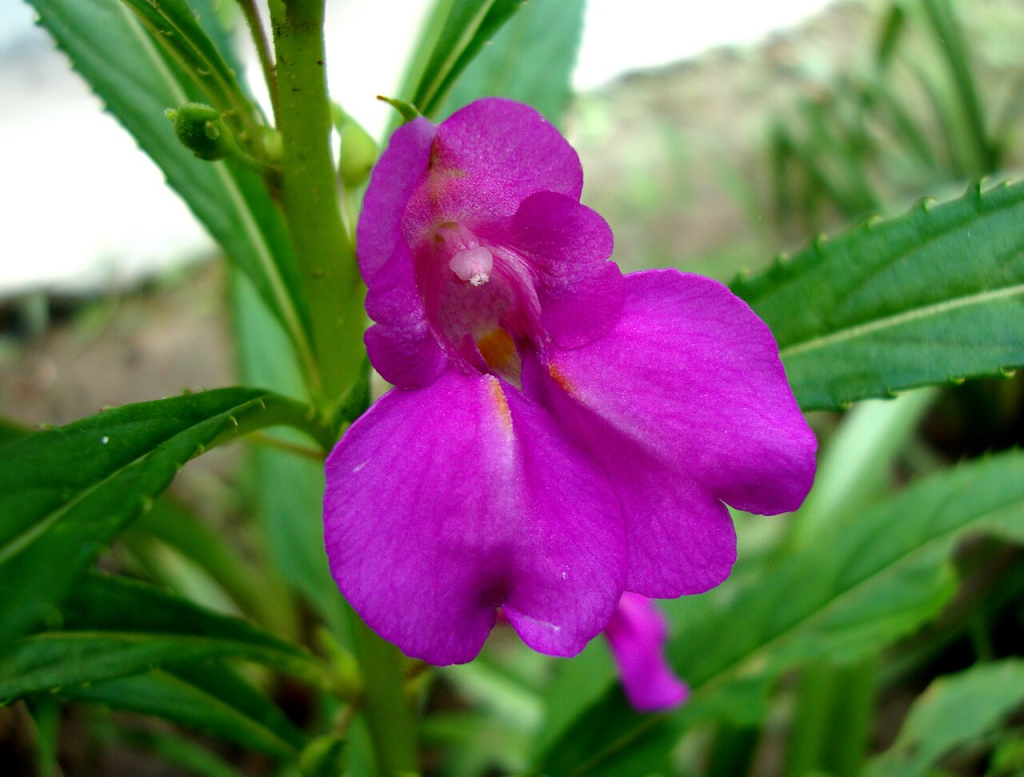
The flowers come in a wide range of colors, including white, pink, rose, red, purple, lilac, and bicolored combinations. Cultivated forms also differ in flower shape, with single, semi-double, and double blooms, while dwarf varieties remain shorter and more compact. These variations make garden balsam useful for adding color to flower beds, borders, containers, and cottage-style gardens.
Growing Conditions
It grows best in warm, moist conditions. It prefers partial shade or filtered sunlight. The plant grows well in rich, organic, well-drained soil. Keep the soil consistently moist and water regularly during dry weather. Prune and pinch the plant regularly to encourage bushier growth and more flowers. Gardeners can propagate the plant through seeds or cuttings.
Vernacular Names of Garden Balsam
Garden balsam has several names around the world, including balsam, rose balsam, spotted snapweed, touch-me-not, and jewel weed. In Bangladesh, people call it Dopati, Feng hsien in China, Bunga Embung in Malaysia, and Dandalet or Panshit in Myanmar.
Garden balsam has several regional names across India. In Hindi and Urdu, people call it Gul-mehndi; in Kannada, Karna kundala and Gowri hoo; in Malayalam, Kaashithumba or Thilam-oonappuu; and in Tamil, Kaasithumpai and Mudda Gorinta, or Gulivinda in Telugu, also locally known as Chilaka mukku puvvu or Kasithummi.
Medical and Other Uses
Garden balsam has a long history of use in traditional medicine across Asia. People have traditionally used different parts of the plant, including the roots, stems, leaves, flowers, and seeds, for complaints such as inflammation, rheumatism, bruises, skin conditions, burns, and other ailments. Modern studies have reported various biological activities, including antimicrobial, anti-inflammatory, antioxidant, antipruritic, and antifungal effects. However, these findings mainly come from laboratory and experimental studies, so they should not be treated as proof of clinical effectiveness.
People also widely grow the plant as an ornamental flower in gardens, pots, and borders because of its colorful blooms. Its flowers attract bees and other pollinating insects, while its explosive seed capsules help the plant spread naturally.
Cultural Significance
Garden balsam has cultural importance in several Asian countries. In Okinawa, Japan, the flower appears in the traditional folk song Tinsagu Nu Hana, which compares where children color their nails to how parents color (guide and shape) the minds of their children.
In Korea, people call the flower Bongseonhwa, and it inspired Hong Nan-pa’s 1919 song Bongseonhwa. The song uses the fading flower as a symbol of Korea under Japanese colonial rule and its return in spring as a sign of hope and renewal.
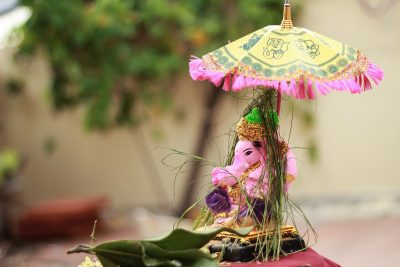
In India, garden balsam has a close link with the monsoon season. Pink-flowered plants often grow naturally along roadsides and field margins. Their flowering season also coincides with Ganesh Chaturthi, when people widely use fresh flowers for pooja and to decorate Ganesha idols.
Garden balsam also has a connection with Gowri Puja in Karnataka. The plant is locally known as Gowri hoo, meaning “Gowri flower,” and people may include its flowers among those used in worship of Goddess Gowri. This association is particularly linked with local Kannada traditions and should not be treated as a universal practice across India.
Frequently Asked Questions
Garden balsam contains plant compounds that may cause irritation or digestive problems if consumed. It is best not to eat any part of the plant.
Garden balsam uses a special seed-dispersal mechanism called ballochory. As the seed pod matures, tension builds in its walls, causing it to split suddenly when touched and fling its seeds away from the parent plant.