Underwater Rhizomes and Adaptations
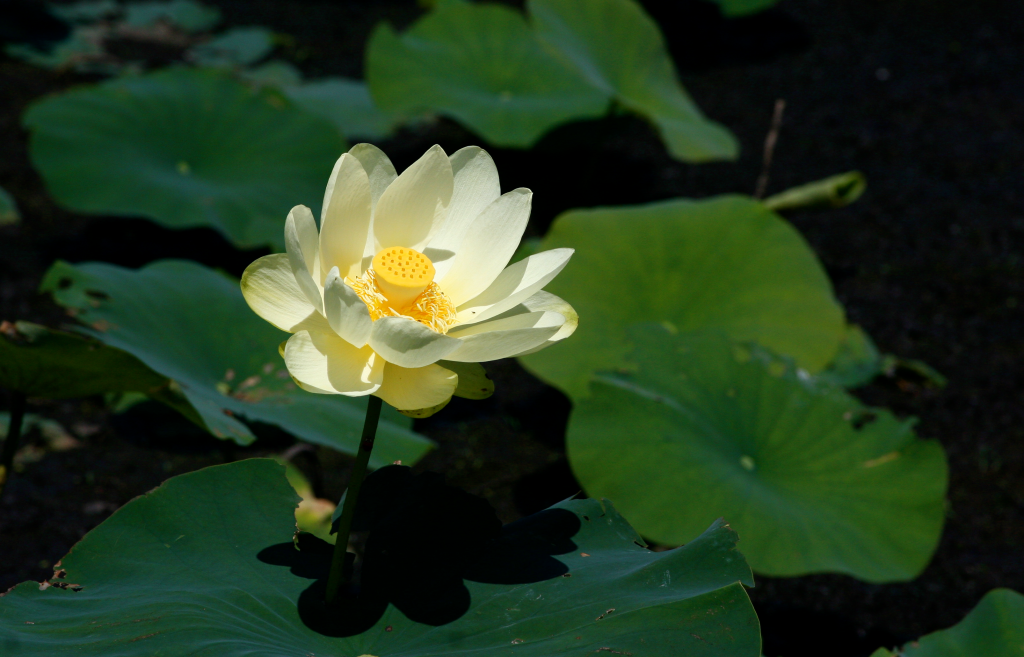
The American Yellow Lotus (Nelumbo lutea) is a large aquatic perennial with impressive circular leaves, strong stems, and showy yellow flowers that rise above the water surface. Mature plants colonize extensively by means of thick underwater rhizomes anchored deep in muddy sediments. The leaves can reach impressive sizes and possess a waxy surface that is very good at repelling water. The bright yellow flowers feature numerous petals surrounding a prominent central receptacle that contains the developing seeds.
Survival in Wetlands
The sturdy rhizomes are essential storage organs that store nutrients to survive long-term in harsh aquatic environments. Furthermore, the species is vigorous in warm seasons and may live for many decades in suitable wetlands. American Lotus naturally occurs in lakes, ponds, marshes, slow-moving rivers, and floodplain wetlands across North America.
From Flowering to Colonies
Flowering is common from late spring through summer in abundant sunlight. It’s not only beautiful to look at but also provides shelter and shade for a range of organisms that help wetland health. Brightly colored flowers often attract pollinating insects, but dense underwater structures provide vital protection for aquatic animals.
Reproduction occurs through flowering, pollination, seed production, and vegetative spread by rhizomes. Seeds are released as seed heads mature and can be dispersed by water movement and the activity of wildlife. Large colonies can develop in suitable habitat by rhizome expansion.
Conservation of a Wetland Icon
Potential threats to the species may include wetland drainage, water pollution, the spread of invasive aquatic plants, and habitat fragmentation. As a result, conservation efforts are now focused on strict wetland protection, water quality improvement, and habitat restoration.
The American Yellow Lotus is still one of the most recognized aquatic plants in North America, loved by botanists, conservationists, and nature lovers alike. Additionally, its adaptations and hardiness make it a unique specimen of the incredible diversity of freshwater plant life, and it will continue to play a vital role in maintaining aquatic ecosystems and continues to fascinate those who study the complex growth patterns of North American flora.