A Bird That Conquered the World
The rock pigeon is one of the world’s most widespread bird species. Native to the cliffs and coastal regions of Europe, North Africa, and Western Asia, it has successfully spread to towns and cities worldwide. Most urban pigeons today descended from domesticated birds that later became feral. The rock pigeon thrives in parks, markets, bridges, rooftops, farms, and other human-made environments because of its remarkable adaptability.
Built for Life on the Wing
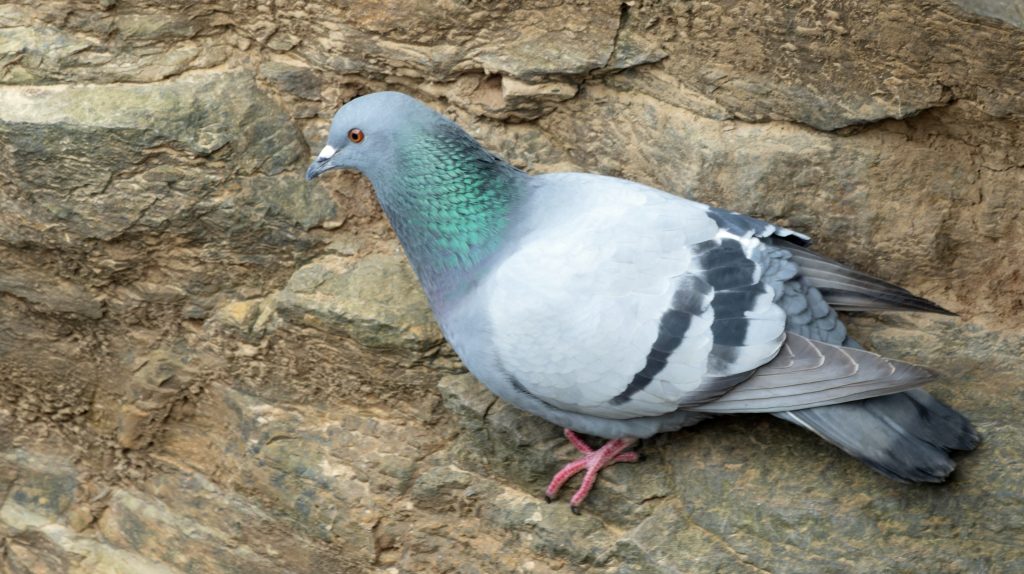
Rock Pigeons typically measure about 34 cm (13½ inches) in length. They have sturdy bodies, small heads, short necks, and broad, rounded tails that allow for strong, agile flight. Rock pigeons occur in many color variations. However, the typical bird has bluish-grey plumage, two black wing bars, and a striking purple-green iridescent neck.
Bird with the Sense of Direction
The adaptability of these birds to survive in the urban environment has made them one of the most recognized birds throughout the world. One of the most exciting traits of the rock pigeons is that they possess a remarkable capability of finding their way back. For thousands of years, people have used rock pigeons to carry messages because of their remarkable ability to return home from hundreds of kilometers away. Scientists suggest that rock pigeons employ a variety of strategies to find their way home by using visual landmarks, the sun as a compass, Earth’s geomagnetism, etc.
More Intelligent Than They Appear
Rock pigeons are very social and intelligent animals. Experiments prove that rock pigeons can distinguish human faces, memorize visual patterns, and solve problems. They learn quickly from experience and adapt easily to changing environments. Their social nature encourages them to gather in large flocks in public squares, train stations, markets, and other food-rich areas. These flocks help them communicate, forage, and stay alert to potential threats.
A Flexible Diet and History with Humans
Rock pigeons feed mainly on grains, seeds, fruits, and even leftovers from human meals. Although many people regard rock pigeons as ordinary city birds, they have shared a fascinating history with humans. Throughout history, they have carried messages during wars and contributed to scientific research. They have also appeared prominently in art, culture, and religious traditions.
Strong Family Bonds and Shared Parenting
Rock pigeons often form long-term pair bonds. Both parents actively participate in building the nest, incubating the eggs, and raising their young. After the chicks hatch, both parents produce a highly nutritious substance called pigeon milk. This nutrient-rich food provides essential nourishment during the chicks’ early stages of development. Their cooperative parenting and strong family ties play an important role in the species’ remarkable breeding success.
Challenges to Survival
Even in cities, rock pigeons face natural predators. Peregrine Falcons frequently hunt them in urban areas, while hawks and owls prey on them in rural habitats. Although the species remains widespread and abundant, climate change and habitat alteration may pose future challenges.