Brown striped bird
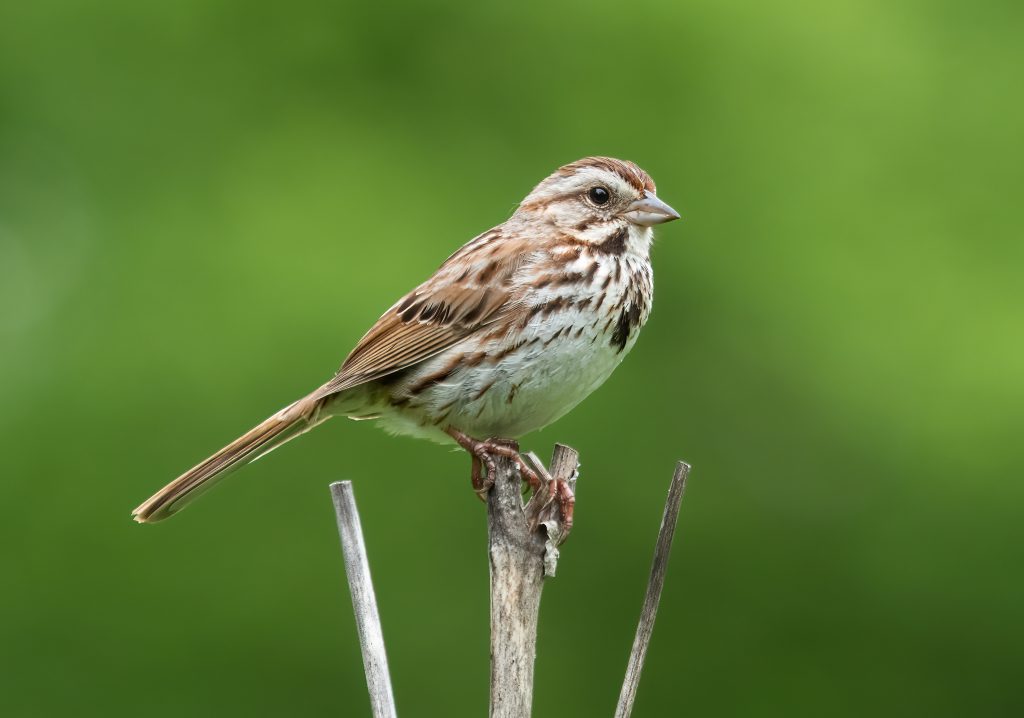
Brown stripes cover the bodies, and a rounded tail is characteristic of the medium-sized song sparrows. They have dark spots on the breast that occasionally fuse to form one spot. Grayish-brown markings on their faces help them blend into their environment. Their beak is small and cone-shaped, enabling them to eat seeds easily.
Twist in Songs
The Song Sparrow is famous for its wide range of songs. Male birds possess various types of songs. Additionally, the regional variations in songs are due to the dialects. Their songs play a very crucial role in their territories and mating process.
Food choices
The song sparrow usually searches for food near plants by hopping about in thick cover, and their food preferences vary from season to season and include grains, fruits, insects, spiders, and various other invertebrates. In the summer months, insects, which provide high-protein content, are very vital for young chicks.
Shelter & Survival
Most species live year-round in their range, while northerly species migrate during winter. Song Sparrow occupies habitats such as marshes, fields, shrubs, agricultural lands, garden areas, and cities. Vegetation acts as a shield against bad weather conditions as well as predator attacks. The predators of the bird include hawks, snakes, foxes, raccoons, and house cats.
Family life
Song sparrows nest either in or near the ground in vegetation such as grasses and shrubs. Grasses and plants compose the cup-shaped nest. The female incubates the eggs, and both parents participate in providing food for the chicks. Young sparrows leave the nest before they are fully grown and while they still rely on their parents for help.
Everywhere birds
Song sparrows are highly adaptable and found all around. Several subspecies of this type of bird were discovered in North America due to their ability to adapt for years to the environments they inhabit. Even though they look like small insignificant birds, song sparrows are among the most common birds you can hear in certain areas.