Nature’s High-Altitude Camouflage Expert
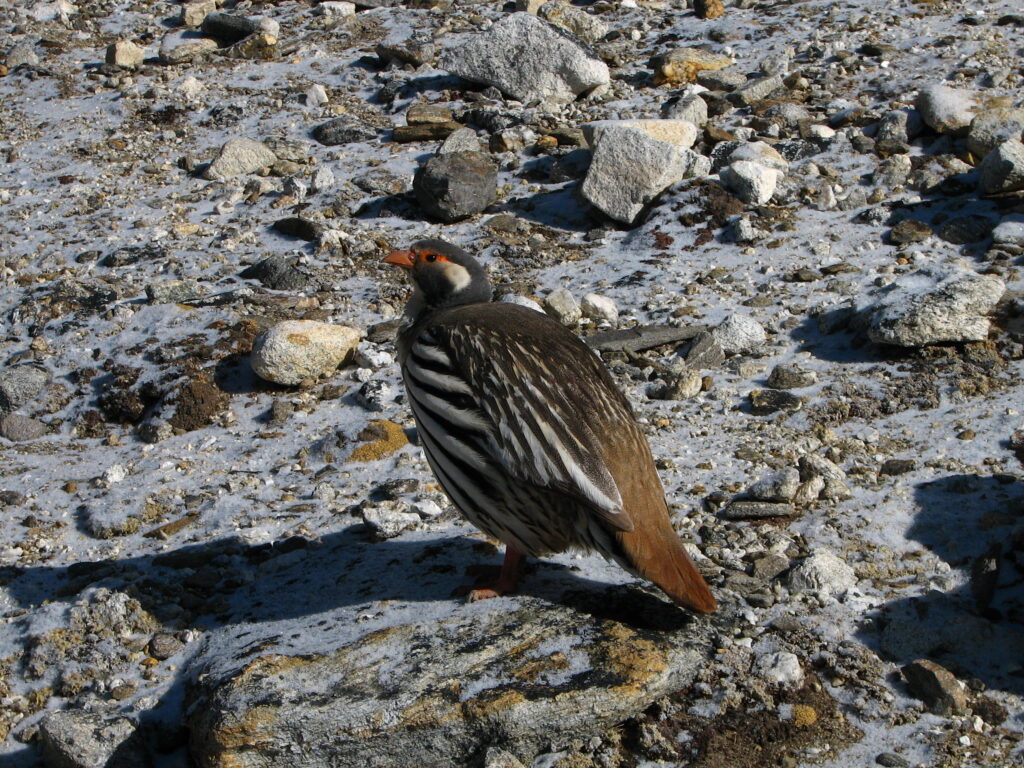
The Tibetan Snowcock belongs to the larger group of alpine species with colors such as gray, brown, white, and chestnut. The feather pattern makes it easier for them to camouflage within their environment. It is strong in build with powerful legs and bill to help them thrive at high altitudes.
The pale coloring on the face and distinct wing colors help identify this species in the wild. The males tend to be larger than the females while having similar physical features. The Tibetan Snowcock’s diet mainly consists of grass, shoots, foliage, seeds, and plants. Roots are consumed depending on seasonal availability. Food is mostly gathered from slopes, ridges, and mountainous terrains.
Home Is Where the Mountains Are
Population movements are usually seasonal but limited to elevation changes since the birds remain residents within their high-elevation environments all year round. The bird possesses strong legs, making its movement through rugged rocks effortless. They live in mountain meadows, rock plateaus, scree slopes, and mountain grasslands. In addition, their choice of habitat helps avoid exposure to various dangers.
Born Ready to Roam
Nests are made on the ground in scrapes that are hidden under rocks or vegetation. Once the eggs hatch, the young will very quickly leave the nest and begin to travel with their parents. The predators include foxes, wolves, eagles, and other animals that are able to reach the mountains. Camouflage is one of the strategies used for survival by the predators. When they sense danger, they run up into the hills before flying off.
Breathing Easy Where Others Can’t
The Tibetan Snowcock is remarkable in that it manages to survive in environments in which other animal species have difficulties due to various environmental issues. Adaptation to low temperatures and lack of oxygen makes it possible for the Tibetan Snowcock to live in such environments all year round.
Studying this bird involves going deep into the mountainous zones of the territory it inhabits. Cryptic plumage ensures that they can go undetected even when in the open air. Scientists consider the Tibetan Snowcock an excellent indicator of the condition of the ecosystem. Sustainable populations of this bird species require the maintenance of high-altitude territories.