A Spectacular Appearance
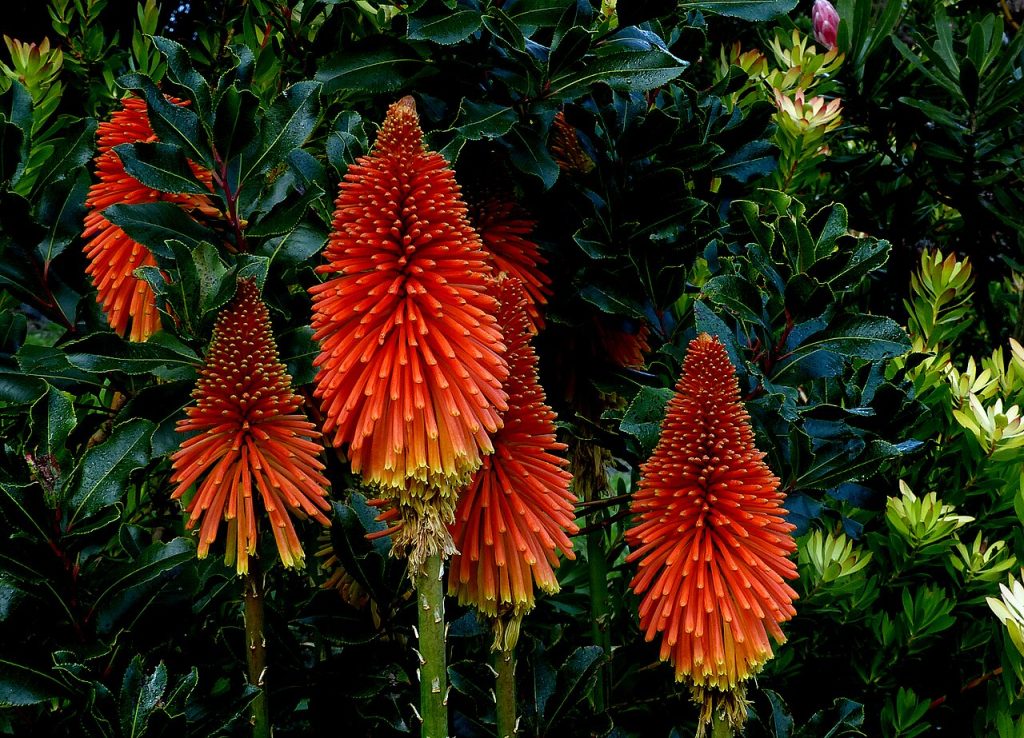
The Torch Lily is a spectacular herbaceous perennial with upright flower spikes, arching grass-like leaves, and vibrant tubular blooms. Mature plants usually form dense clumps of considerable height during the flowering season. Additionally, a sturdy crown produces narrow green foliage that persists through much of the growing season. Flower spikes are usually bi-colored, in shades of red, orange, yellow, or cream.
Built for Tough Conditions
Deep roots help the plant access more moisture and better tolerate drought. Moreover, this species generally grows at a moderate rate and can live many years in favorable conditions. Flowering usually continues from summer through autumn, giving color when many other perennials are fading. Furthermore, Torch Lily tolerates heat, intermittent drought, and a wide range of soil conditions as long as drainage is good.
Pollinator Benefits and Ecological Importance
Flowers with rich nectar attract many pollinators and make a major contribution to garden biodiversity. Bees, butterflies, and nectar-feeding birds are often seen visiting the flowering spikes. As a result, the plant provides reliable floral resources for pollinators over extended flowering periods. Torch Lily is native to the grasslands and mountains of southern Africa and is widely cultivated in parks, gardens, and landscape plantings. Therefore, it provides ornamental value for both aesthetics and ecology.
Nature’s Color-Changing Blooms
One scientific aspect related to this plant is that its flower color changes during flowering, producing a gradient effect in the inflorescence. In addition, the tubular flower form benefits pollinators with matching feeding adaptations. Birds often feed on nectar and help with pollination. Meanwhile, many insects use the pollen, and the dense leaves provide shelter.
Reproduction and Propagation Methods
The plant reproduces by seed production and vegetative division of established clumps. Pollinated flowers produce seeds that naturally disperse when mature. Additionally, gardeners frequently propagate plants by dividing crowns to maintain vigor and increase plantings.
Challenges and Conservation
Poorly drained soils, excess moisture in winter, and certain fungal diseases are potential threats. In addition, habitat alteration may affect wild populations in some areas. Conservation focuses on habitat preservation and proper cultivation of the indigenous plant. Torch Lily is easy to distinguish because of the beauty and vigor of its flowers. Overall, its ornamental value, ability to attract pollinating insects, and versatility have made it a popular choice across many ecosystems.