Physical Characteristics
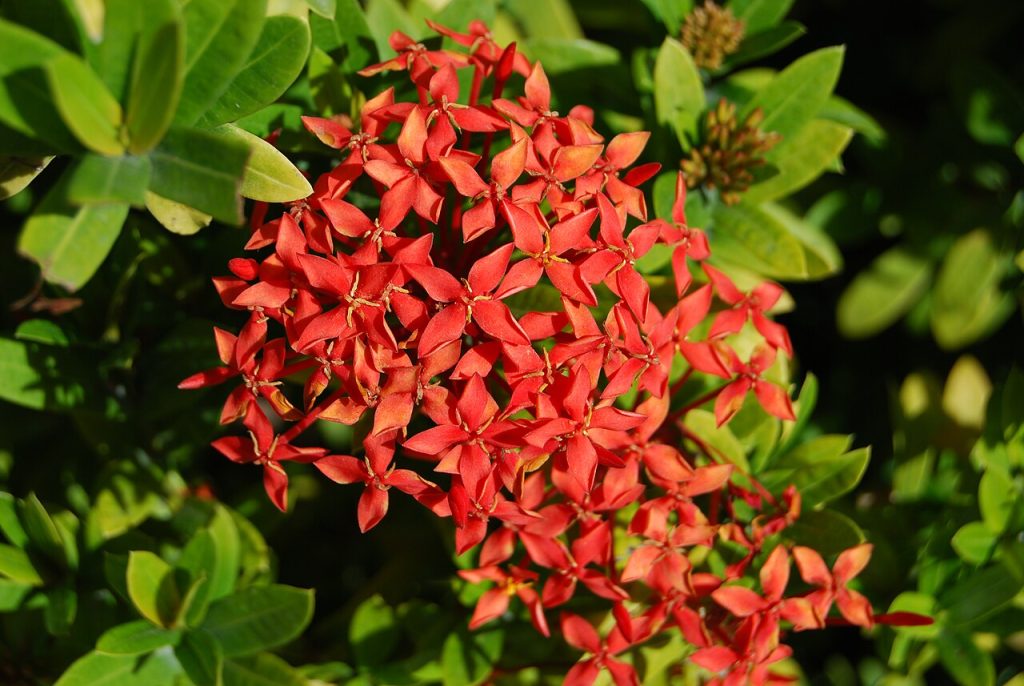
Jungle geranium is a compact, evergreen flowering shrub recognized by its dense branching pattern, shiny dark green leaves, and round flower heads of vivid colors of tubular flowers. The mature plant grows to about 1-2 meters tall and forms attractive mounds that suit gardens and natural scenery. Its leather-textured, oval leaves grow in opposite pairs along the stems. The flowers are commonly red, orange, yellow, pink, or white and have a long-lasting bloom period. Moreover, each flower cluster contains many individual blooms, extending nectar availability to pollinators for several days.
Habitat and Growing Conditions
Jungle geranium prefers well-drained soils rich in organic matter and grows best in full sun to part shade. The species is widely cultivated throughout tropical regions of the world. In addition, natural populations occur in tropical forests, woodland margins, riverbanks, and open clearings across South and Southeast Asia.
Ecological Importance
Jungle geranium adds important ecological value by providing nectar and supporting pollinator diversity. Furthermore, butterflies, bees, moths, and nectar-feeding birds often visit its tubular flowers and help transfer pollen between plants. The tubular shape of the flower may favor pollinators with suitably adapted feeding structures. Additionally, the dense foliage shelters beneficial insects and supports small garden ecosystems.
Reproduction and Conservation
Reproduction occurs through flowering, pollination, seed production, and vegetative propagation. The plant mainly reproduces through stem cuttings because it roots easily in warm, humid conditions. After pollination, the flowers produce small fruits containing viable seeds that can develop into new plants. Threats include root rot caused by poor drainage, insect pests, habitat loss, and prolonged environmental stress. Responsible growing practices, healthy soil management, and habitat conservation can help maintain healthy populations.
Jungle geranium is one of the most popular tropical shrubs because of its long flowering season, ornamental value, and ecological benefits. Moreover, its spectacular flower clusters, versatility, and close relationship with pollinating wildlife highlight the amazing diversity and ecological importance of tropical flowering plants in natural and cultivated ecosystems.