Overview
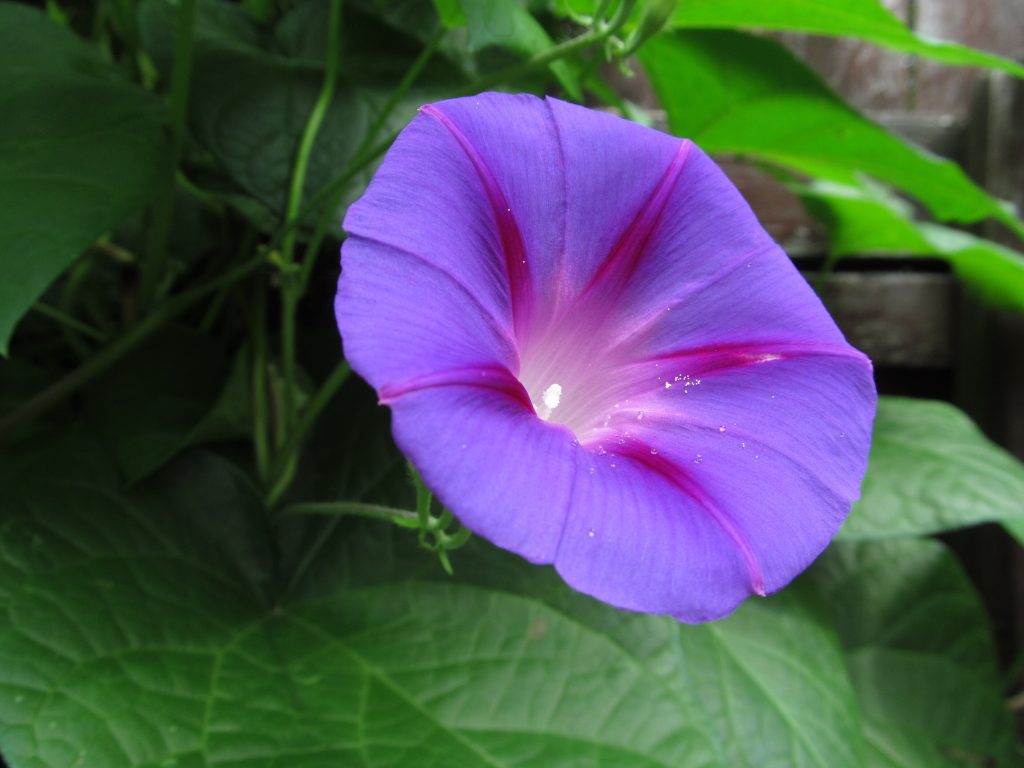
The common morning glory is a flowering vine native to Mexico and Central America. Today, Common Morning Glory grows widely as an ornamental plant in tropical, subtropical, and temperate regions. Its vibrant, trumpet-shaped flowers in shades of purple, pink, blue, and white make it a popular ornamental vine. As a result, it is a popular choice for gardens, trellises, fences, and arbors. Moreover, its blooms open in the cool morning hours and gradually close as the day warms.
Beauty in Bloom
Common morning glory is a fast-growing, twining annual vine that can reach 6–10 feet (1.8–3 meters) in a single growing season. Its slender climbing stems readily ascend trellises, fences, arbors, and nearby vegetation, creating a lush vertical display. The plant has alternate, bright green, heart-shaped leaves measuring 3–6 inches (7–15 cm) long, providing an attractive backdrop to its colorful flowers.
Additionally, it produces large, trumpet-shaped flowers measuring 2–5 inches (5–12 cm) across. The blooms grow singly in the leaf axils on long stalks and appear in shades of deep purple, violet, blue, pink, magenta, and white, often with a lighter-colored throat. They open in the morning and close later in the day. After flowering, rounded seed capsules develop and contain several dark, angular seeds.
Growing a Healthy Vine
Common morning glory grows best in full sun. It prefers fertile, well-drained soil but adapts to a wide range of soil types. Water regularly during establishment and prolonged dry periods, allowing the soil to drain well between waterings. As a twining vine, it requires a trellis, fence, or similar support for healthy growth. Light pruning or pinching can help maintain shape and encourage branching.
Seeds are the most common method for propagating common morning glory. They germinate readily in warm soil. In cooler climates, seeds are often scarified or soaked overnight before sowing to improve germination. Mature seed capsules can be collected for future planting. Under favorable conditions, common morning glory grows quickly and flowers throughout the growing season.
Common Pests and Diseases
Common Morning Glory is generally hardy but occasionally attracts aphids, spider mites, whiteflies, leaf miners, and root-knot nematodes. These pests can cause leaf discoloration, stunted growth, and reduced vigor. The plant is also susceptible to powdery mildew, especially in warm, humid conditions with poor air circulation. Good garden hygiene, proper spacing, and avoiding excess moisture on the foliage help prevent problems and keep the plant healthy.