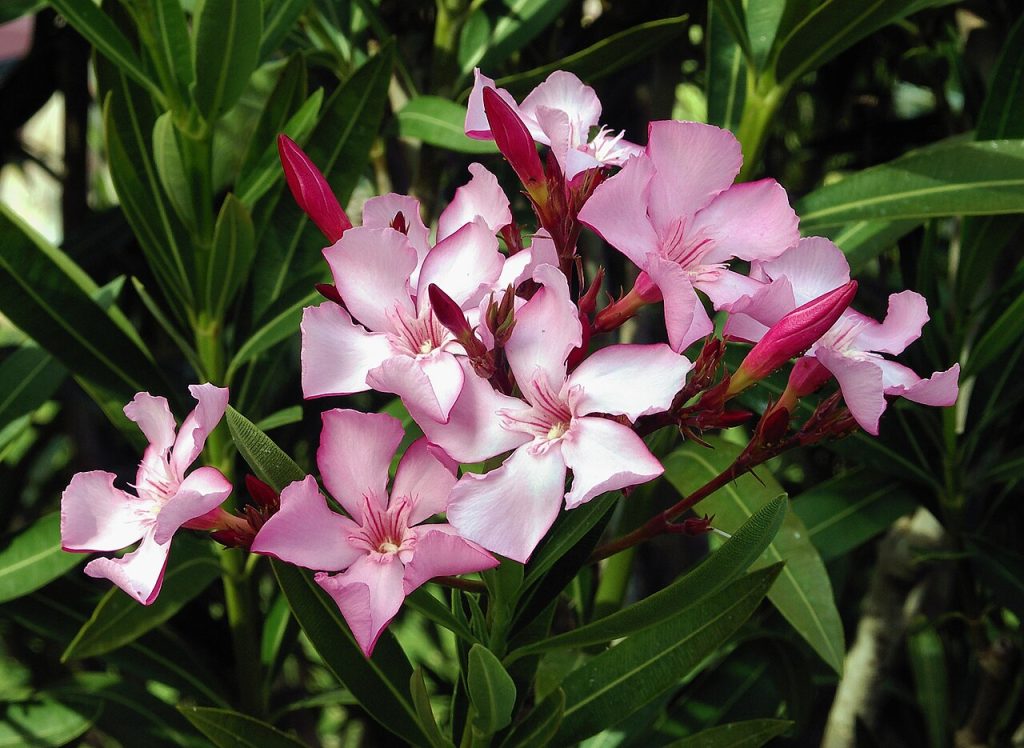
The Showy Flowers and Evergreen Foliage
Oleander is an evergreen shrub or small tree that can reach about 6 meters in height. It generally develops several erect or spreading stems, while young branches release a milky latex when insects, animals, or other factors damage their tissues. Its leaves are long, narrow, leathery, and often arranged in groups of three around the stems.
Wild oleander commonly produces pink or reddish flowers, while cultivated varieties may have white, cream, yellow, or purple flowers. The flowers have a tubular structure with five spreading lobes, and some varieties produce fragrant blooms. Under favorable conditions, flowering can continue for long periods, with seasonal peaks varying according to climate. Its dense evergreen foliage also adds structural diversity to gardens, parks, and other managed landscapes.
Common English and Regional Names
It has several English and regional names. Common English names include oleander, rose laurel, rosebay, and be-still tree. In India, people know oleander by different names across languages. Hindi speakers commonly call it Kaner, while Kannada and Tamil speakers use Arali, and Telugu speakers use Ganneru. Sanskrit sources use the name Karavira, and religious traditions may refer to its leaves as Kaner Patra. Some traditional and horticultural sources have also used the scientific name Nerium indicum for the plant.
Adaptation to Dry and Coastal Conditions
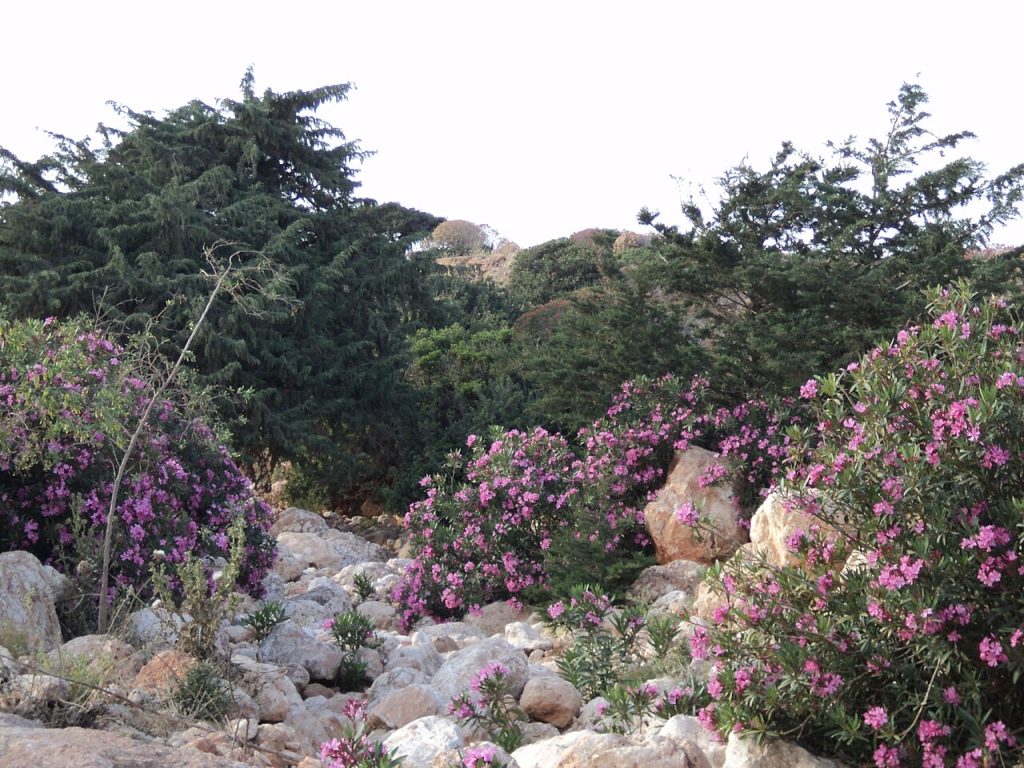
It is native to regions extending from the Mediterranean through the Middle East and Indian subcontinent to Myanmar. In natural habitats, it commonly occurs along seasonal watercourses, rocky valleys, and dry riverbeds, where it experiences strong sunlight and periods of limited water availability.
It also grows widely in gardens, parks, roadsides, and coastal landscapes. The plant thrives in warm climates, full sun, and well-drained soils, although it can tolerate many soil types. Established plants are notably drought-tolerant and can withstand salt spray, allowing them to remain productive in dry and coastal environments. These characteristics make oleander particularly useful for landscaping in warm regions.
Reproduction and Seed Dispersal
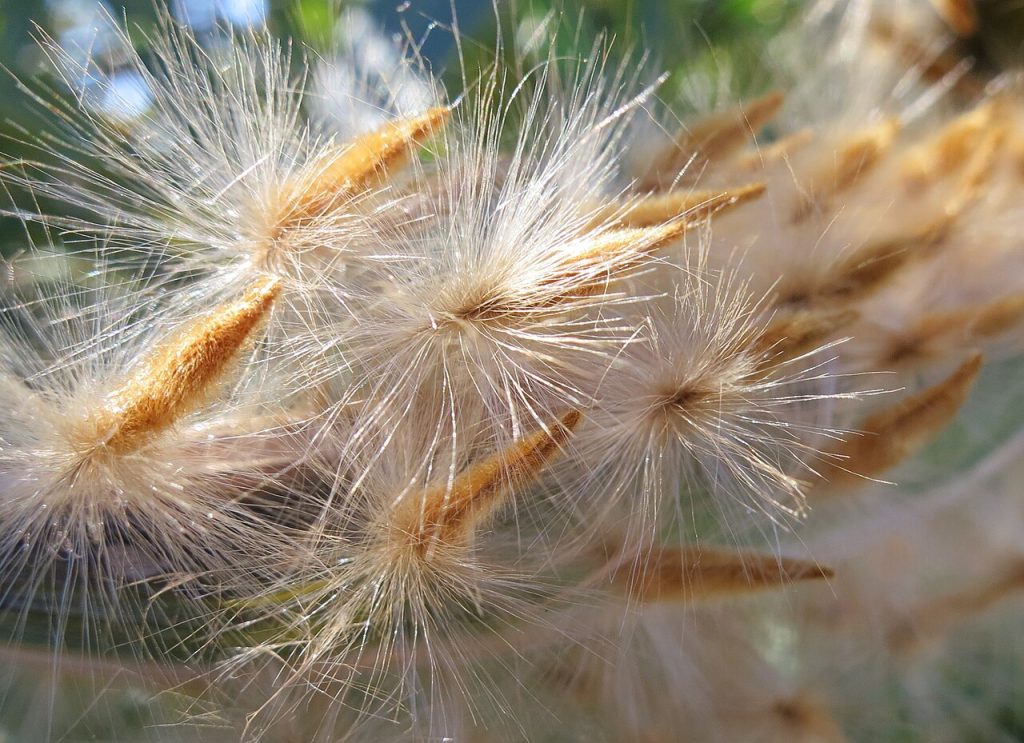
Oleander can reproduce through seeds and semi-ripe stem cuttings. Bees, butterflies, moths, and other insects may pollinate the flowers as they collect nectar and pollen. Following pollination, the plant develops paired, elongated follicle fruits.
These follicles split open when mature and release numerous seeds. Each seed has a silky covering of hairs that helps it disperse by wind. This allows the seeds to travel away from the parent plant and contributes to the plant’s spread. Oleander remains widespread in its native range, while cultivation has extended its distribution across warm regions of the world.
Cultural Significance of Oleander
Oleander has cultural and religious significance in several parts of India. People use its colorful flowers in ornamental displays, temple traditions, and certain Hindu rituals, and some regional devotional practices.
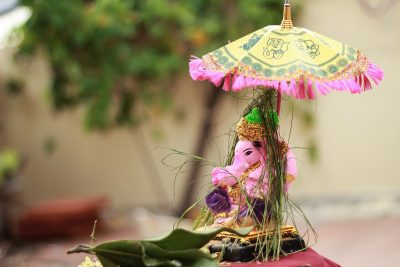
It also has a connection with Ganesh Chaturthi in traditions involving the offering of flowers and patra (leaves) to Lord Ganesha. In the 21 Patra tradition of Ganesh worship, devotees call oleander leaves Kaner Patra or Karaveera Patra. Its cultural importance is especially interesting because the plant combines beauty, ritual use, and significant toxicity. Although devotees may use its flowers as offerings, people should never consume any part of the plant or use it in food preparation.
Toxic Compounds in Oleander
Oleander is highly toxic because all parts of the plant contain biologically active cardiac glycosides, particularly oleandrin and oleandrigenin. These compounds affect the heart and can cause nausea, vomiting, abdominal pain, diarrhea, weakness, and headache after ingestion. Severe poisoning may lead to abnormal heart rhythms, nervous system disturbances, visual problems, collapse, and potentially death. The plant’s sap can also irritate the skin and eyes.
Drying does not remove oleander’s toxins, so dried leaves, twigs, and other plant material remain hazardous. People should never burn oleander branches or use them as cooking fuel or food skewers. The plant can also poison grazing animals such as horses, cattle, and sheep. Although people have used oleander medicinally, its narrow safety margin makes self-medication unsafe. Keep the plant away from children and animals, and seek immediate medical attention after suspected ingestion.
Frequently Asked Questions
Oleander can flower for long periods under favorable conditions, with the exact flowering season varying by climate and cultivar.
Yes. All parts of oleander contain toxic cardiac glycosides, including oleandrin. People should keep the plant away from children and animals.