How to identify Mexican Butterfly Weed
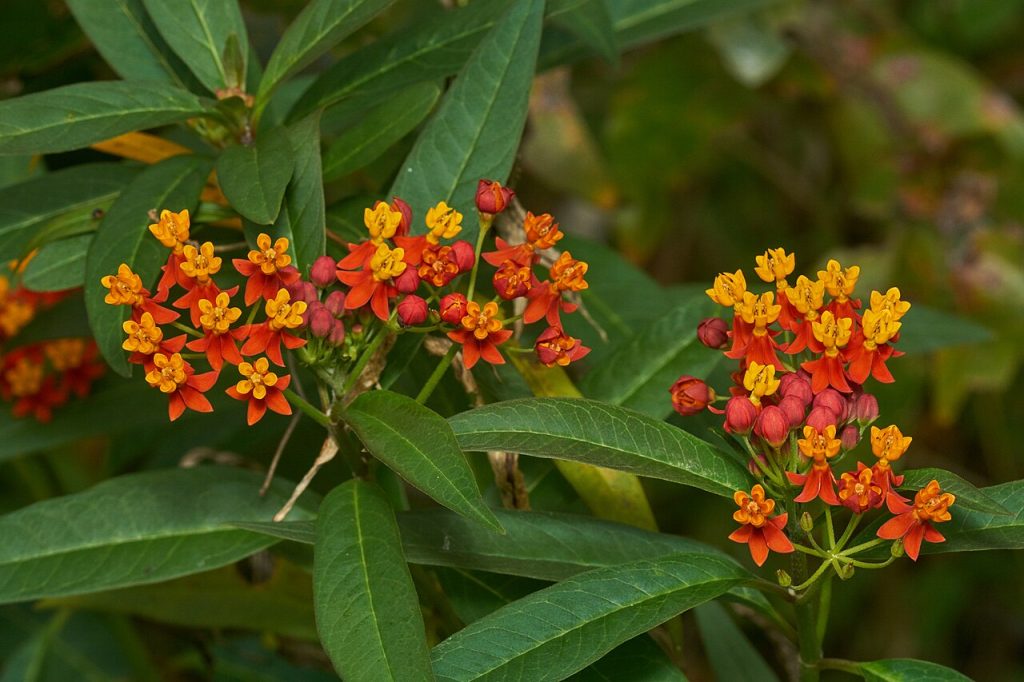
Mexican butterfly weed is an upright, herbaceous perennial with narrow, lance-shaped leaves, milky sap, and brilliant clusters of orange, yellow, or orange-red flowers. Mature plants typically grow 60–100 cm tall, forming compact clumps that remain attractive throughout the growing season. Furthermore, its bright green leaves are evenly spaced along sturdy stems, creating a striking contrast with the colorful flower clusters.
Thick roots enable efficient water uptake, allowing the plant to withstand drought once established. In warm climates, Mexican butterfly weed grows quickly and blooms continuously from late spring through autumn under favorable conditions. Additionally, the plant produces pollinia and natural defensive compounds that discourage many grazing animals while remaining harmless to specialized monarch caterpillars.
Habitat and Distribution
Mexican butterfly weed grows naturally in open grasslands, roadsides, scrublands, woodland edges, and disturbed habitats. It is native to Mexico, Central America, and parts of tropical North America. It thrives in sunny, well-drained locations and adapts well to warm environments.
Pollinator Benefits and Ecological Role
Mexican butterfly weed plays an important ecological role. Specifically, it provides abundant nectar for butterflies, bees, moths, and many other beneficial insects. It is also a vital larval host plant for monarch butterflies, whose caterpillars rely exclusively on milkweed leaves for nourishment during their development. In addition, hummingbirds frequently visit the flowers for nectar, further enhancing pollination across a variety of ecosystems.
Reproduction and Conservation
Mexican butterfly weed reproduces through flowering, insect pollination, seed production, and vegetative growth. After pollination, mature seed pods split open, releasing silky-haired seeds that the wind carries over long distances. Under favorable conditions, gardeners also propagate the plant from seeds and stem cuttings. However, the species faces threats from habitat loss, pesticide exposure, invasive plants, and declining native pollinator populations. The conservation efforts focus on planting native nectar sources, reducing chemical pesticide use, and preserving natural grassland habitats.
Mexican butterfly weed remains one of the most valuable wildlife-friendly flowering plants because of its long blooming season, exceptional support for pollinators, and ornamental beauty. Its close relationship with monarch butterflies, along with its unique reproductive strategies and ecological adaptations, highlights the importance of conserving native flowering plants.