Plant Features and Adaptations
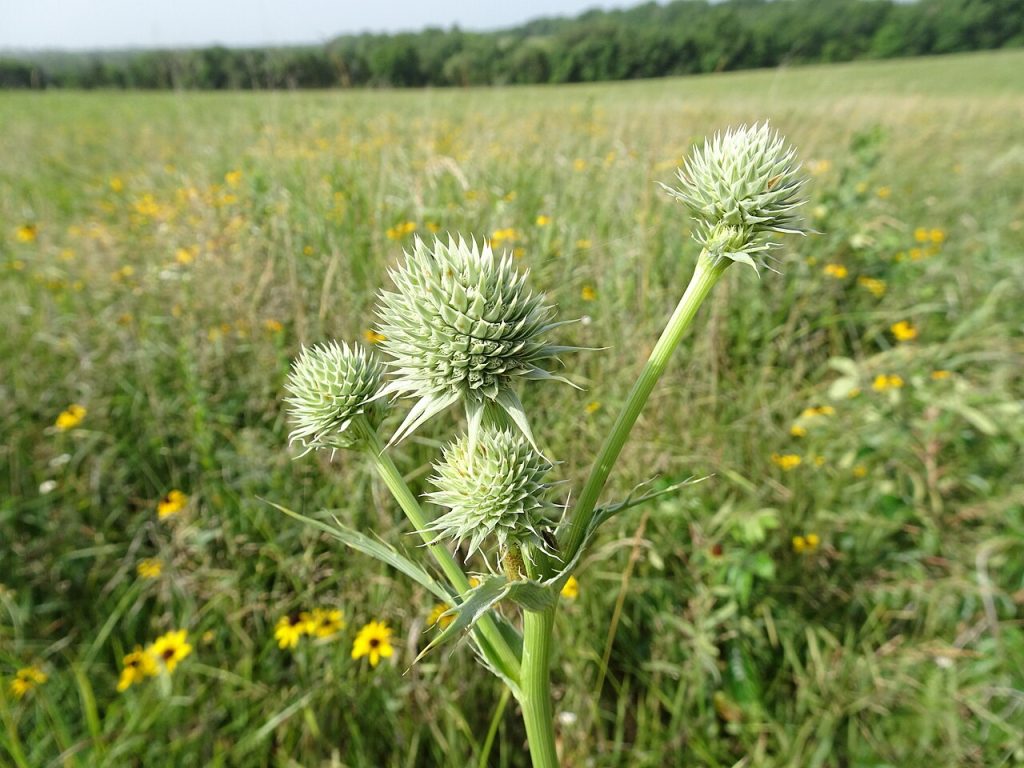
Rattlesnake Master is a unique herbaceous perennial with upright flowering stems, long, sword-shaped, bluish-green leaves, and rounded, silvery-white flower heads. Additionally, mature plants can reach heights of 1 to 1.5 meters, forming bold architectural shapes in open landscapes. The stiff leaves have sharp margins and parallel veins, like those of some yucca species, making the plant easy to spot.
Its thick taproot extends deep into the soil, providing excellent drought tolerance and allowing the plant to live for many years. Because of this, Rattlesnake Master spreads slowly and thrives in nutrient-poor, well-drained soils where many other flowering plants struggle. Flowering occurs from early to late summer, producing abundant, rounded flower clusters rich in nectar. Its exceptionally long flowering period provides a valuable nectar source during midsummer, when many prairie wildflowers have already finished blooming.
Natural Habitat and Distribution
Rattlesnake Master is native to the central and eastern regions of North America, where it naturally occurs in tallgrass prairies, open savannas, grasslands, and dry meadows. It thrives in sunny, open landscapes with well-drained soils and plays an important role in native prairie ecosystems.
Wildlife and Ecological Benefits
Rattlesnake Master plays an important ecological role by supporting diverse pollinator communities and enhancing prairie biodiversity. Its nectar-rich flowers attract bees, butterflies, wasps, beetles, flies, and many other beneficial insects throughout the blooming season. Goldfinches may feed on the mature seeds, while small mammals use the surrounding vegetation for shelter and protection. The plant’s extended flowering period makes it a valuable food source for pollinators during midsummer, when fewer prairie plants are in bloom.
Reproduction and Conservation
Rattlesnake Master reproduces through flowering, insect pollination, seed production, and slow regeneration from its persistent root system. After pollination, the flower heads produce numerous seeds, and wind and gravity disperse them once they mature. As a result, seedlings establish well in open sites where competition is low.
However, the species faces threats from agricultural expansion, habitat fragmentation, invasive grasses, and the widespread loss of native prairie ecosystems. Conservation efforts include prairie restoration, controlled burning, and the protection of native grasslands. Rattlesnake Master is a distinctive wildflower of the North American prairies, valued for its unusual appearance, drought tolerance, and importance to wildlife. Overall, its specialized adaptations and ecological significance demonstrate how native perennial plants contribute to healthy grassland ecosystems and support rich biodiversity.