- Scientific Name
- Plumeria rubra
- Location
- Central America, Mexico, Northern South America
- Habitat
- Landscapes, Parks, Rocky Areas, Subtropical Garden, Tropical Garden
- Season
- Autumn, Spring
Overview
The Red Frangipani (Temple Tree) is a tropical deciduous tree native to Mexico, Central America, and northern South America. People celebrate it for its vibrant, fragrant flowers and distinctive branching habit, and they widely cultivate it in tropical and subtropical regions for its ornamental beauty and cultural significance.
Description
The Red Frangipani grows as a small tree or large shrub, reaching 15–25 feet (4.5–8 m) in height. It has thick, greyish-green, succulent-like branches that develop a sculptural, knobby appearance after the leaves are shed.
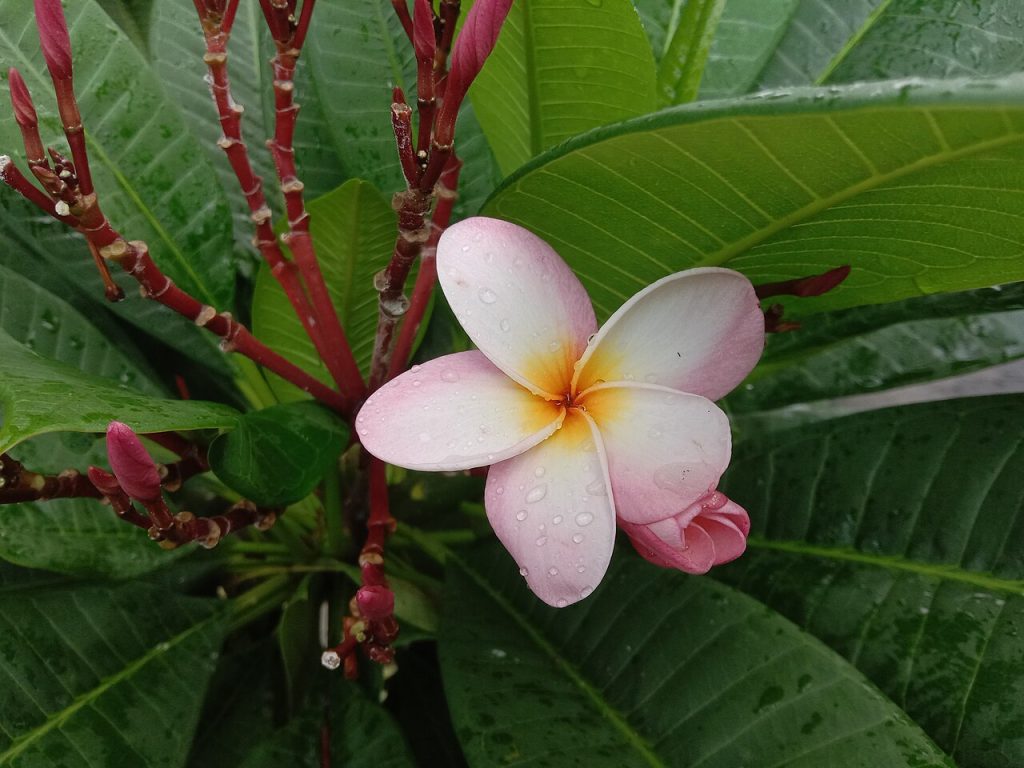
Its large, lance-shaped leaves measure 8–16 inches (20–40 cm) long and cluster at the branch tips. From late spring through autumn, the tree produces clusters of waxy, five-petaled flowers in shades of deep red, crimson, coral pink, or rose, often with a yellow center. The blooms release a sweet fragrance, especially during the evening.
The Red Frangipani is a long-lived deciduous tree that enters a dormant period during autumn or winter, shedding its leaves before producing fresh foliage and flowers in spring. It reproduces naturally through seeds, but gardeners more commonly propagate it from stem cuttings, which establish quickly and flower within a few years.
Cultivation
The Red Frangipani performs best in full sun and well-drained, slightly acidic to neutral soil. Water deeply during the growing season, allowing the soil to dry between waterings, and reduce watering during dormancy. A balanced slow-release fertilizer encourages healthy growth and abundant flowering, while occasional pruning helps maintain its shape. It grows well both in the ground and in containers, making it suitable for gardens, patios, and balconies.
Pests and Diseases
Although relatively hardy, aphids, mealybugs, scale insects, spider mites, thrips, and whiteflies may occasionally affect the Red Frangipani. Excess moisture or poor air circulation often causes leaf spot and yellowing leaves. Proper care and regular inspection help minimize these problems.
Uses
People grow Red Frangipani as an ornamental tree for its colorful blooms and elegant form. They also use its flowers in garlands, Hawaiian leis, religious ceremonies, and decorative arrangements. Traditionally, people have used parts of the plant in folk medicine, though these uses require further scientific study. The nectar-rich flowers also attract butterflies and other pollinators, enhancing biodiversity in gardens.