Overview
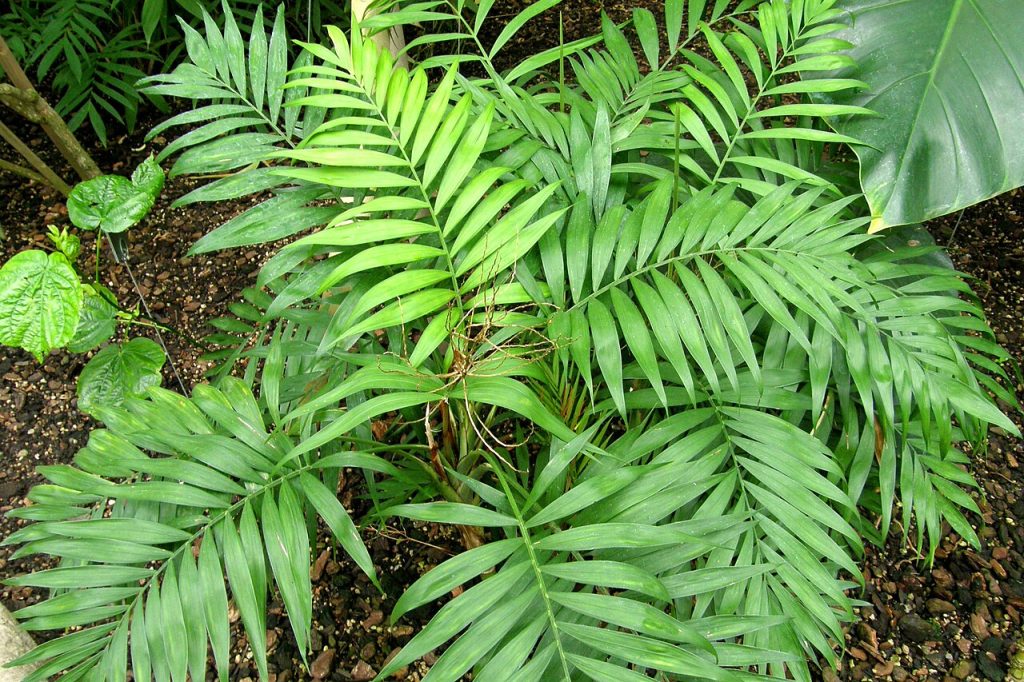
Parlor Palm is a popular, low maintenance indoor plant admired for its slender, arching stems and elegant, feathery green fronds. Native to the rainforests of southern Mexico and Guatemala, the Parlor Palm naturally grows beneath taller trees as an understory plant. Its ability to tolerate low indoor light made it especially popular during the Victorian era, and it remains a favorite for homes and offices today.
Description
The parlor palm has slender, cane-like stems and graceful, pinnate green leaves that form a soft, tropical-looking canopy. As a houseplant, it typically grows between 1 and 6 feet (0.3–1.8 m) tall, while outdoor plants grown in suitable warm climates can reach up to 16 feet (4.9 m). Mature plants may occasionally produce small, fragrant yellow or orange flowers, followed by small berries. However, flowering is uncommon when the plant is grown indoors.
Parlor Palm Indoor
Parlor palms grow best in bright, indirect light but can also tolerate low-light conditions. Direct sunlight may scorch their delicate leaves. They prefer a well-draining potting mix and containers with drainage holes to prevent root rot. Water the plant when the top 1–2 inches of soil feels dry, avoiding excessive moisture. The plant prefers warm temperatures and moderate indoor humidity. Fertilize lightly during spring and summer.
Parlor palms have shallow roots and prefer to remain slightly snug in their containers, so repotting is usually necessary only every two years or less. They can be propagated through seeds or root division, although propagation can be challenging.
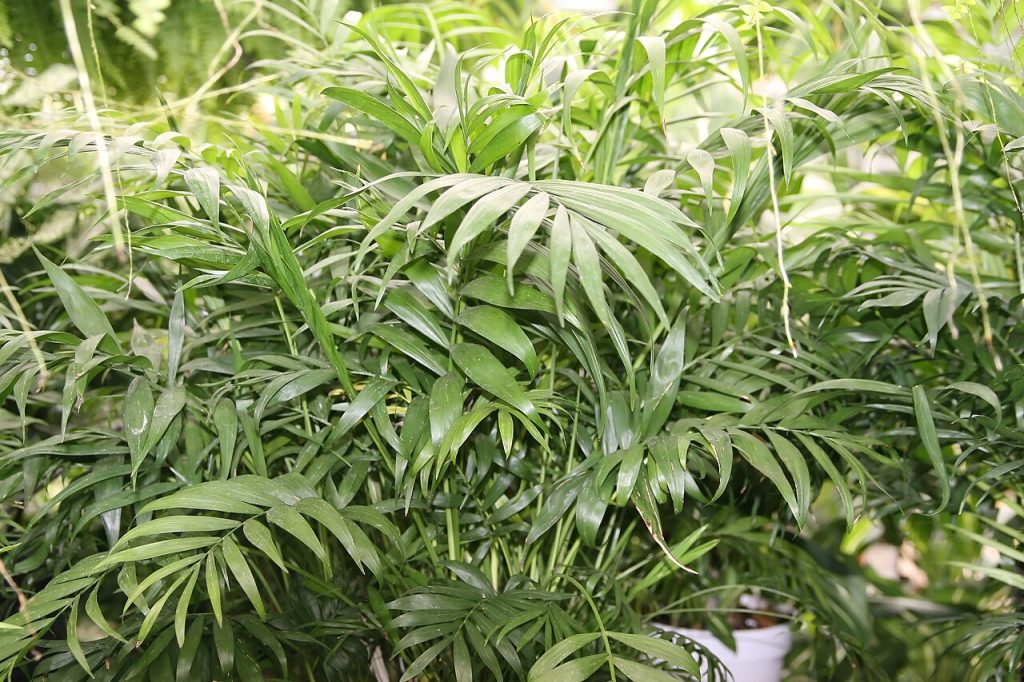
Low Maintenance Outdoor Plant: Parlor Palm Care
Parlor palms are easy to maintain because they adapt well to typical indoor and outdoor conditions and do not require constant attention. They tolerate low light, need only moderate watering, and grow slowly, reducing the need for frequent repotting or pruning. Their simple care requirements make them a reliable choice for both beginners and busy plant owners, as low maintenance outdoor plants.
Varieties
The parlor palm is believed to have at least two naturally occurring forms, with lowland plants tending to have thinner stems and highland plants developing thicker stems. A few cultivars, including dark-leaved forms, are also available, although they are relatively rare. Most parlor palms sold in nurseries and garden stores are the standard bright-green variety.
Common Issues
Overwatering, excessive sunlight, underwatering, and dry indoor air can cause yellowing or browning leaves. Overwatering may also lead to root rot, while excessive direct sunlight can scorch the foliage. Pests such as scale, aphids, mealybugs, and whiteflies may occasionally affect the plant, particularly when grown outdoors. Regularly checking the foliage and maintaining proper watering and light conditions can help keep the plant healthy.
The parlor palm is an elegant, adaptable, and low maintenance houseplant that brings a refreshing tropical charm to indoor spaces. Its graceful foliage, tolerance of low light, and pet-safe nature make it an excellent choice for both beginner and experienced plant enthusiasts. With minimal care and suitable growing conditions, this long-lived palm can remain a beautiful addition to homes and offices for many years.
Frequently Asked Questions
Yes. Parlor Palm require low light, minimal watering and grow slowly. They adapt well to indoor conditions and are easy to maintain, making them a good indoor plant.
Some of the common problems and their causes are-
1. Brown, crispy leaf tip - underwatering, dry air or too much direct sunlight
2. Root rot - overwatering
3. Fine webbing on lower fronds- from pests like Spider mites, aphids, mealybugs, and whiteflies
Yes. Parlor palm is also known as "Good Luck Palm". It is believed to bring wealth, prosperity and positive energy to the home.
Parlor palm is a slow-growing plant. With proper care, it has a typical indoor lifespan of up to 50 years (even more, in some cases).
Parlor palms fare better indoors, with bright, indirect light. A position near any east-facing window would be ideal. If it is too sunny, you can move the plant away from the window or use a sheer curtain to block direct light.
Parlor palms are very adaptable. They can also grow well in a shaded or north-facing window.
Yes, parlor palm can effectively remove common household toxins like benzene, formaldehyde, and trichloroethylene from the air. These toxins are released by furniture or synthetic materials. It is pet friendly and also produces oxygen, through photosynthesis.