Why Aloe Vera Thrives in Dry Climates
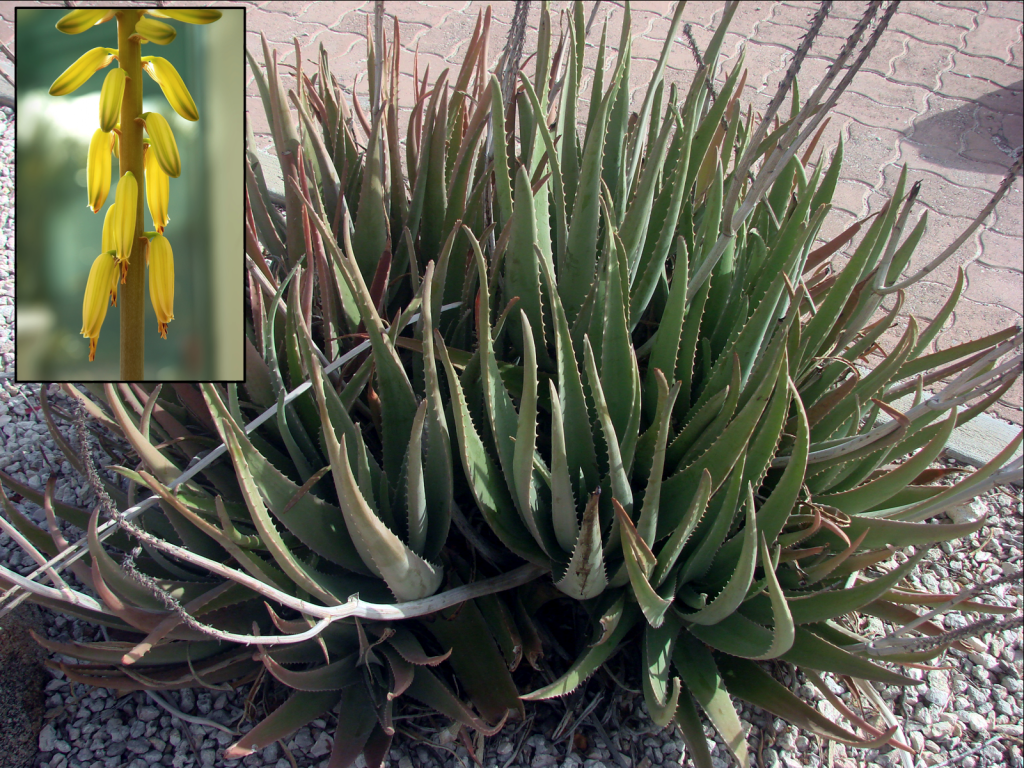
Aloe vera is a perennial succulent with a compact rosette habit, leathery, lanceolate leaves, fleshy gel-filled tissues, and serrated edges. Fully grown plants reach 60–100 cm (24–39 in) in height and slowly form clumps by producing offsets from the base. The leaves are grayish green to bright green and often have faint white markings when young. This is a medium-growing plant that prefers warm climates, plenty of sunlight, and little watering. Its thick, water-storing leaf tissue allows it to continue growing during long periods of water scarcity. The species is also highly adaptable and can thrive in a range of environmental conditions.
Aloe Vera Adaptations & Water Conservation
A waxy outer coating, strong, fibrous roots, and Crassulacean Acid Metabolism (CAM) photosynthesis are some Aloe vera adaptations that reduce water loss. Here are a few more that aid its water conservation:
Aloe vera Structural Adaptations
Aloe vera possesses specialized structural features that support water storage, protection, and efficient resource use in dry environments. Its leaves are organized into distinct tissues, including an outer protective rind, a latex-containing layer, and a central gel-rich region. The central region contains large water-storing parenchyma cells, or hydrenchyma, which allow the leaf to retain substantial amounts of water.
The outer rind consists of several cell layers that protect the inner tissues and provide structural support. Beneath it, the vascular bundles contain xylem and phloem, which transport water, minerals, and nutrients throughout the leaf. The peripheral chlorenchyma contains chlorophyll-bearing cells that carry out photosynthesis, while the central hydrenchyma is primarily specialized for water storage.
The leaf surface also has a thick protective cuticle, which forms a barrier against excessive water loss. The roots are relatively shallow and spreading, enabling the plant to absorb moisture available near the soil surface.
Aloe Vera Physiological Adaptations
Aloe vera has several physiological adaptations that enable it to survive hot and dry conditions with limited water availability. One of its most important adaptations is Crassulacean Acid Metabolism (CAM) photosynthesis. Its stomata open mainly at night, when temperatures are lower and water loss is reduced. Carbon dioxide is absorbed and stored as organic acids, mainly malic acid. During the day, the stomata remain largely closed, and the stored carbon dioxide is released for photosynthesis. This helps reduce water loss through transpiration while maintaining photosynthetic activity.
Under water-deficit conditions, they can also undergo osmotic adjustment by accumulating soluble sugars and other osmolytes. These substances help maintain cellular water balance and support cell function during drought stress. Together, CAM photosynthesis and osmotic adjustment improve water-use efficiency and enable it to maintain physiological functions during prolonged periods of water scarcity.
Aloe Vera Morphological Adaptations
Aloe vera has several morphological features that help it survive in dry environments. It is a succulent, short-stemmed plant with thick, fleshy leaves arranged in a compact rosette. The fleshy leaves provide specialized tissue for water storage, allowing the plant to retain water during periods of limited availability.
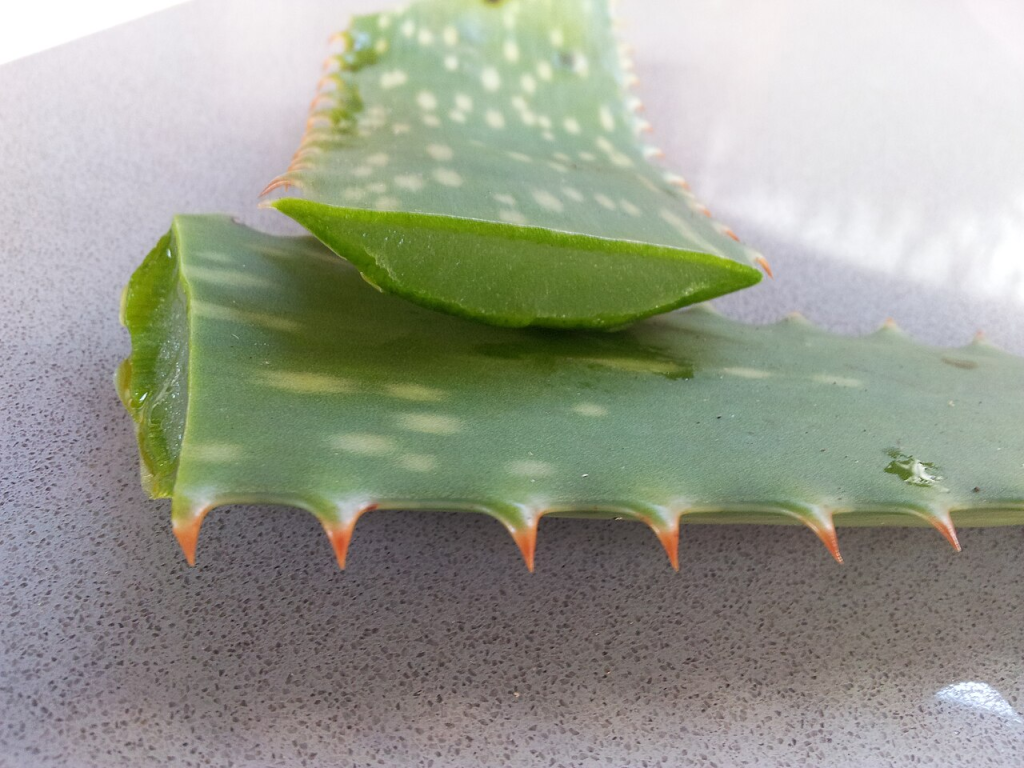
The leaves are generally triangular or lance-shaped, with a broad base that gradually narrows toward a pointed tip. Their margins bear small, serrated teeth that help protect the water-rich leaves from herbivores. The leaf surface is also covered by a protective waxy layer that helps shield the underlying tissues.
Aloe vera usually has a short or nearly stemless growth form, with its leaves clustered close to the ground. It also produces offsets, or “pups,” around the base, enabling vegetative propagation and allowing the plant to spread locally.
Aloe Vera Xerophytic Adaptations
Aloe vera is a succulent xerophyte adapted to survive in hot, dry environments where water availability is limited. Its thick, fleshy leaves contain specialized water-storage tissues that allow the plant to store water during prolonged dry periods.
The leaves are covered by a thick, waxy cuticle that forms a protective barrier and reduces water loss from the leaf surface. Its compact rosette arrangement of fleshy leaves also helps protect the growing region and contributes to water conservation. Sharp teeth along the leaf margins provide protection from herbivores, helping safeguard the plant’s water-rich tissues.
In addition to these structural features, Aloe vera employs physiological mechanisms such as CAM photosynthesis and osmotic adjustment, which improve water-use efficiency and help maintain cellular function during drought. Together, these adaptations enable it to conserve water and survive prolonged periods of water scarcity.
Aloe Vera Behavioral Adaptations
Aloe vera is a plant and does not exhibit behavioral adaptations. Its ability to survive dry environments is instead associated with morphological, structural, physiological, and xerophytic adaptations.
Habitat
Aloe vera occurs naturally in rocky plains, semi-arid areas, coastal habitats, and dry grasslands. However, centuries of cultivation have spread the plant throughout tropical and subtropical regions worldwide. Its ability to withstand drought and adapt to different environmental conditions has contributed to its widespread cultivation.
Low Maintenance Outdoor Plants
Aloe vera is a resilient plant that grows well both indoors and outdoors. It thrives in warm conditions with plenty of bright light and well-draining soil, making it one of the best low maintenance outdoor plants in frost-free climates. Water only when the soil has dried out completely, as overwatering can cause root rot and mushy leaves. Use a well-draining cactus or succulent potting mix and a container with drainage holes to prevent water accumulation. Repot when the roots outgrow the container or emerge from the drainage holes.
Looking for more easy-to-grow plants for your home and garden? Check out other similar low maintenance plants here: Beginner-Friendly Easy-to-Grow Plants
Pollinators & Ecological Role
Aloe vera produces tall flowering stems bearing tubular yellow flowers that attract bees and other pollinating insects. Its flowers provide nectar for pollinators, while mature plants can offer shelter to small reptiles and invertebrates in natural habitats. By supporting pollinators and providing habitat, Aloe Vera can contribute to biodiversity in gardens and dry landscapes.
How to make Aloe Gel
- Select a mature, healthy outer leaf. You can identify these by checking if they are thick, firm, and green in color. These leaves contain more gel.
- Cut as close to the base as possible.
- Make it stand upright for about 10-15 minutes. This helps to drain out the yellow latex called Aloin. It is important to remove the yellow latex, as this can become a skin irritant.
- Wash the leaf. Trim off the spiky edge of the leaf.
- Peel away the green skin.
- Scoop out the inner gel completely.
- Blend it for 10-20 seconds to smooth out the consistency.
- Transfer it to a clean, airtight container and store. Transfer it to a clean, airtight container
How to Preserve Aloe Vera Gel
Choose an airtight container to store the gel. Homemade aloe vera gel can be stored in a refrigerator for 5-7 days. In order to store it for longer, add it to a glass container in small portions. You can thaw it in small batches and use it accordingly.
Propagation and Conservation Fa
Aloe vera reproduces through flowering, pollination, and seed production, as well as strong vegetative propagation through offsets that develop around the parent plant. These offsets can be separated and replanted to produce healthy new plants with the same characteristics. Threats to the species include habitat disturbance, particularly where natural populations are affected. Conservation efforts encourage sustainable cultivation and responsible protection of wild genetic diversity where native populations occur.
Aloe vera is one of the world’s most widely cultivated succulents, valued for its hardiness, architectural beauty, and remarkable ability to thrive in challenging environments. Its water-retaining tissues, CAM photosynthesis, effective reproductive strategies, and drought adaptations demonstrate the remarkable evolutionary success of plants adapted to dry conditions.
Frequently Asked Questions
Yes. Aloe vera is a xerophyte, specifically a succulent xerophyte.
Aloe vera is adapted to dry, water-limited conditions, but it is not restricted to deserts.
No. Aloe vera generally prefers infrequent, thorough watering followed by a period when the soil is allowed to dry.