Overview
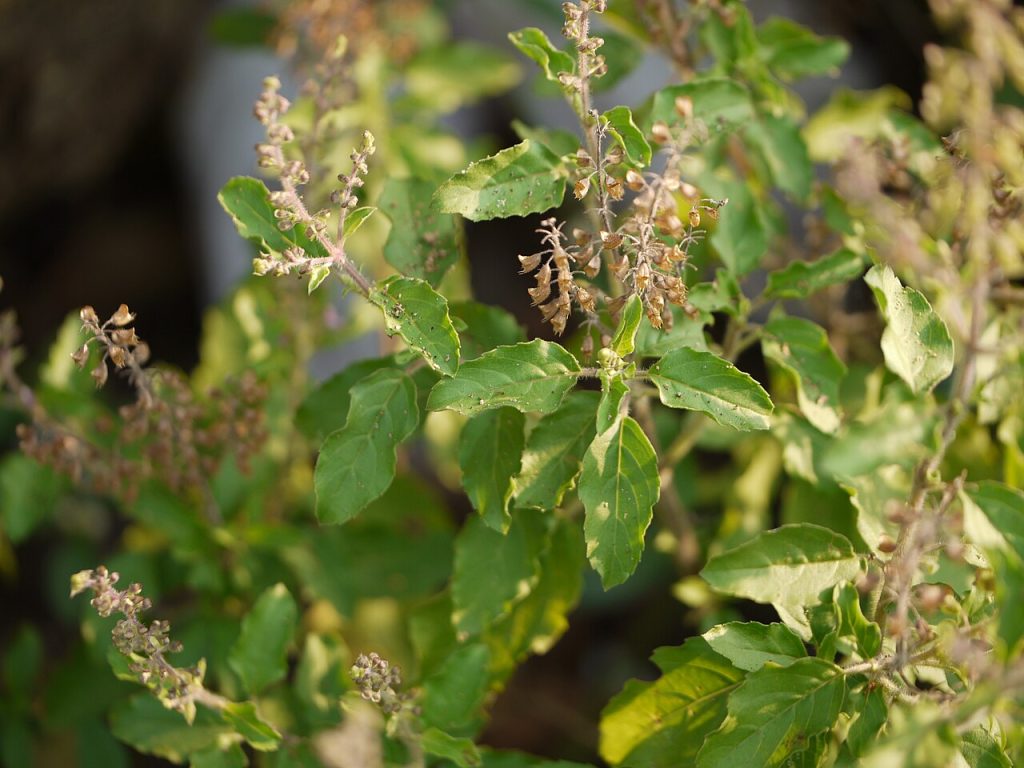
Holy Basil (Ocimum tenuiflorum), an aromatic perennial herb or short-lived subshrub, belongs to the mint family, Lamiaceae. It reaches about a meter in height with upright, branching stems that may become slightly woody at the base. Its small, oval leaves have toothed margins and a strong fragrance produced by aromatic oils in special glands. Depending on the variety, the stems and leaves can range from green to purple.
Slender clusters of tiny pink, purplish-red, or white flowers bloom on upright flowering spikes. In suitable tropical conditions, it will bloom and produce fruit for much of the year. After pollination, the plant produces small brown nutlets, which serve as its seeds.
Regional Names of Holy Basil
| Country /Region | Name |
|---|---|
| India | Holy Basil Tulsi / Tulasī |
| Nepal | Holy Basil Tulsi / Tulasī |
| English Speakers | Sacred basil |
| Sri Lanka | Madhurthala |
Older botanical literature commonly used Ocimum sanctum for the same species, making it a synonym rather than a different plant. Taxonomists adopted O. tenuiflorum as the accepted name as botanical classification and understanding of the species developed over time.
How Holy Basil Grows and Reproduces
Holy Basil occurs naturally across tropical and subtropical Asia, particularly in open and seasonally dry climates. Gardeners now widely grow it around homes, gardens, temples, and other human settlements in warmer regions. It prefers warm, sunny, and well-drained soil. Prolonged exposure to frost can damage the plant.
Gardeners usually grow Holy Basil from seeds, but they can also propagate established plants through suitable vegetative methods. They need consistent moisture to grow, but excessive water can rot the roots and eventually kill the plant. Its tiny flowers provide nectar and pollen for insects like bees and other visiting pollinators.
Holy Basil’s Role in South Asian Culture
Holy Basil has deep roots in South Asian culture and holds an important place in Hindu traditions. Many Hindu households regard it as sacred and traditionally worship the plant. People may grow it in a dedicated space or shrine, and they associate it with purity, devotion, and spiritual significance. People also use it in various religious practices and offerings.
Across Asia, people cultivate the plant not only for its cultural importance but also for food, traditional uses, and aromatic qualities. Its close association with homes, gardens, and temples has made it a familiar plant across many parts of South Asia.
Kew lists the species as widespread and not currently threatened. Its long history of cultivation by humans has contributed to Holy Basil becoming a familiar plant in many warm regions of the tropics.
Holy Basil in Onam Pookkalam Traditions
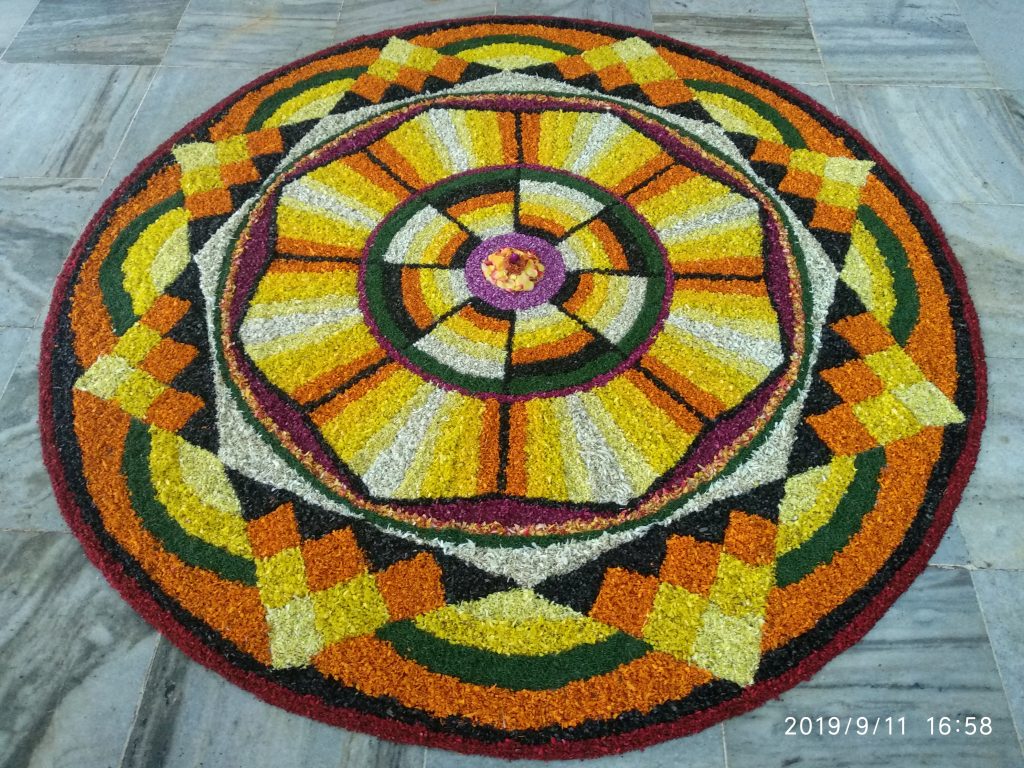
In Kerala, Tulsi has a place in the Onam Pookkalam, the traditional floral decoration prepared during the Onam festival. Additionally, people can add Tulsi to the Pookkalam on Thiruvonam to bring green foliage among the flowers. While other flowers contribute colorful petals, Tulsi adds a leafy texture and a contrasting green element to these arrangements. Its place in the decoration for Onam connects a known garden plant with the seasonal floral traditions of Kerala.
Medicinal Properties of Holy Basil
Holy Basil has a long history of use in traditional South Asian medicine, particularly Ayurveda. Ayurvedic practitioners have used its leaves and other parts in preparations associated with respiratory health, digestion, stress, and general well-being. Researchers have also investigated its potential antioxidant, anti-inflammatory, antimicrobial, and stress-relieving properties, as well as possible effects on blood sugar and cholesterol. However, traditional use does not confirm its effectiveness in treating medical conditions, and researchers need further clinical studies to establish these potential benefits.
Frequently Asked Questions
Tulsi is the common name widely used for Holy Basil, Ocimum tenuiflorum, particularly in South Asia. The species was previously classified under the synonym Ocimum sanctum.
Holy Basil (Ocimum tenuiflorum) is a distinct species from culinary sweet basil (Ocimum basilicum). It is especially known for its strong aroma and cultural and traditional importance in South Asia.
Holy Basil grows best in warm, sunny conditions with well-drained soil. It needs regular moisture but can be damaged by excessive water and prolonged frost.
Holy Basil, an aromatic perennial herb or short-lived subshrub, belongs to the mint family, Lamiaceae.
The Nepali and the Indian name for Holy Basil is Holy Basil Tulsi / Tulasī.