Overview
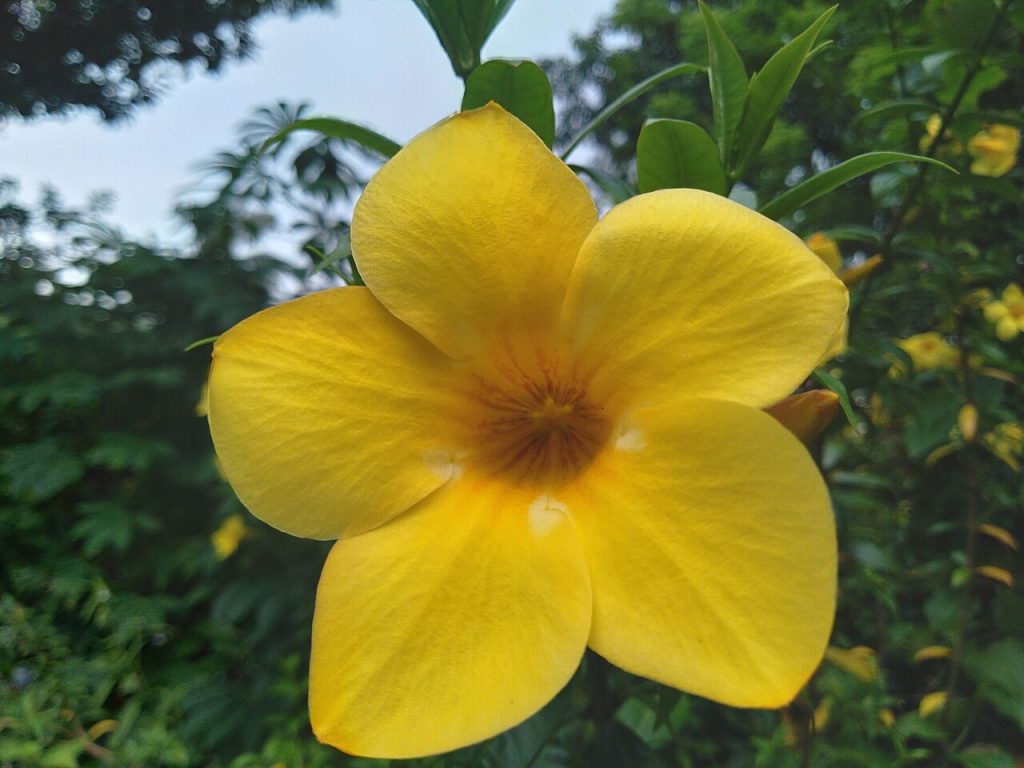
Golden Trumpet is an evergreen perennial flowering plant in the family Apocynaceae. This plant is native to South America, including Brazil, Bolivia, French Guiana, Guyana, Suriname, and Venezuela, and has become widely naturalized in tropical and subtropical regions worldwide.
Regional Names
Golden Trumpet is known by different names in the regions where it grows. In Malayalam, people call it Manjakolambi or Kolaambi, while Tamil sources record Kolaambi and Manjal-patti. Other recorded names include Pilakhanti in Hindi, Allenandatheega in Telugu, Arasinhu in Kannada, and Pivlee Ghunti in Marathi. In the Philippines, people call it Kampanero and Campanilla, while Indonesians use the name Bunga Terompet.
Description
Golden Trumpet typically grows as a compact shrub or climbing plant. If left unpruned, it can reach 2–6 metres in height and spread up to 5 metres. The plant has glossy, leathery, bright green leaves arranged in whorls of three to five. Its most striking feature is its large, trumpet-shaped yellow flowers, which usually have five petals. After flowering, the plant produces dry, spiny fruits called schizocarps. These fruits contain two to four seeds and split open when mature, releasing the seeds.
Care, Cultivation and Propagation of Golden Trumpet
Golden Trumpet thrives in bright light, including some direct sunlight, warm temperatures, and moderately moist, well-drained soil rich in organic matter. It requires moderate watering and grows well in containers, hanging baskets, or as a landscape plant. Regular pruning helps maintain a shrub-like form or control its climbing habit.
Gardeners can propagate Golden Trumpet through stem-tip or other suitable stem cuttings. Cuttings provide a common method for producing new plants, while seeds can also support propagation. Gardeners generally take stem-tip cuttings during the warmer growing period and root them under suitable moist conditions.
Is Golden Trumpet Invasive?
Golden Trumpet is widely cultivated as an ornamental plant for gardens, patios, hedges, and hanging baskets because of its attractive foliage and vibrant flowers. However, it can become invasive in some regions where people have introduced it. In northern Queensland, Australia, escaped plants have spread from gardens into bushland and along roadsides, where they can smother or displace native vegetation. Therefore, gardeners should prevent garden waste and plant material from spreading into natural areas. However, its invasive status varies by region, so people should not consider it invasive everywhere.
Is the Golden Trumpet Flower Poisonous?
The plant also has a history of traditional medicinal use. People have traditionally used different parts for purposes including cathartic and purgative preparations, and folk medicine has reported uses for conditions such as fever, jaundice, colic, malaria, and other ailments. However, Golden Trumpet contains toxic compounds, and people should not attempt medicinal use without appropriate professional guidance. If ingested, it can cause severe diarrhea and vomiting. The milky latex sap can cause contact dermatitis if it comes in contact with bare skin or eyes, causing redness or irritation.
Cultural and Festive Significance
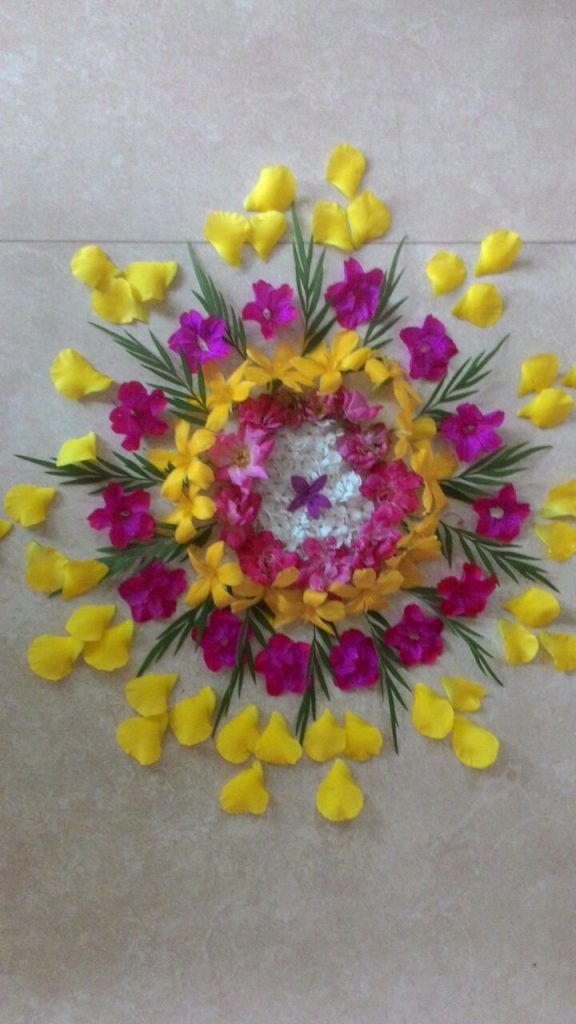
The bright yellow flowers are also associated with Onam floral decorations in India, where people include them among the colorful flowers used to create a traditional pookolam. Their vibrant color adds to the festive appearance of these floral arrangements and complements the many other flowers traditionally gathered for Onam celebrations.
It is also culturally significant in some regions and serves as the official flower of Canóvanas, Puerto Rico. It remains popular in tropical regions such as northern Queensland, Australia.
Frequently Asked Questions
Yes. Golden Trumpet can be propagated through suitable stem cuttings, making it a practical way to produce new plants. Seeds can also be used for propagation under suitable growing conditions.
Yes. The flower (and other parts) is poisonous if ingested, and the milky sap can irritate the skin and eyes.
Golden Trumpet has traditional medicinal uses, but the plant contains toxic compounds. Because of this, it should not be used for self-treatment, and any medicinal use should be guided by a qualified professional.
If you live in a war,. tropical climate, then the golden trumpet is easy to grow. It requires direct sunlight, moist soil (regular watering), well draining soil and cannot tolerate frost. Given all these suitable conditions, the Golden Trumpet can grow vigorously.
Yes, Golden Trumpet is a perennial flowering shrub.