Overview
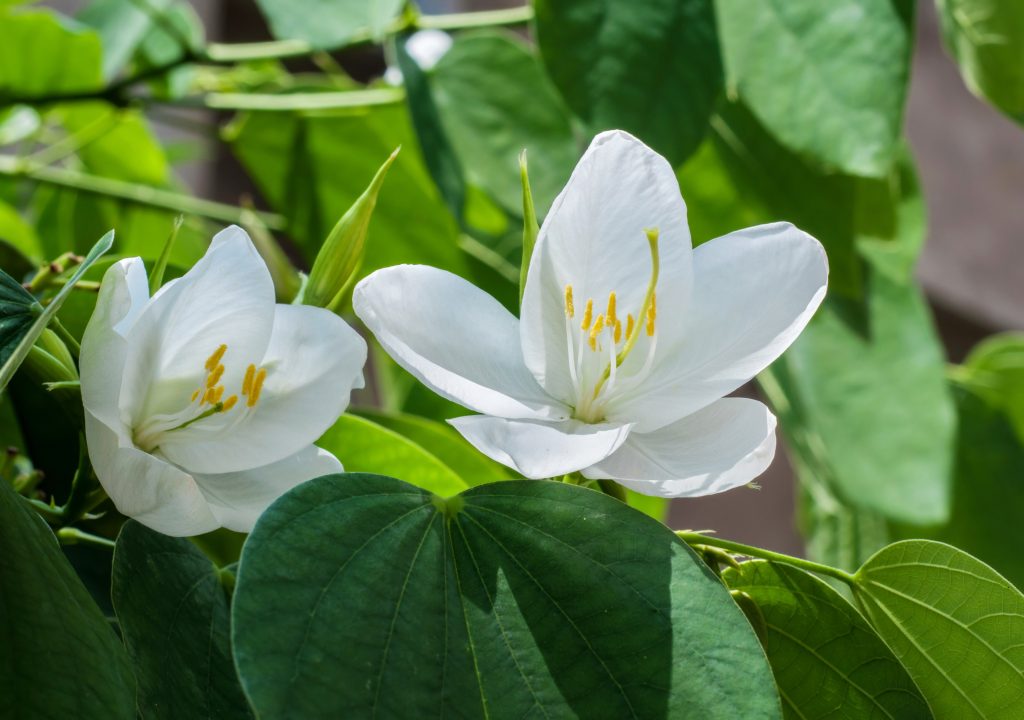
The White Orchid Tree (Bauhinia acuminata) is a beautiful flowering plant or small tree that can brighten a sunny corner of a garden with its pristine white flowers. It grows natively in parts of Southeast Asia, including India, Malaysia, Indonesia, and the Philippines, where warm tropical conditions support its growth.
Regional Names
The White Orchid Tree has several regional names. In India, people call it Safed Kachnar in Hindi, Mandaaram in Malayalam, Kanchan in Kannada, Vellai Mandaarai in Tamil, Mati-katota in Assamese, Chingthrao Angouba in Manipuri, and Shwet Kachnar in Marathi. It also goes by Dwarf White Bauhinia, White Orchid-tree, and Snowy Orchid-tree.
Plant Characteristics
The White Orchid Tree is a small tree that generally grows to about 2–3 metres tall. It has an erect, woody trunk with well-branched growth that forms a rounded canopy. Young stems start green and tender before becoming woody and brown as they mature. Its leaves have a distinctive deep division into two lobes, giving them an appearance similar to an ox’s hoof. They are bright green with a deep cleft in the middle.
The flowers are large, slightly fragrant, and mostly pure white, sometimes with a hint of pale yellow at the base of the petals. They measure about 8–12 cm across and have five delicate petals resembling orchid flowers, giving the tree its common name. Yellow-tipped stamens and a curved green style appear at the centre. The tree flowers mainly from spring to summer. Its fruits are long, narrow pods measuring about 10–15 cm in length. The pods contain several flattened seeds and change from green to brown or black as they mature before splitting open to release the seeds.
The Hong Kong Orchid Tree Connection
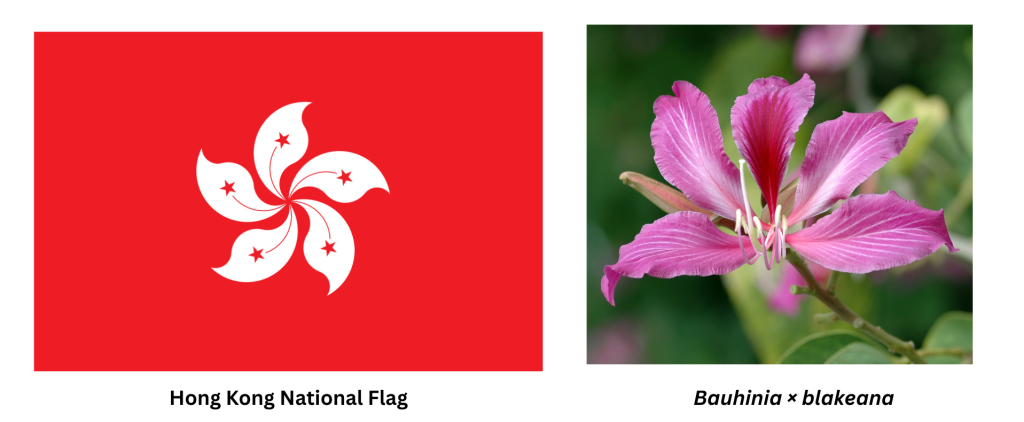
The White Orchid Tree belongs to the genus Bauhinia, which also includes Bauhinia × blakeana, commonly known as the Hong Kong Orchid Tree. Although it is a different plant and species, this close relative serves as the floral emblem of Hong Kong. Its stylized five-petalled flower appears at the centre of the Hong Kong flag.
Growth and Care
White Orchid Trees thrive in full sun to partial shade and prefer well-drained soil. Regular watering benefits the plant during dry periods, although the soil should dry slightly between waterings. Pruning can maintain the tree’s shape, remove dead or damaged branches, and encourage flowering. Gardeners can propagate the plant through seeds or stem cuttings.
Uses and Significance
White Orchid Trees are primarily grown as ornamental plants because of their attractive leaves and beautiful white flowers. The plant also has traditional medicinal uses, with reports of Bauhinia acuminata preparations for coughs, urinary problems, ulcers, and hypertension. These are traditional uses and should not be treated as proven medical treatments.
Traditional Medicinal Uses
People have traditionally used different parts of Bauhinia acuminata in herbal practices. Reports describe its use for conditions such as coughs, urinary problems, ulcers, and hypertension. However, traditional use does not establish safety or effectiveness, so people should not use the plant for self-treatment without appropriate professional guidance. The tree also has cultural significance during Onam, when its flowers contribute to the festive floral traditions of Kerala.
Frequently Asked Questions
No. Despite its orchid-like flowers, the White Orchid Tree belongs to the legume family Fabaceae. Its flowers only resemble orchids, which is why it is commonly given the name White Orchid Tree.
The White Orchid Tree mainly flowers from spring to summer, producing large, showy white blooms. Providing plenty of sunlight, suitable soil, and regular care can support healthy growth and flowering.