What Makes Marigold So Distinctive?
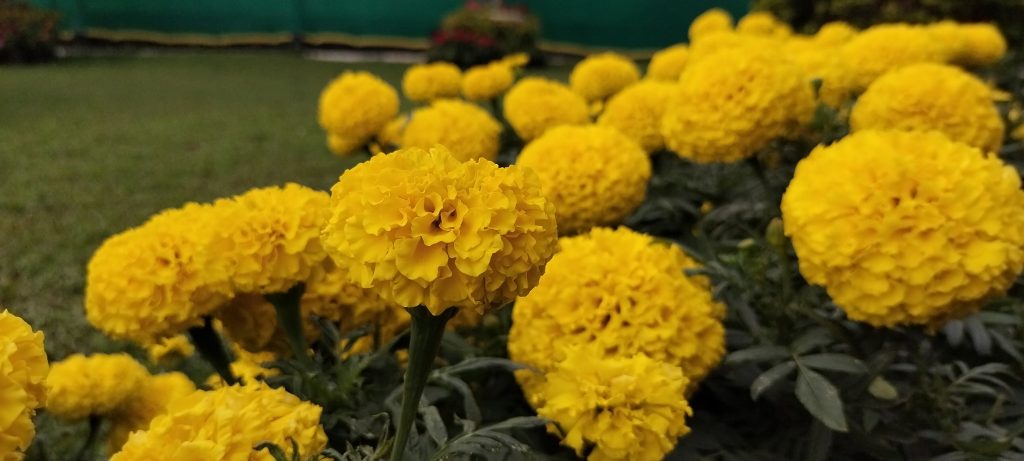
Marigold is an annual flowering herb in the Asteraceae, or daisy, family. Its scientific name is Tagetes erecta. It usually grows 0.4 – 1.8 m tall and develops upright, branching stems with finely divided leaves. The leaves contain narrow leaflets and emit a strong smell.
The large flower heads are solitary on long peduncles and are usually golden yellow, yellow, or orange in the cultivated forms. Each garden marigold flower head contains many tiny disk flowers that create a dense appearance, surrounded by prominent ray flowers.
Volatile compounds in the foliage and other plant tissues produce the pungent aroma in the marigold. Its flower heads attract bees, butterflies, and other insects that visit for nectar and pollen, while its profuse blooms add seasonal color to borders, beds, containers, pathways, and landscape plantings. After pollination, the plant produces slender black achenes containing the next generation of seeds. The characteristic pappus of scales and bristles on its fruits helps botanists identify the species.
Regional Names of Marigold
It has different names around the world. African marigold, Aztec marigold, Mexican marigold, and American marigold are the common names in English. In Mexico, where the species is native, people commonly call it cempasúchil, cempohualxochitl, or flor de muerto, meaning “flower of the dead.” In India, regional names include chendumalli or Jamanthi in Malayalam and banthipuvvu in Telugu. Other names used around the world include rose d’Inde in French, Aufrechte Studentenblume in German, senjugiku in Japanese, barhattsy pryamostoyachie in Russian, wan shou ju in Chinese, and dao rueang in Thai.
How Marigold Grows and Blooms
Marigold prefers fertile, well-drained soil that does not become waterlogged and grows well in full sun. Propagation through seeds, which germinate easily in warm conditions. Once seedlings develop several true leaves, growers can move them. Regular watering helps young plants continue growing during dry periods. Given enough warmth, sun, and moisture, plants may continue to bloom for many months. After flowering and pollination, they produce slender black achenes containing seeds. Its rapid growth and ability to produce abundant flowers within a relatively short growing cycle also make it valuable for commercial flower production.
Marigold Flower Origin: From Wild Plant to Garden Favorite
Tagetes erecta is native to Mexico and Central America. In the 16th century, Spanish and Portuguese explorers found the flowers and brought seeds back to Europe. In Europe, people placed these bright flowers on altars dedicated to the Virgin Mary and called them “Mary’s gold” (later shortened to marigold)
Now, it grows widely across many parts of the world, including India and other tropical and subtropical regions. Indigenous cultivation and later horticultural selection have resulted in numerous forms valued for their flower color, size, and shape. Today, growers cultivate marigolds extensively as ornamental plants and for cut and loose flowers. Outside India, T. erecta also has cultural and horticultural uses, including ornamental planting and the production of natural dyes. Its rapid growth, long flowering period, bright flower heads, and adaptability have helped make it one of the most familiar ornamental marigolds in warm gardens.
Cultivars and Related Marigolds
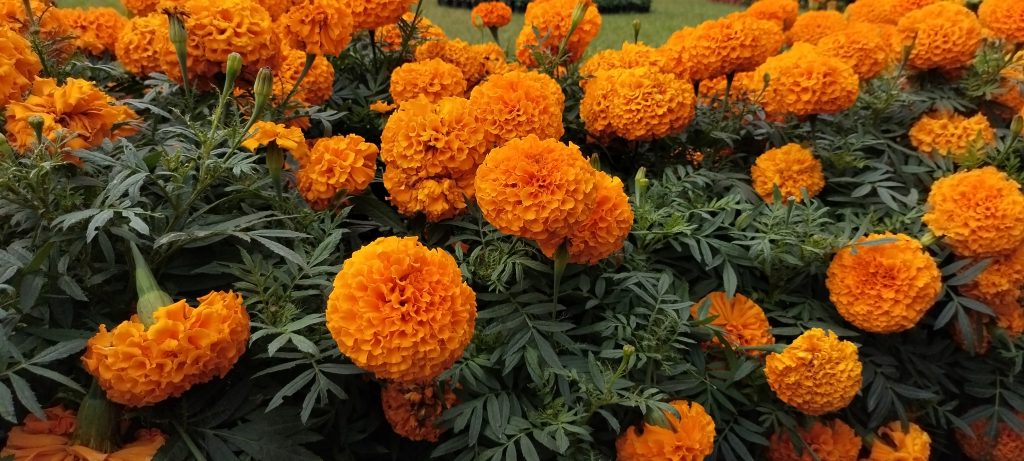
Horticulturists have developed many marigold cultivars with differences in plant height, flower size, color, and flower form. The African or Aztec marigold is Tagetes erecta, while the French marigold is Tagetes patula. Although botanists have traditionally treated them as separate species, some have debated this classification. In fact, Kew’s Plants of the World Online currently treats Tagetes patula as a synonym of Tagetes erecta, while other botanical and horticultural sources continue to use T. patula as a separate species. This taxonomic disagreement reflects the similarities and variation found among cultivated marigolds.
Cultural Significance
México: Día de los Muertos
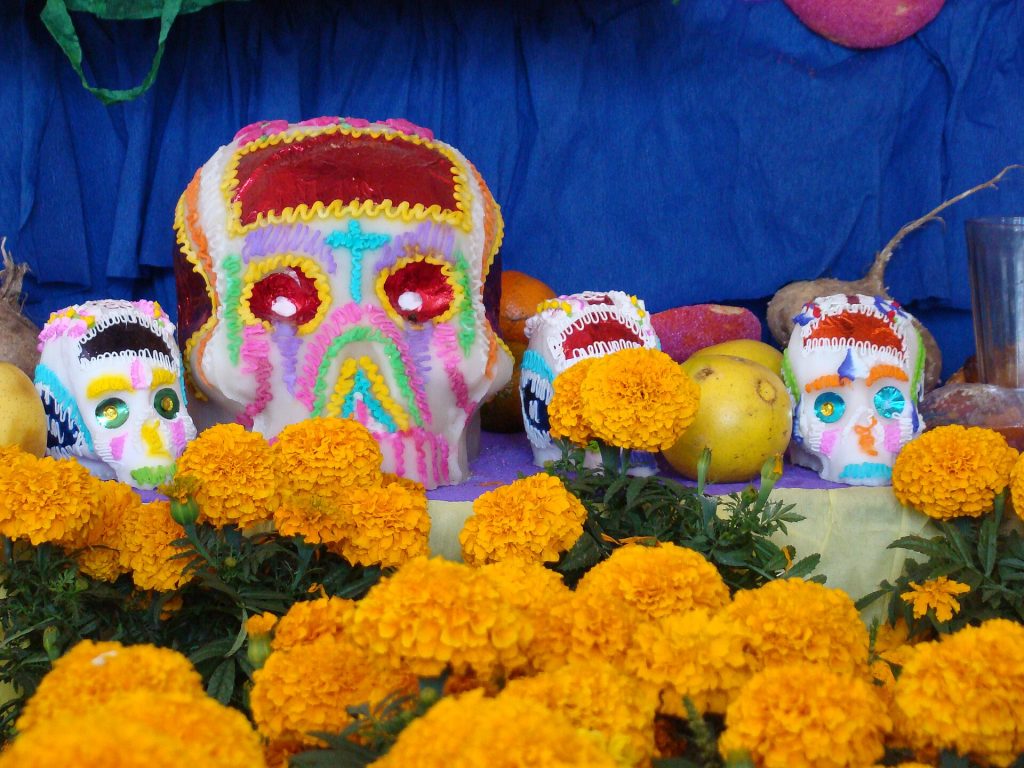
In Mexico, marigold has a particularly strong cultural connection with Día de los Muertos, or Day of the Dead. Tagetes erecta, known as cempasúchil, traditionally decorates altars, graves, and ofrendas during the celebration. People also call it flor de muerto, or “flower of the dead.” Its bright flowers and distinctive fragrance have made it an enduring symbol of remembrance and the celebration of deceased loved ones.
India: Onam
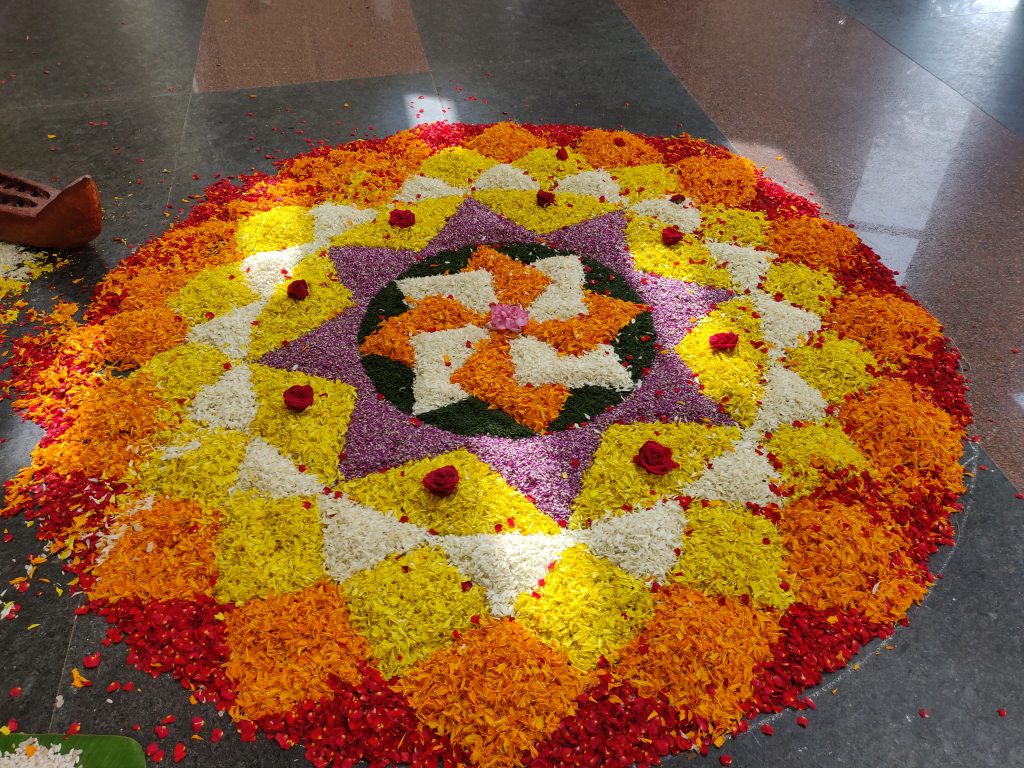
In Kerala, marigold has become increasingly associated with Onam through the commercial flower trade and its use in modern Pookkalams. Its bright yellow and orange flowers provide strong colors for creating decorative patterns from flower petals. Although traditional Pookkalams relied mainly on locally available flowers, modern designs now commonly incorporate commercially cultivated flowers such as marigolds.
Diwali and Other Festivals
Across India, people widely use marigolds for garlands, religious offerings, household decoration, weddings, and festivals. Growers cultivate large quantities to meet seasonal demand, especially during Diwali and Vijayadashami. In other South Asian countries, people also use them in ceremonies and decorations. India and Thailand widely cultivate Tagetes, while flower markets supply marigolds for daily rituals, weddings, festivals, and religious occasions.
Ukraine: A National and Folk Symbol
In Ukraine, chornobryvtsi is the name for marigold and holds an important place as a national and folk symbol. The tradition encompasses several Tagetes species, including T. erecta, T. patula, and signet marigold. Chornobryvtsi appear in Ukrainian songs, poems, and stories, where they represent home, family, and Ukrainian cultural identity. Therefore, the Ukrainian symbolism applies to the genus Tagetes and several marigold species, rather than specifically to Tagetes erecta.
Medicinal Uses
Marigold has a long history of traditional medicinal use, particularly in Mexico and other parts of its native range. Traditional medicine practitioners have used Tagetes erecta for digestive complaints such as stomach pain, diarrhea, colic, vomiting, indigestion, and intestinal parasites. They have also used it for respiratory complaints, including colds, flu, bronchitis, and nasal congestion. Its flowers contain carotenoids, particularly lutein and other xanthophylls, which contribute to their yellow and orange colors. These traditional uses and laboratory findings do not, however, establish marigold as a proven treatment for medical conditions.
Frequently Asked Questions
African marigold usually refers to Tagetes erecta, while French marigold generally refers to Tagetes patula. They differ in typical plant size and flower characteristics, although their taxonomic classification has been debated.
The characteristic scent comes from volatile compounds produced by the plant's leaves and other tissues. The aroma is particularly noticeable when the foliage is touched or crushed.
No. Marigold is native to Mexico and Central America. It was brought to India in the 16th or 17th century by the Spanish and Portuguese traders.
Banthi poolu or Banthipoovu is the Telugu name for Marigold.