Description
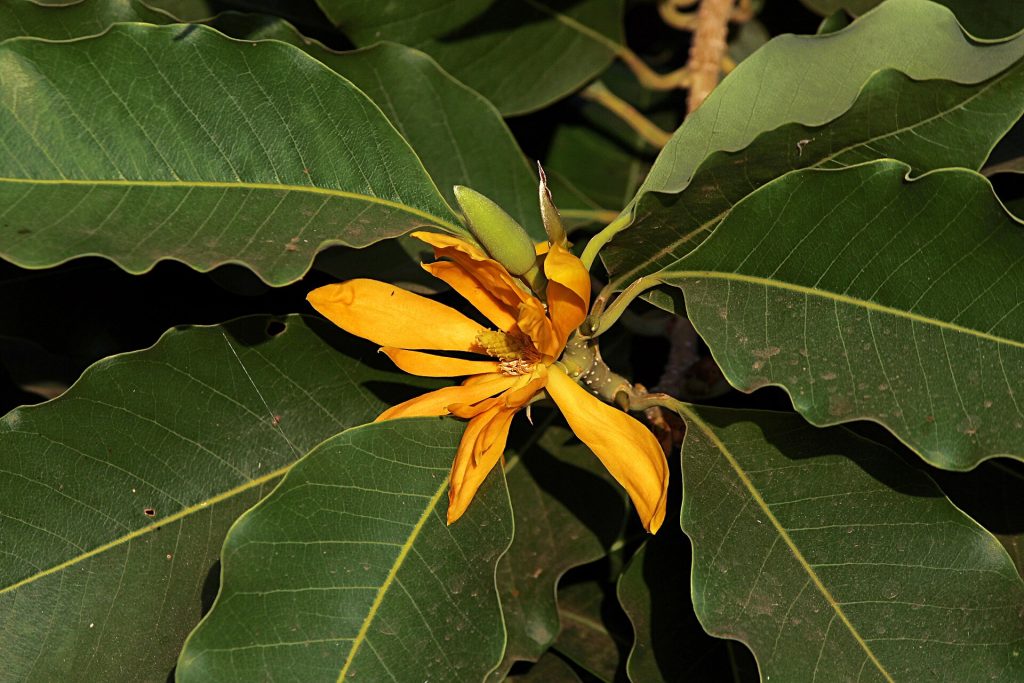
Champak, formerly known as Michelia champaca, is a fragrant evergreen tree belonging to the magnolia family, Magnoliaceae. It is native to South and Southeast Asia and southern China, where it grows in tropical and subtropical forests. In its natural range, the tree can reach about 50 meters in height, although cultivated trees are generally smaller.
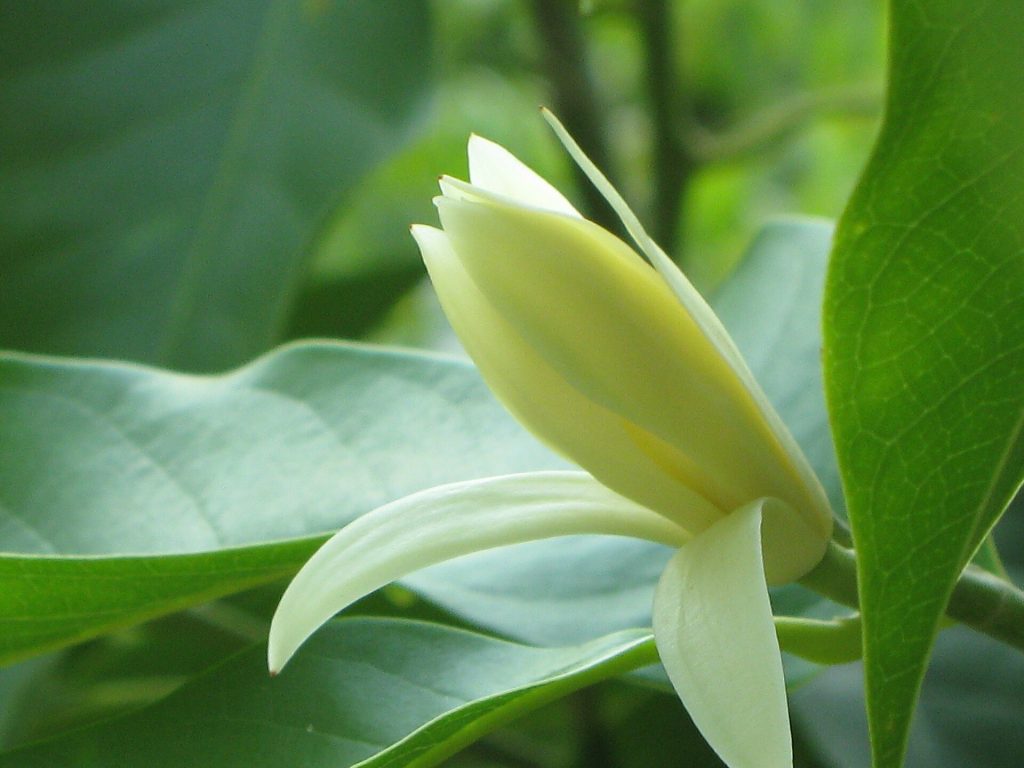
The tree has a graceful, upright form with a dense green canopy. Its leaves are large, glossy, simple, and elongated, with smooth margins. The most distinctive feature is its highly fragrant flowers, which range from creamy yellow and golden yellow to orange. The silky-looking flowers have narrow, strap-shaped tepals and produce a rich, sweet fragrance. They generally bloom from June to September, although flowering can continue for much of the year in warm tropical climates.
Growing conditions
It grows best in warm, humid tropical and subtropical climates. It prefers full sun to partial shade with fertile, moist but well-drained soil, particularly loamy soil. Regular watering is important, especially for young plants. Trim dead/dried branches annually. Propagation through stem cuttings or seeds.
Vernacular Names of Champak
Joy Perfume Tree is a popular name for champak in English, a name that reflects its importance in perfumery. People in China call it Huang Lan, while people in Thailand call it Chan. In Indonesia and Malaysia, people commonly call it Cempaka Kuning, meaning “yellow cempaka.” In Aceh, Indonesia, people call the flower Jeumpa or Bungong Jeumpa, and it holds particular cultural importance.
Different names across India refer to Champak. People in Hindi-speaking regions call it Champak or Champa, while its Sanskrit name is Champaka. In Bengali, people call it Champa or Swarnachampa, and in Marathi, people call it Sonchafa, Sonchampa, or Pivla-champa. Across southern India, it has several regional names: Sambagam or Shenbagam in Tamil, Chembakam or Champakam in Malayalam, Sampige in Kannada, and Sampangi or Champakamu in Telugu. Other regional names include Champa in Odia, Rae-champo in Gujarati, and Tita-sopa in Assamese.
Medical and other uses
Champak has a long history of use in traditional medicine systems, including Ayurveda and other South and Southeast Asian traditions. People have traditionally used different parts of the plant to prepare remedies for conditions such as fever, headaches, digestive complaints, urinary problems, and rheumatic pain. Traditional sources also describe the use of flowers, bark, leaves, seeds, and roots for various purposes. However, many of these medicinal applications are based on traditional practice, and evidence from modern clinical studies remains limited.
The fragrance is the main value of the flower. People use them to make perfumes, fragrant oils, and garlands, and they often wear them in their hair. Champak flowers have also contributed to the fragrance industry, including the famous perfume Joy by Jean Patou.
The tree also has practical uses. People use its finely textured wood for furniture, cabinetry, and construction. They also widely plant the tree as an ornamental species in gardens, parks, temple grounds, and urban landscapes. Its fragrant flowers attract pollinators, while birds feed on its seeds and help disperse them.
Cultural and religious significance
India
The species has a long history of cultural and religious importance across South and Southeast Asia. In India, people highly value its golden, fragrant flowers for pooja, temple offerings, religious rituals, and garlands. They also use the flowers as natural adornments and traditionally wear them in their hair. It also has value for its ornamental and festive appeal. People commonly plant the trees in temple grounds, gardens, parks, compounds, and along avenues.
The flowers are especially valued during the monsoon season and are commonly sold in flower markets for religious offerings and festive decorations, including those for Ganesh Chaturthi.
Buddhism
In Buddhist traditions, people associate Champak with Aththadassi Buddha, who is said to have attained enlightenment beneath the tree. Tibetan tradition also associates the Champak with the future Buddha.
Indonesia
Champak holds particular cultural importance in Aceh, Indonesia. The flower serves as a symbol of Aceh, and its beauty and fragrance also bring value. People commonly use it in traditional ceremonies and as a decorative flower. Its cultural significance also appears in the popular Acehnese folk song Bungong Jeumpa.
Frequently Asked Questions
Champak flowers are light yellow when they first open and gradually become orange-yellow as they mature.
Champak has intensely fragrant flowers that have long been valued for perfumery. The name “Joy Perfume Tree” is associated with the use of its floral fragrance in perfume-making.