Pomegranate
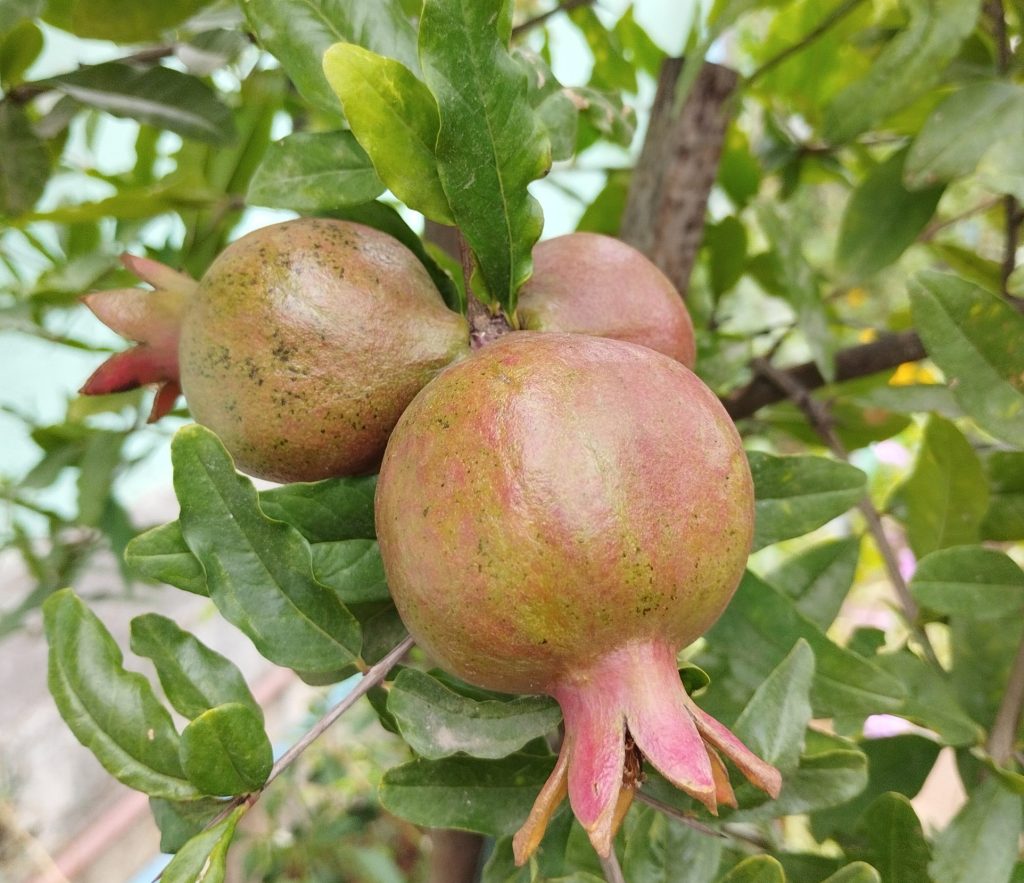
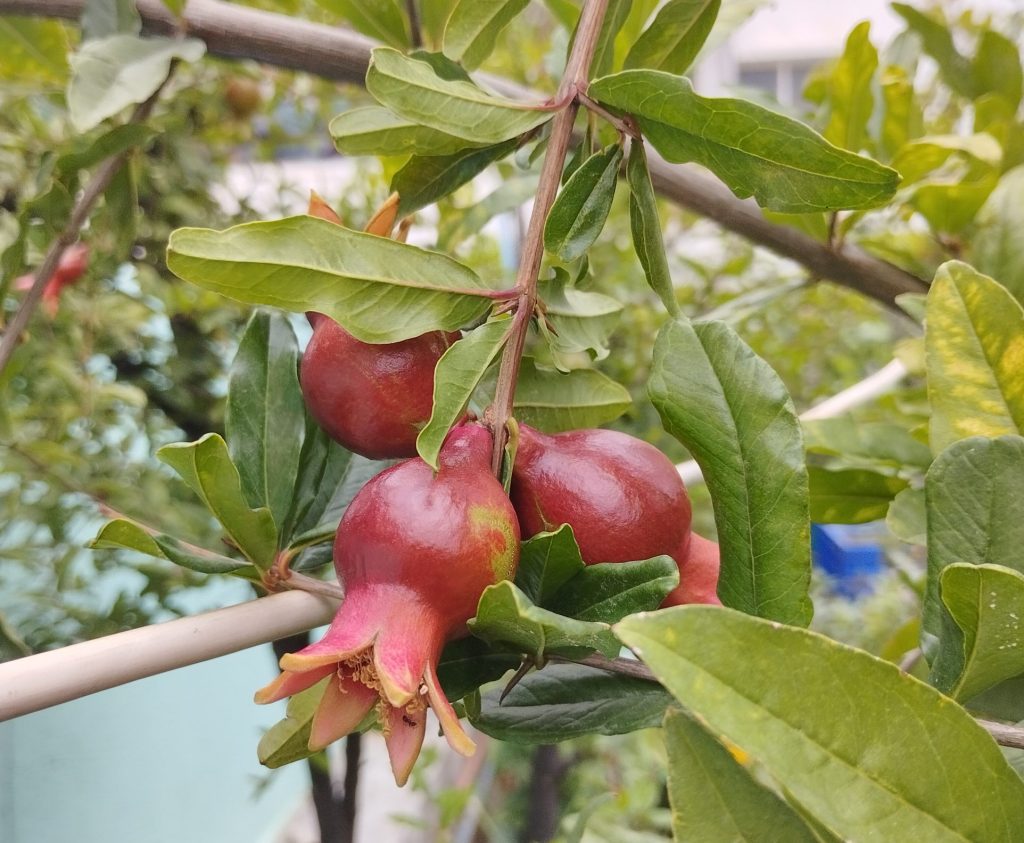
Pomegranate is a deciduous or semi-evergreen shrub that can become a small tree under suitable conditions. It normally grows to around 5–8 meters tall and produces many branches from the base. Young stems may form short spines. Mature bark is grayish and textured. The leaves are narrow and glossy, typically growing opposite each other or in small clusters on young branches.
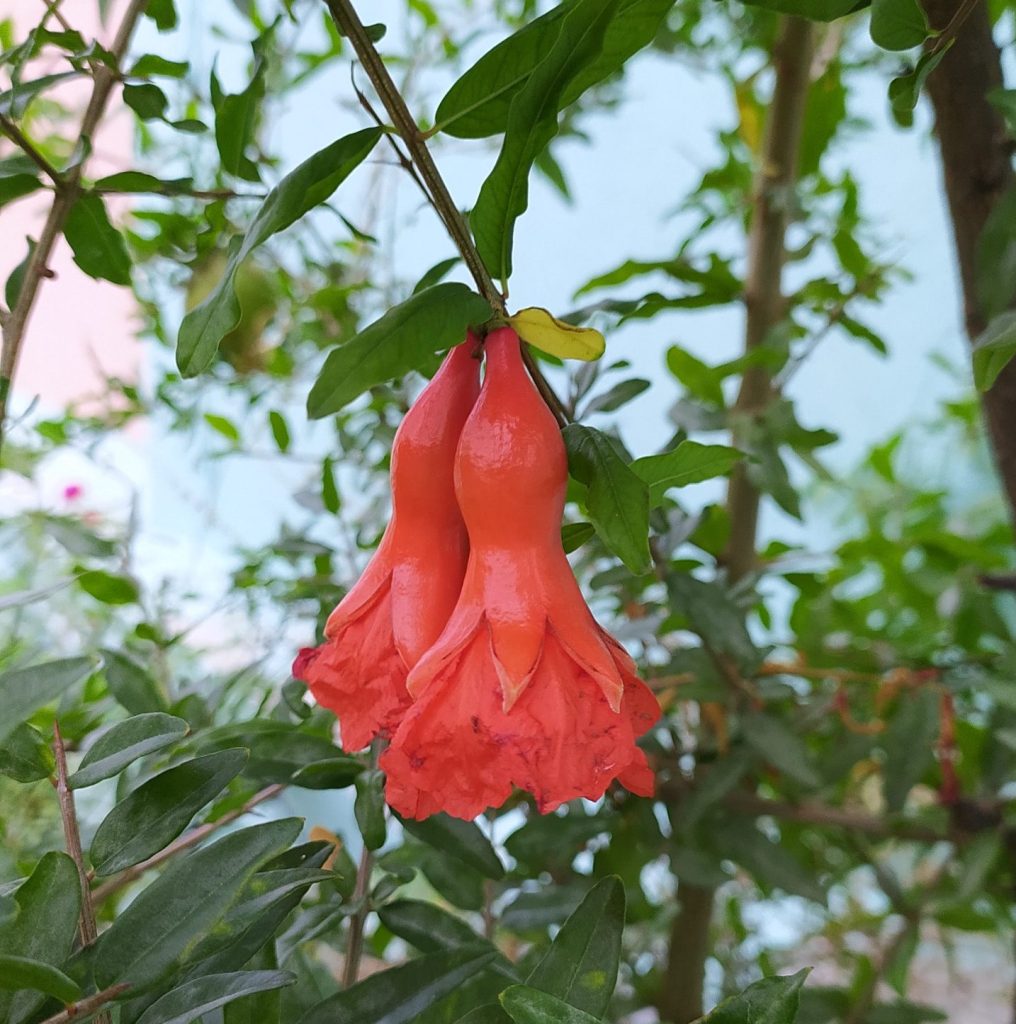
The flowers are usually bright red to orange-red with thick waxy petals surrounding prominent stamens. Some cultivated varieties produce flowers of varying shades and shapes. The rounded fruit develops a tough outer covering which changes color as it matures. Inside, the fruit has several chambers with many juicy structures called arils. Each aril encloses a seed in translucent, brightly colored tissue containing water, sugars, acids, and other compounds.
The Jewel-Like Structure of Pomegranate Fruit
A particularly impressive botanical feature is the complex internal structure of the fruit, where many seed-bearing chambers develop within one protective shell. What is also interesting is that the edible arils are not the seeds themselves, but fleshy seed coats called sarcotestas.
Cultural Significance of Pomegranate
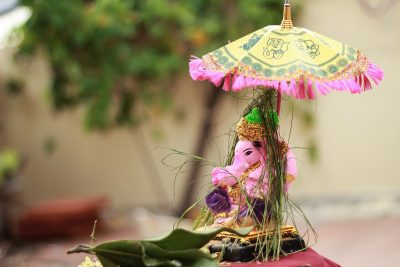
Some Indian communities use the pomegranate flowers and fruit in food offerings and religious practices (including in festive settings), although its use during Ganesh Chaturthi varies by region and household tradition.
Symbolism and Tradition
Pomegranate has a long cultural history in several civilizations and is commonly associated with fertility, prosperity, abundance, and life because of its many seeds. Its symbolism appears in Persian, Greek, Roman, Jewish, Christian, and Islamic traditions, although the meaning differs between cultures.
Indian Cultural Associations
In India, people value pomegranate both as a food and as a culturally significant fruit. Its use in religious offerings varies according to regional customs and particular traditions rather than following one universal practice.
Names of Pomegranate in Different Languages
The fruit is called Anar in Hindi and Urdu, Dalim in Bengali and Assamese, Dalimb in Marathi, and Maathulam in Tamil. In Telugu, people commonly call it Danimma, while Kannada uses Daalimbe. In Sanskrit, names include Dadima and Dantabija. Internationally, people know it as Pomegranate in English, Grenade in French, Granada in Spanish, Melagrana in Italian, Granatapfel in German, Romã in Portuguese, and Nar in Persian. Botanical literature worldwide uses the scientific name Punica granatum.
Pollination and Seed Dispersal
The species originates from northeast Turkey and Iran, Iraq, Afghanistan, and Pakistan, and people widely cultivate it elsewhere. It adapts well to warm temperate and subtropical climates and grows in dry valleys, gardens, orchards, hillsides, and semi-arid agricultural areas. The pomegranate prefers full sun, well-draining soil, and moderate irrigation for best results. Mature plants withstand drought better than prolonged waterlogging and can withstand seasonal temperature variation. Flowering often occurs in warm periods, with fruit development following successful pollination. Bees and other flower-visiting insects frequent the flowers and assist in pollination. Birds and mammals may eat ripe fruit and help disperse seeds after eating.
Uses of Pomegranate
Traditional Medicine Uses
People have used pomegranate as food and medicine for a long time in traditional medicine, using the fruit, rinds, flowers, and other parts of the plant. Recent research has identified polyphenols, tannins, anthocyanins, and other bioactive compounds in various tissues. Researchers have studied its antioxidant, anti-inflammatory, metabolic, and cardiovascular effects, but results vary according to the preparation and the clinical context.
Culinary Uses
People eat pomegranate arils fresh and also use them in juices, salads, desserts, sauces, chutneys, and other dishes. The juice and seeds are especially valued for their sweet-tart flavor, while dried seeds are used as a spice in some cuisines.
Other Uses
People have traditionally used pomegranate peel, flowers, and other plant parts for dyes, tanning, and other practical purposes. People also cultivate the plant as an ornamental shrub or small tree because of its attractive flowers and colorful fruits. The plant prefers full sun, rich, well-drained soil, moderate watering, and dry conditions while the fruit is ripening. People generally propagate it by seed, hardwood cuttings, or other horticultural techniques.
Frequently Asked Questions
Pomegranate plants can produce different types of flowers. Some flowers are mainly male and drop without developing into fruit, while other flowers are fertile and can develop into pomegranates after successful pollination.
A single pomegranate can contain hundreds of arils, each surrounding a seed. This unusual abundance of seeds is one reason the fruit has been associated with fertility and abundance in many cultures.