Emerald Wings in Motion
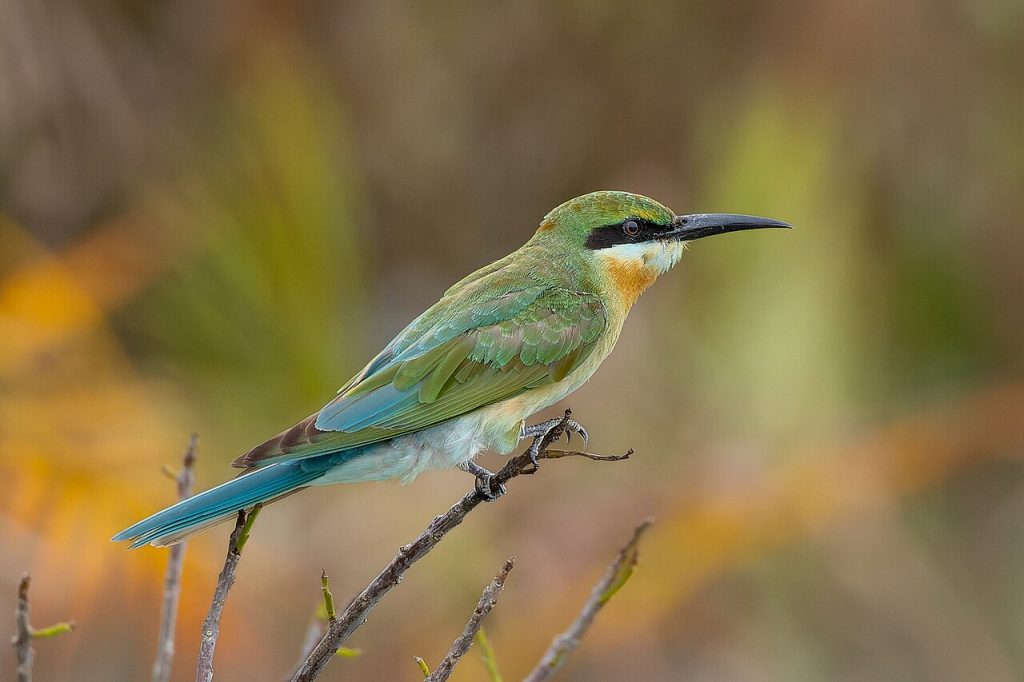
The Blue-tailed Bee-eater is a beautiful and elegant bird, with a slim build, colorful green plumage, and long central tail feathers. The adult has a chestnut throat, black eye stripe and a bright blue tail, which is the source of the common name of the species. It has a long, slightly curved bill, well adapted to catch flying insects with deadly precision. Its slender pointed wings provide it with superb maneuverability, enabling it to make fast aerial chases over open terrain.
Masters of the Aerial Hunt
This species is mostly active in the air, performing agile twists and turns while in pursuit of its prey. Blue-tailed bee-eaters feed mainly on insects, including bees, wasps, dragonflies, butterflies and other flying insects. They have a remarkable feeding adaptation in that they will often dash stinging insects against a perch several times to remove the venom sacs and stingers before consumption. They hunt from exposed branches, flying quickly out to catch passing insects and then returning to the same perch.
Journeys Across Open Skies
The species occupies open countryside, riverbanks, wetlands, cultivated fields, and forest edges where insect populations remain abundant. Many populations are migratory and undertake seasonal journeys between breeding and wintering grounds. Large flocks sometimes gather during migration, creating spectacular aerial displays.
Life Beneath the Banks
Breeding pairs use their bills and feet to dig nesting tunnels in sandy banks; these tunnels are often longer than a meter and end in a chamber where the eggs are laid. The underground location helps to maintain a relatively constant temperature as well as providing some protection from the environment. Both parents take turns incubating the eggs and feeding the developing chicks. The young remain in the nesting chamber until they are sufficiently developed to fly.
Strength in Numbers
Its natural predators are snakes, monitor lizards, birds of prey and small mammals that have access to nesting colonies. Colonial nesting enhances collective vigilance and the detection of potential threats. An interesting feature of this species is its ability to eat hundreds of insects in one day. Another interesting fact is that migration flocks may contain large numbers of individuals, which travel together. The blue-tailed bee-eater is one of the most interesting insect-eating birds in Asia, with bright colours, skilful flying and unique feeding methods.