Rangoon Creeper Flowers: Color-Changing Beauty
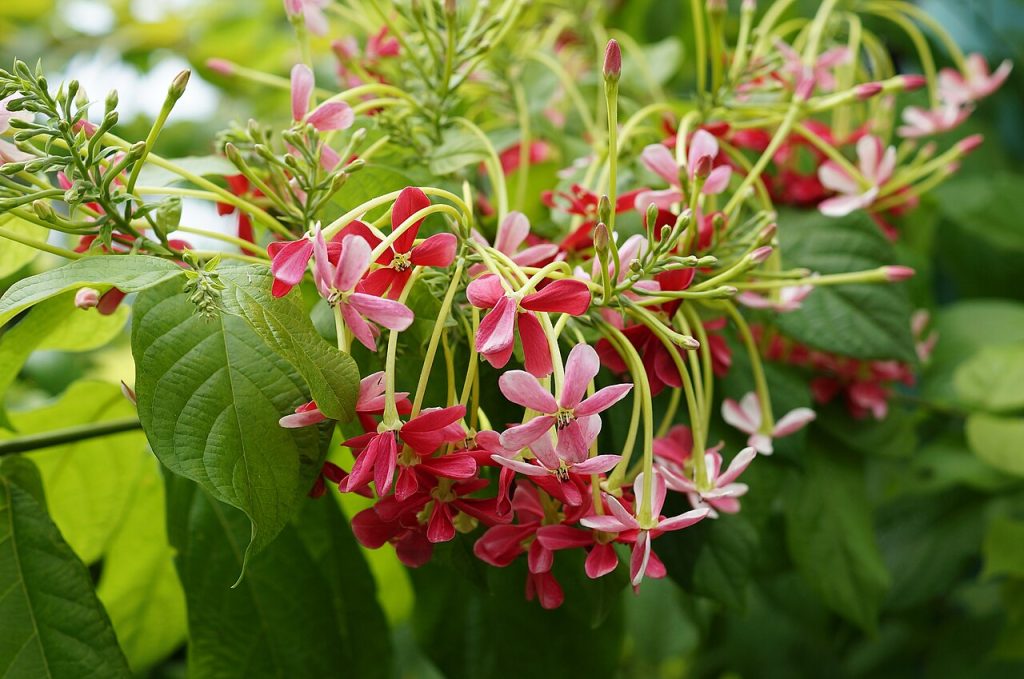
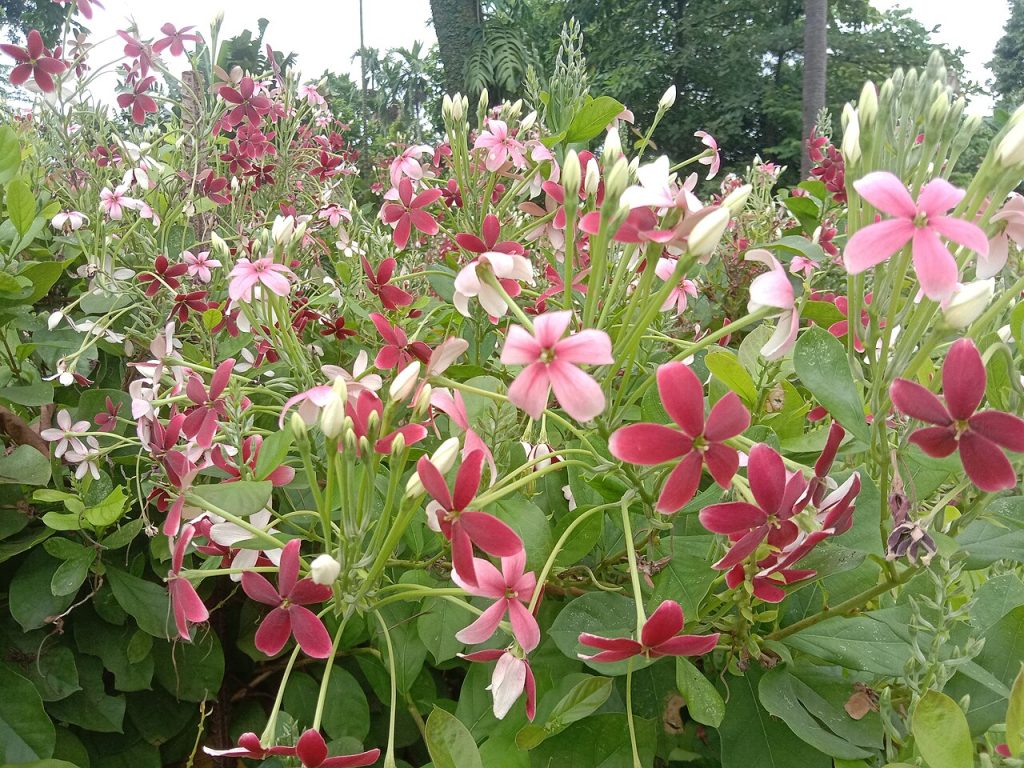
Rangoon Creeper, also known as Burma Creeper, is a vigorous woody vine. It has climbing stems, glossy green leaves, and fragrant tubular flowers in attractive clusters. Its twining growth habit allows it to grow several meters across trellises, fences, trees, and garden structures. The leaves are oval, smooth, and opposite on flexible stems that gradually become woody with age. During warm seasons, flower clusters sprout repeatedly. They show an amazing change of color from white to pink and finally deep red. Strong root systems support rapid growth and establishment in tropical and subtropical environments. Under suitable conditions, Rangoon Creeper grows fast and can develop extensive vegetative coverage in a short time. Flowers usually appear from spring to fall, but in frost-free areas they may bloom for longer periods.
Local Names for Rangoon Vine
Its common name “Rangoon Creeper” pays homage to Rangoon, Burma’s former capital city. Now Burma is officially known as Myanmar, and Rangoon was renamed Yangon. Regional names for the Rangoon Creeper include Melati in Kannada, Madhumalti in Hindi, and Irangun malli in Tamil. Its name in Malayalam is Pullanni, and it is called Rodha Manoharam in Telugu. In Filipino, they call it Niyog-niyogan, and in Spanish, it is Quiscual.
Pollinators and Ecological Benefits
Rangoon Creeper provides important nectar resources and contributes to biodiversity in cultivated and semi-natural habitats. During the flowering period, bees, butterflies, moths, and other nectar-feeding insects frequently visit the flowers. The fragrance becomes especially noticeable in the evening, helping attract nocturnal pollinators. The production of large amounts of nectar that supports diverse pollinator communities is a notable ecological attribute of the species.
In addition, its dense foliage provides sheltering cover for small animals and creates microhabitats that contribute to ecological complexity. These interactions demonstrate how ornamental plants can also support wildlife and contribute to local ecosystems.
Rangoon Vine Reproduction and Natural Habitat
Rangoon Creeper naturally grows in tropical forests, woodland margins, riverbanks, and disturbed habitats across South and Southeast Asia. Reproduction occurs through flowering, pollination, seed production, and vegetative propagation. After pollination, the flowers develop into long fruits containing seeds. These seeds can grow into new plants under suitable conditions. Rangoon Creeper also propagates easily from cuttings because its stems root readily.
Possible threats include habitat degradation, land-use changes, prolonged drought, and other environmental pressures affecting native ecosystems. Conservation efforts therefore focus on preserving suitable habitats and encouraging responsible cultivation in appropriate areas.
Rangoon Creeper Uses
Mostly grown for its ornamental value, the Rangoon Vine also has many medicinal uses. It is said to be useful in treating ringworm infection, rickettsia, common cold, loose bowels, and cough. The roots can be used to treat parasitic worm infections and diarrhea. It may also alleviate rheumatism. Young children, when exposed to steamed leaves and seeds of the Rangoon creeper, have been known to cough less.
Indigenous people of the Philippines apply hot poultices of the leaves to treat snake and animal bites. Folklore also suggests using the leaves to cure headaches and crushing them and applying them on the skin to treat skin diseases.
Plant Communication and Tropical Biodiversity
Rangoon Creeper remains highly appreciated for its ornamental beauty, long flowering period, and ecological value. Its color-changing flowers, fragrant blooms, and interactions with wildlife illustrate the remarkable adaptations found among tropical climbing plants. The changing flower colors may also function as a visual signal that helps pollinators identify flowers at different stages of their reproductive development.
The species continues to attract horticulturists, botanists, and nature lovers interested in pollination biology, plant development, and tropical biodiversity. Its combination of rapid growth, distinctive floral adaptations, and relationships with pollinators highlights the complex connections between plants and the ecosystems in which they grow.
Frequently Asked Questions
Depending on the stage of reproductive development, the flowers change colors from white to pink and then finally a deep red. One can find
The plant has ornamental and medicinal value. The leaves, roots and seeds of the plant are known to have compounds which help in the treatment of skin infections, skin diseases, diarrhea, snake and animal bites, rheumatism, common cold, cough, among others.