
Now You See Me, Now You Don’t!
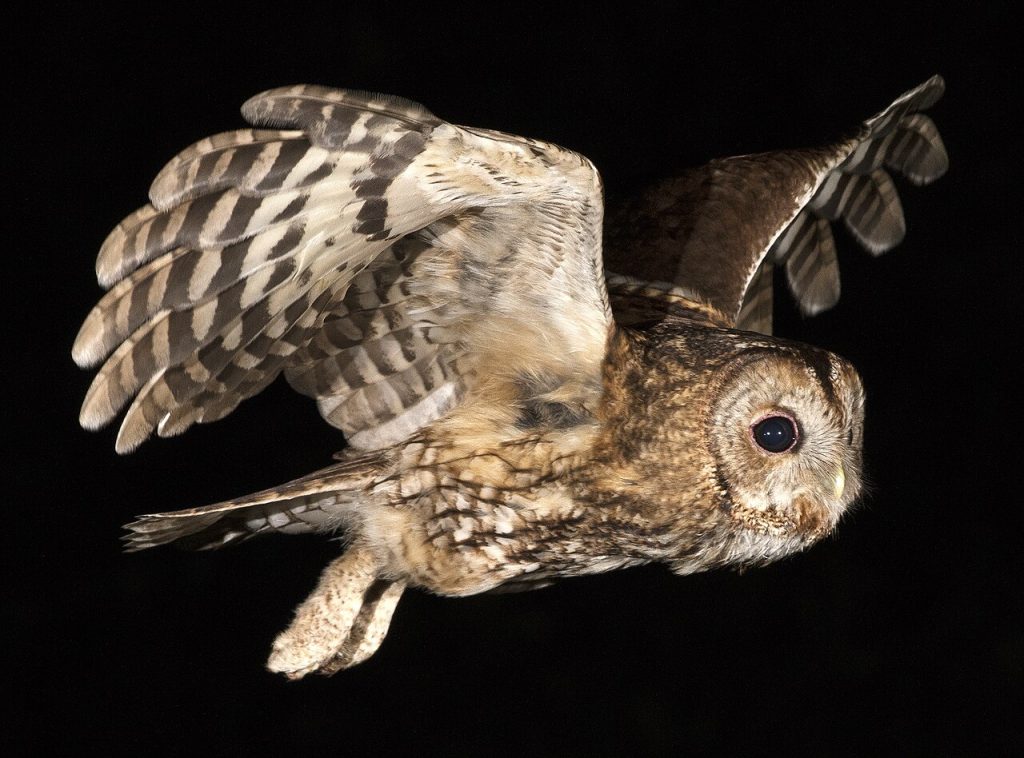
The tawny owl is a medium-sized nocturnal bird with a rounded head and dark, expressive eyes. It has a compact body, broad wings, and a short tail. An adult measures between thirty-seven and forty-six centimeters in length. It has either warm brown or gray plumage with dark streaks and pale markings, providing excellent camouflage against tree bark. The Tawny Owl’s head looks smooth and rounded because, unlike many owls, the Tawny Owl has no ear tufts. Armed with powerful feet and sharp talons, these birds capture prey efficiently, while the hooked bill tears food into manageable pieces.
Tawny Owl Adaptations for Survival
One interesting scientific fact is that the face disc of the owl channels sound to the ears. These are offset from each other, with such precision that the owl can find its prey in total darkness. Another exceptional adaptation is the specialized edges of the tips of the feathers. They cut down on air turbulence and on wing noise so they can fly silently. Another remarkable fact is that Tawny Owls have very flexible necks, which can rotate up to 270 degrees. This greatly increases their field of vision without moving the body.
Food and Shelter Habits
Tawny Owls mainly eat small mammals like mice, voles, and shrews, but will eat birds, insects, frogs, and earthworms if the opportunity occurs. They hunt rodents, helping to keep populations in check and maintain healthy woodland ecosystems. The natural habitat is deciduous forest, mixed woodland, parks, orchards, large gardens, and mature urban green spaces in much of Europe and western Asia. It is largely a resident species, defending territories throughout the year rather than migrating long distances.
Courtship to Parenthood
Courtship begins in late winter with characteristic hooting calls and aerial displays that strengthen pair bonds. Tawny Owls usually nest in natural tree hollows in trees, in old nests, or in special nest boxes built for them. The females usually lay two to four white eggs and do most of the incubating, while the males bring food. Both parents will actively guard and feed the chicks after hatching until they fledge.
Predators, Threats, and Conservation Efforts
Predators are large birds of prey, martens, foxes, and sometimes domestic cats, which are a threat to young birds. Excellent camouflage, silent movement, and nocturnal behavior reduce the chances of being predated. Threats include habitat loss, removal of mature trees, road collisions, and secondary poisoning from rodenticides in some areas. Conservation programmers aim to protect the woodland habitat, conserve nest cavities, and promote responsible management of wildlife.
Peppa Pig Guest Star
Peppa Pig has a whole episode dedicated to searching for the elusive Tawny Owl. It also makes a couple of appearances in a few other episodes as well.
The Tawny Owl’s extraordinary specialism is demonstrated in its remarkable hunting adaptations, haunting calls, and ecological importance, making it one of Europe’s most familiar woodland predators.