The Fork-Tailed Phantom
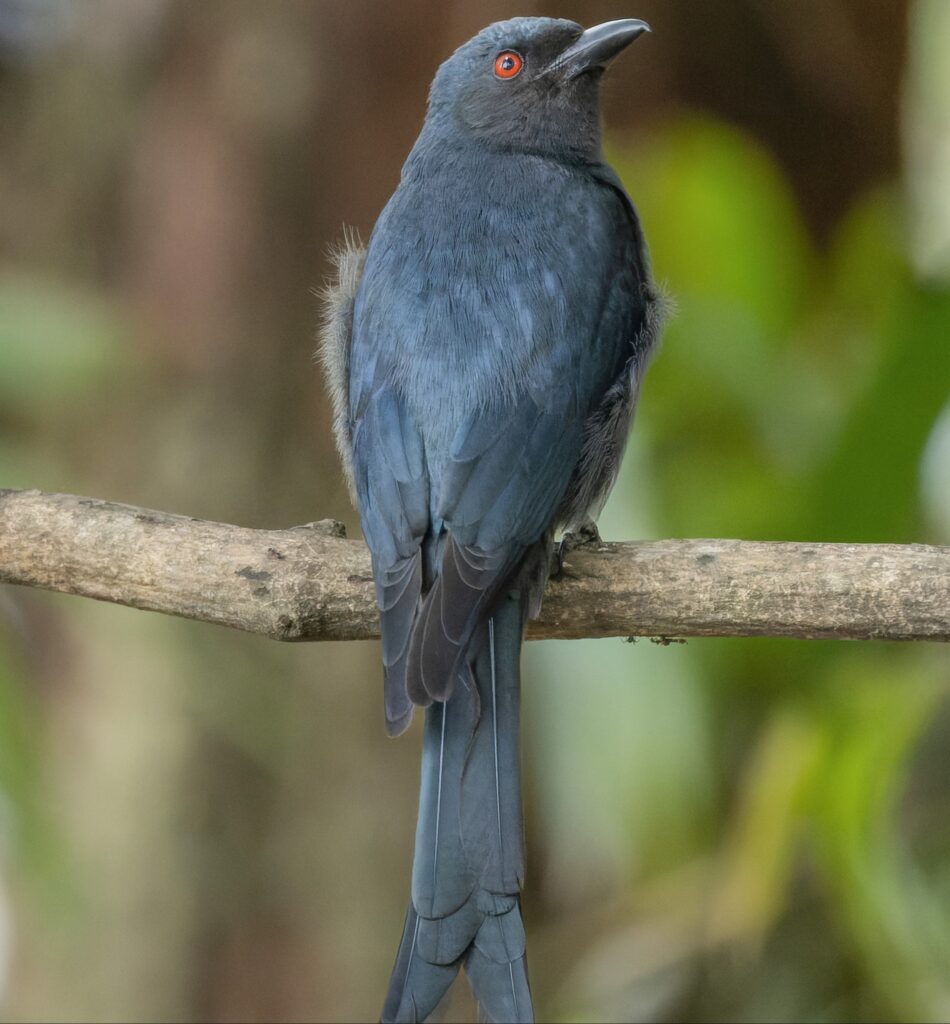
The Ashy Drongo is a slim elegant bird with a grayish smoke colored plumage forked tail and brilliant red eyes. Its streamlined body and long wings make it very agile in flight. The species has a slender black bill adapted to catching insects. Adult birds are uniformly gray, giving them a sophisticated appearance compared to other woodland birds. The fork in the tail is very conspicuous and enhances maneuverability; it is also a handy aid to identification.
Catching Dinner on the Fly
Ashy Drongos perch conspicuously and scan the surroundings for prey. They feed mainly on flying insects such as beetles, moths, flies, termites and winged ants. They are able to catch insects on the wing by rapidly flying in the air accurately. Individuals often return to the same perch after successful foraging attempts. This strategy allows energy conservation while maintaining effective foraging performance.
Following the Insect Trail
The species occurs in forest, wooded valleys, plantations and rural landscapes with trees. Many northern populations are seasonal migrants, moving to warmer areas where insects are still abundant. Seasonal movements help keep access to reliable food resources throughout the year. Ashy Drongos are known for their alert behaviour and superb control in flight.
Building a Home Above the Ground
Breeding pairs build neat cup-shaped nests of twigs, roots and plant fibres. Nests are built on horizontal branches, offering some protection from predators. Little clutches, incubation is shared. Adults also share the duties of feeding and protecting the nestlings. Young birds are fed and protected without interruption until they are able to fend for themselves. Predators include snakes, larger birds and tree-dwelling mammals that can reach nests.
Small Bird, Fearless Spirit
It is an aggressive species when protecting breeding territories and will readily attack much larger intruders. Despite its delicate appearance, the Ashy Drongo is an efficient predator and an important regulator of insect populations. It is one of the most distinctive drongo species in South and Southeast Asia, because of its graceful shape, active lifestyle and bright red eyes.