Life Across the Tropics
The tropical mockingbird is a familiar songbird native to a wide range. It occurs from southern Mexico through northern and eastern South America, including the Lesser Antilles and several other Caribbean islands. It does not migrate, and adults measure about 23–25.5 cm in length. Their weight varies among different subspecies.
A Voice That Stands Out
Its adaptability and lively behaviour have made it one of the most familiar birds across its range. Although its plumage is relatively plain, its confident nature and beautiful voice make it easy to notice in parks, gardens, and open countryside.
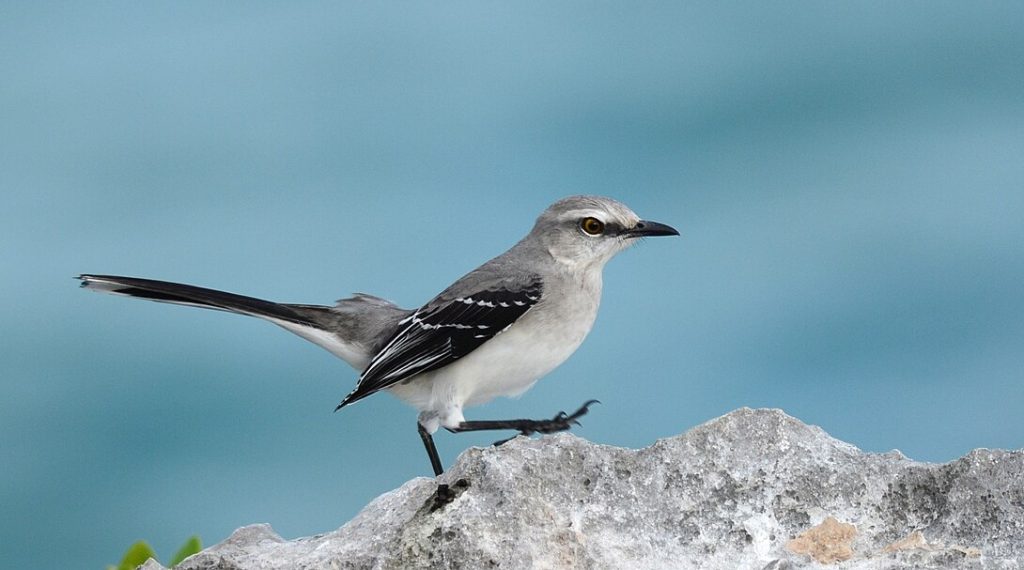
Tropical mockingbird displays grey upper parts, a pale whitish eyebrow (supercilium), and a distinctive dark stripe through the eye. Its underparts are off-white. Its blackish wings feature two bold white wing bars and white-edged flight feathers. It also has a long, dark tail tipped with white feathers. A slender black bill with a slight downward curve and long dark legs complete its elegant appearance. Juveniles appear browner than adults and show dusky streaks across the chest and flanks.
Thriving in Every Habitat
The tropical mockingbird is found in open landscapes. It adapts exceptionally well to human-altered environments. Its commonly inhabits scrublands, savannas, parks, gardens, farmland, and residential areas. It gathers most of its food while foraging on the ground or among low vegetation. It also catches flying insects, including swarming termites.
As an omnivore, it feeds on spiders, grasshoppers, beetles, seeds, berries, and cultivated fruits such as mangoes. It also eats lizards, bird and lizard eggs, food from bird feeders, and even discarded human food. Its varied diet helps it survive in changing environments throughout the year. By feeding on insects and consuming fruits, the bird also contributes to natural pest control and seed dispersal, supporting healthy ecosystems.
Songs That Fill the Air
The tropical mockingbird produces a long, varied song made up of mellow whistles, harsh notes, trills, and repeated phrases. It often sings for extended periods and may continue throughout the night. It rarely mimics other bird species. Its common calls include a resonant “pree-ew” and a harsh “chick” or “chek.”
The bird often sings from exposed perches such as trees, rooftops, or fences to advertise its territory and attract a mate. Its rich, repeated songs are among its most distinctive features.
Family Life and Teamwork
Breeding usually begins toward the end of the wet season and continues into the early part of the following wet season. During this period, a pair may successfully raise as many as three broods. The species is primarily monogamous. However, cooperative breeding has also been observed, with young birds from an earlier brood helping their parents care for the next one. Tropical mockingbirds are highly territorial and boldly defend their nesting area against rival birds and potential predators.
Raising the Next Generation
Both male and female build the nest using coarse twigs lined with softer materials. They place it low in a shrub or small tree. A typical clutch contains two to four eggs, with three being the most common. The female performs most of the 13–15-day incubation, while both parents and sometimes the helpers feed the chicks. Afterwards, the young remain in the nest for up to 19 days before fledging and continue to receive parental care for some time.
A Bird Built to Thrive
The tropical mockingbird is classified as Least Concern by the IUCN due to its wide distribution, large population, and remarkable adaptability. It is common and easily observed across most of its range, with no major threats currently affecting its overall population.
Its stable population highlights its resilience. Conserving natural habitats and urban green spaces will help ensure this attractive songbird continues to thrive. With its pleasant songs, fearless behaviour, and ecological value, the tropical mockingbird remains a favourite among birdwatchers and nature lovers.