Ajuga Bugleweed Groundcover is a colorful ornament for your garden. Bugleweed is a hardy, low-growing perennial ground cover valued for its colorful foliage, dense spreading habit, and striking blue-purple flower spikes. Native to Europe, northern Africa, and southwestern Asia, gardeners widely cultivate it to suppress weeds, stabilize slopes, and add year-round interest to gardens.
How to Identify Bugleweed
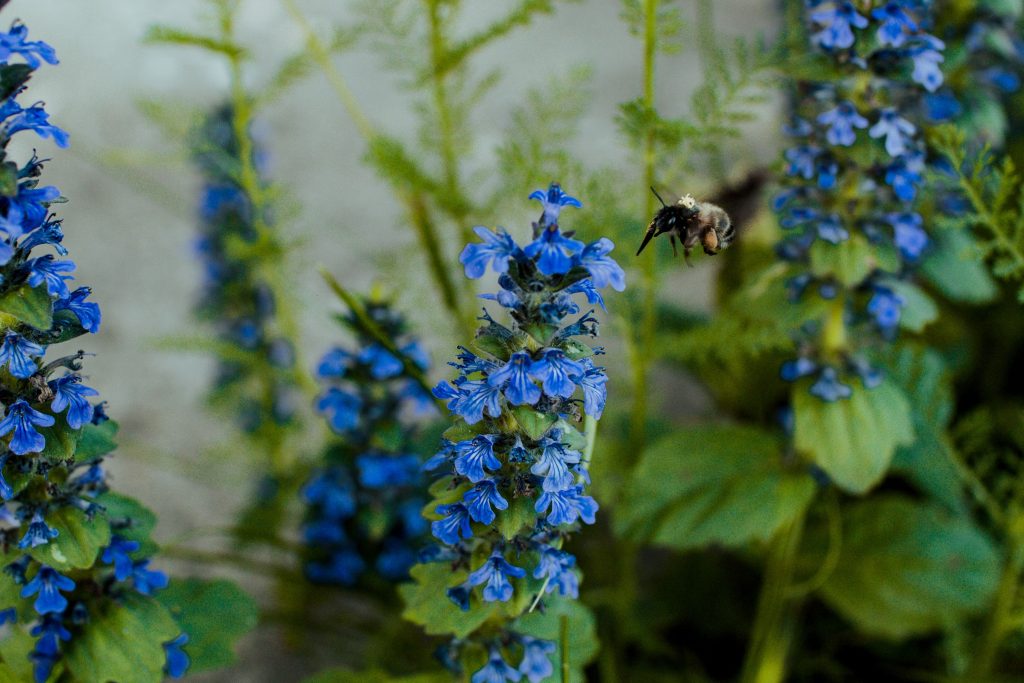
Bugleweed grows 4–14 inches (10–35 cm) tall and spreads through creeping underground runners, forming dense mats of foliage. Meanwhile, its square stems bear opposite, oval to elliptical leaves that range from green to bronze or purplish-green, depending on the variety.
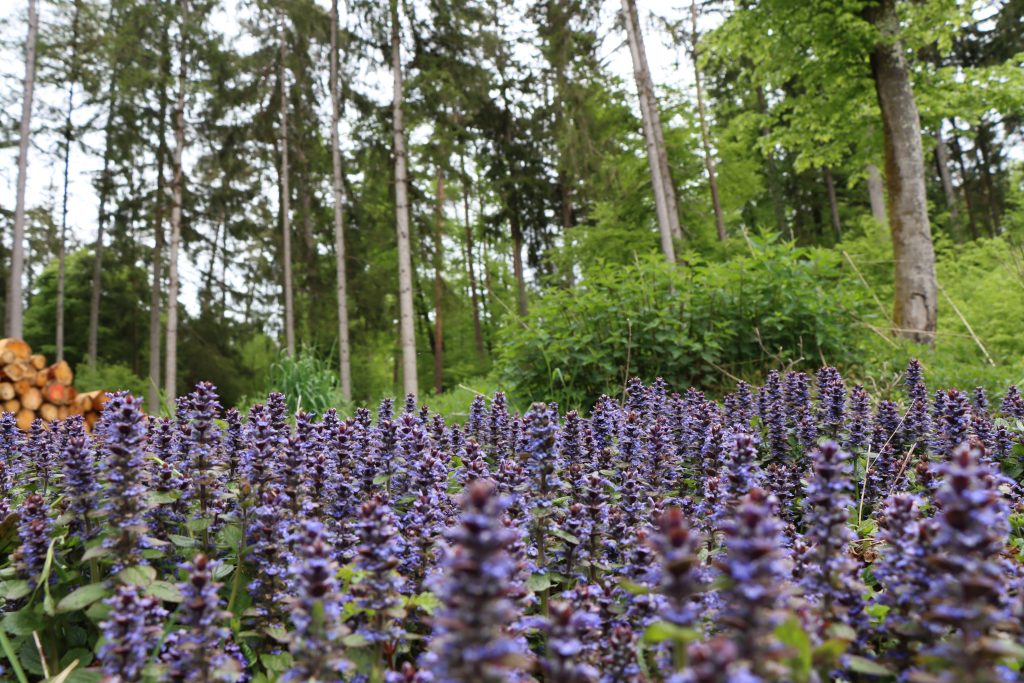
Bugleweed produces upright spikes of small blue to violet flowers above its foliage. Additionally, each two-lipped flower has darker veins on the lower petal. It is also rich in nectar, attracting bees, butterflies, hummingbirds, and other pollinators.
Habitat and Season
Bugleweed thrives in woodlands, grasslands, and moist, shaded habitats. It grows best in fertile, well-drained soil and adapts to full sun, partial shade, or full shade. However, foliage color is often more vibrant with several hours of sunlight each day. As a result, flowering typically occurs from mid to late spring.
Life Cycle
Bugleweed is a perennial that returns each year from its root system. Over time, it spreads rapidly by underground runners that produce new plants, gradually forming dense colonies. Furthermore, gardeners commonly propagate it by dividing mature clumps or transplanting rooted runners in spring or autumn.
Bugleweed Groundcover for Garden
Gardeners widely use Bugleweed as an ornamental ground cover in woodland gardens, borders, beneath trees, and on slopes, where it helps reduce soil erosion and suppress weeds. In addition, the young leaves and flowers are edible, although they have a slightly bitter taste. Traditionally, people also used the plant in European folk medicine for its wound-healing and anti-inflammatory properties.
Garden Ideas for Sloped Gardens
Sloped gardens can be both attractive and practical when the space is planned around the natural shape of the land. Being a groundcover plant, Bugleweed is a good option for this purpose. It offers a more natural look while spreading across the slope and reducing soil erosion. It forms a low-growing cover that can fill spaces between other plants. Rocks and stepping stones can also add structure while creating a clear path through the garden. One simple idea is to create terraces using low retaining walls, giving you several level areas for planting flowers, herbs, or small shrubs. Raised beds can work well on gentle slopes, while gravel paths can provide better drainage and make the garden easier to access. Bugleweed is a useful choice because they are often better suited to the local climate and soil conditions. Adding mulch around plants can help retain moisture and protect the soil. With thoughtful planting and simple landscaping features, a sloped garden can become an interesting and functional outdoor space.
Pests and Problems
Bugleweed is generally easy to grow and rarely suffers from serious pest or disease problems. However, aphids may occasionally feed on the leaves, while crown rot and fungal diseases can develop in poorly drained soil or overcrowded areas with poor air circulation. Therefore, regular pruning and well-drained soil help keep the plant healthy.