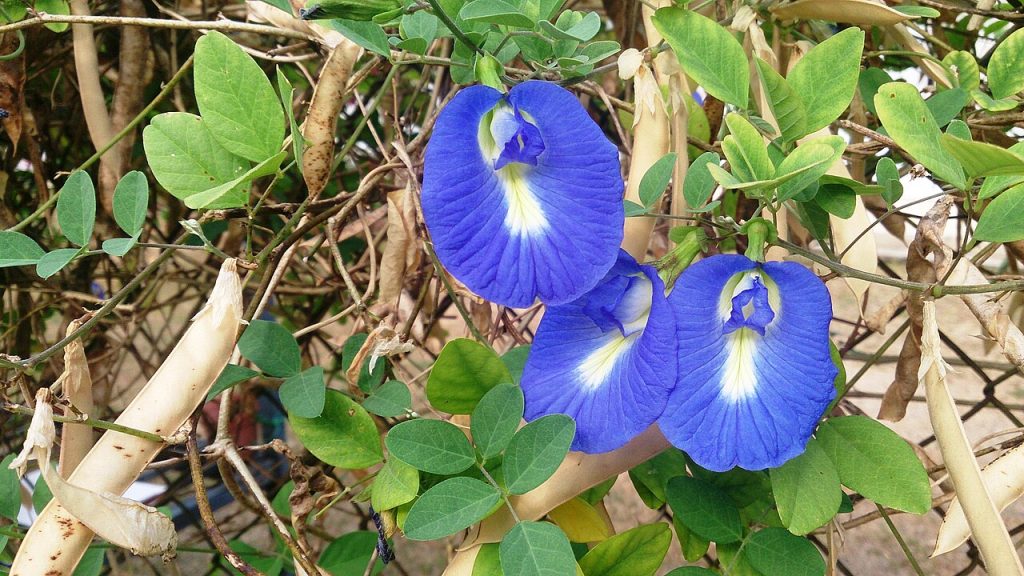
- Scientific Name
- Clitoria ternatea
- Location
- Africa, Asia
- Habitat
- Disturbed areas, Grasslands, Riverine Vegetation
- Season
- Summer
Overview
Butterfly Pea (Clitoria ternatea) is a tropical climbing vine that blooms mainly in summer, producing vivid blue, purple, or white flowers. It offers edible flowers and pods, ornamental appeal, and traditional culinary and medicinal uses. Native to tropical regions of Asia, people now widely cultivate the plant in Africa and other warm climates.
Botanical Description
Butterfly pea is a perennial climbing vine belonging to the family Fabaceae. It typically grows 1–15 feet (30–450 cm) tall and spreads about 3–6 feet (90–180 cm) wide. The plant has slender, twining stems that allow it to climb and spread efficiently. The leaves are pinnately compound with 5–9 oval leaflets arranged alternately along the stem, giving the plant a delicate, feathery appearance. Small stipules occur at the base of each leaf.
The flowers are the most distinctive feature of the plant. They are usually deep blue with pale yellow or white markings at the center and have a characteristic conch-shaped form. Some varieties may also produce white, pink, or purple flowers. Flowering mainly occurs from early summer to fall, although in tropical climates it may continue year-round. After flowering, the plant produces slender seed pods containing approximately six to ten seeds. The flowers contain both male and female reproductive parts and can self-pollinate. However, insect pollinators, especially bees, enhance fertilization and seed production.
Cultivation and Care
Butterfly pea grows best in full sun, well-draining sandy or loamy soil, and warm and humid conditions. Water young plants regularly to establish strong roots, while mature plants are drought-tolerant; however, consistent moisture promotes better flowering. Adding compost, well-rotted manure, or a balanced NPK fertilizer at planting supports healthy growth. Regular pruning and removal of spent flowers help maintain a bushy growth habit and encourage continuous blooming. Repot container-grown plants when they outgrow their pots.
Gardeners can propagate Butterfly pea through seeds or stem cuttings. Seeds germinate better when soaked in water for 12–24 hours before planting, while cuttings root faster and produce earlier blooms. Harvest flowers fresh or dry them for tea and natural coloring, while collect mature pods for seed saving.
Culinary Uses and Health Benefits
People widely use Butterfly pea flowers in food and traditional wellness practices. They most commonly use them to make blue herbal tea, which turns purple or pink when lemon juice or other acids are added. Further, they also use them as natural food coloring in rice, desserts, drinks, and cocktails. In Southeast Asian cuisine, people value the flowers for both their appearance and mild earthy flavor.
Butterfly peas are rich in anthocyanins, antioxidant compounds that help protect cells from oxidative damage and support health. Traditionally, people have used them to support memory, cognition, and stress relief, though scientific evidence is limited.
Common Pests and Diseases
Aphids and spider mites commonly affect Butterfly pea. Aphids cause leaf curling and yellowing, while spider mites create webbing and speckled leaves. Control small infestations with water spray, while use neem or horticultural oils for severe cases. The plant is also prone to fungal and moisture-related diseases like leaf spot, powdery mildew, and root rot. These occur due to poor drainage or excess moisture and lead to leaf damage or root decay. Proper drainage, base watering, and good airflow help prevent them.