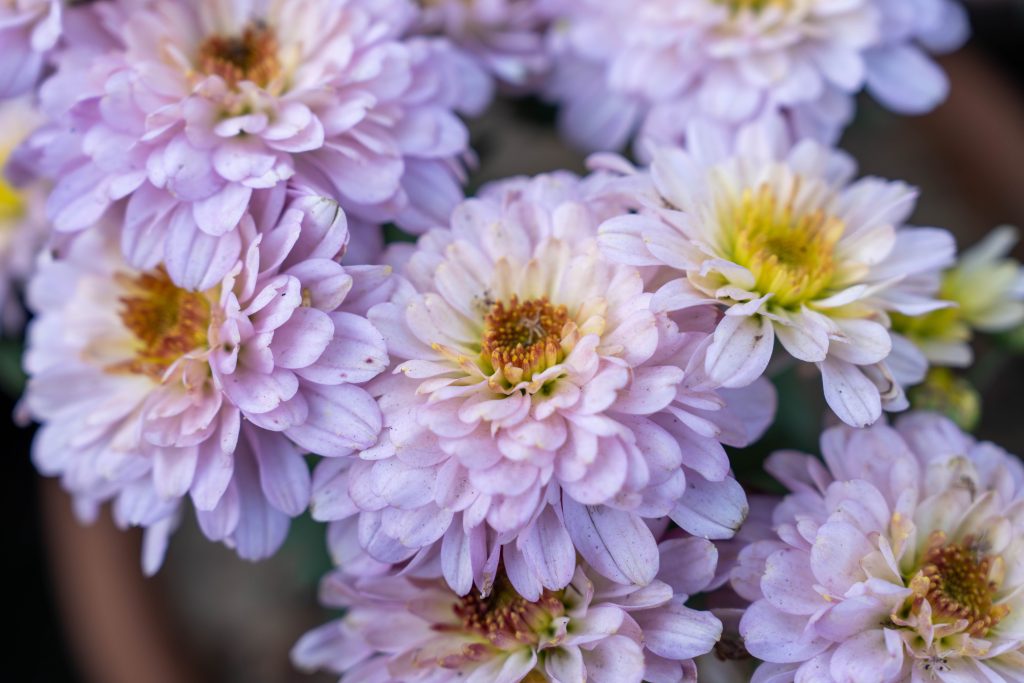
Lavender chrysanthemums are loved for their soft purple, lilac, and lavender-coloured blooms. They are not a separate species. Instead, “lavender chrysanthemum” is a simple way to describe chrysanthemum cultivars with these flower colours. Like other mums, lavender chrysanthemums belong to the daisy family, Asteraceae. They can also have different flower shapes. Some have simple, daisy-like mums blooms, while others have rounded pompons or layers of petals.
Lavender Mums Bloom Season
Usually, Lavender mums bloom from late summer into autumn. They grow best in a sunny spot with fertile, well-drained soil. They also look lovely in containers, flower beds, borders, and bouquets.
Lavender Chrysanthemum Flower Meaning
The chrysanthemum flower meaning changes across cultures and flower colours. They can represent joy, friendship, loyalty, and affection. Lavender and purple flowers are often linked with elegance, grace, and admiration.
Shades of Lavender Chrysanthemums
Lavender chrysanthemums are not limited to one shade. Their blooms can range from soft, pale lavender to lilac, mauve, and deeper violet-purple. Some cultivars have cooler blue undertones, while others appear warmer because of their pink tones. This natural variation gives lavender mums plenty of colour choices for flower arrangements.
Their soft colour pairs well with white, pink, yellow, and deeper purple flowers. Whether you grow them in a pot or add them to an autumn border, lavender chrysanthemums offer a gentle alternative to brighter mum colours. This makes the lavender chrysanthemum a beautiful choice for an autumn garden.
Chrysanthemums (Chrysanthemum × morifolium)
Chrysanthemums are among the most recognisable flowers in gardens and bouquets. Widely known as mums, these plants belong to the daisy family, Asteraceae. The genus Chrysanthemum includes perennial plants native mainly to temperate Eurasia and parts of East Asia. Today, gardeners grow chrysanthemums worldwide for their colourful flowers and long flowering season.
Interestingly, the name Chrysanthemum comes from Greek words associated with “gold” and “flower”. However, modern chrysanthemums display far more colours than their name suggests.
What Is a Chrysanthemum Flower?
What looks like one flower is actually a flower head made up of many tiny florets. This structure is typical of plants in the Asteraceae family. The outer florets usually look like petals. Meanwhile, the central florets form the flower’s centre. Their cheerful blooms appear in colours ranging from yellow and orange to pink, red, purple, and white. They also come in many forms, from simple daisies to rounded pompons.
Other Names for Chrysanthemum
Chrysanthemum has several common names. Mum is the shortened name widely used in North America. Chrysanth is another common abbreviation, particularly in British usage. Depending on the type, you may also see names such as garden mum, hardy garden mum, autumn mum, florist’s chrysanthemum, and florist’s daisy.
The name garden mum usually refers to chrysanthemums selected for outdoor growing. Meanwhile, florist’s chrysanthemums are often grown for their large, decorative flowers and use in bouquets.
Types of Chrysanthemums
Chrysanthemums come in many flower forms, including single, pompon, cushion, anemone, decorative, spider, and quill mums. Single mums have daisy-like flowers, while pompon mums produce small, rounded blooms. Cushion mums form compact, flower-covered plants, making them popular garden choices. Decorative mums have layers of overlapping petals, whereas spider and quill mums have long, narrow petals. Spray chrysanthemums produce several smaller blooms along branching stems and are widely used in floral arrangements. These forms can differ in hardiness.
Chrysanthemum Flower Meaning
The chrysanthemum flower meaning varies between cultures and flower colours. In general, chrysanthemums can represent friendship, loyalty, joy, and affection. For example, red chrysanthemums are often associated with love. White chrysanthemums can represent innocence and honesty. Yellow chrysanthemums have more varied symbolism, including friendship in some traditions.
However, the meaning changes significantly between countries. In parts of Europe, chrysanthemums are strongly associated with mourning and remembrance. In China and Japan, the flower has long been connected with longevity and youth. That cultural contrast makes the chrysanthemum particularly fascinating.
Hardy Garden Mum: A Reliable Autumn Favorite
The hardy garden mum is especially popular with gardeners who want dependable seasonal colour. These chrysanthemums are generally perennial and can return after winter when grown in suitable conditions. However, not every chrysanthemum has the same cold tolerance. Some types need winter protection, particularly in exposed gardens or areas with severe frost. Therefore, check the cultivar’s hardiness before planting it outdoors. Hardy garden mums prefer a sunny, sheltered position. They also grow best in fertile soil that remains moist but drains well. Waterlogged soil can damage their roots, so good drainage matters.
When Do Mums Bloom?
Garden mums bloom from late summer into autumn. In the UK, many hardy types bloom between September and November. Their late-season flowers add colour when many summer plants have already finished flowering. Day length plays an important role in chrysanthemum flowering. As daylight hours shorten, many cultivars begin forming flower buds. This response to changing day length is called photoperiodism. Therefore, chrysanthemums can seem to “know” when autumn is approaching. In reality, their flowering response is closely linked to seasonal changes in light.
How to Grow Chrysanthemums
Choose a sunny location with fertile, well-drained soil. Space plants about 30–45 centimetres apart to give them enough room to grow. Furthermore, water newly planted chrysanthemums regularly during active growth. Keep the soil moist, but avoid constantly wet conditions. Once young plants reach around 20 centimetres tall, pinch out the growing tips. This encourages side shoots and can produce a fuller plant with more flowers.
During flowering, remove faded blooms to keep the plant looking tidy. Deadheading can also encourage additional buds. Chrysanthemums can also be propagated from cuttings or by dividing established clumps. Spring is a useful time for both methods.
Why Grow Chrysanthemums?
Chrysanthemums offer colour when many gardens begin to fade. Moreover, single-flowered varieties can provide nectar for late-flying bees and butterflies. They also work well in borders, containers, and dedicated cutting gardens. With their wide range of colours and flower forms, there is a chrysanthemum for almost every autumn display.
Above all, chrysanthemums combine beauty with impressive botanical variety. Whether you grow a hardy garden mum or enjoy chrysanthemums as cut flowers, these autumn favourites bring a final burst of colour before winter arrives.
Frequently Asked Questions
Yes. Apart from lavender, Chrysanthemums come in many colours, including white, yellow, pink, red, orange, purple, and bronze, with some varieties having multicoloured blooms.
Yes. Chrysanthemums grow well in pots and containers as long as they have enough space for the roots and good