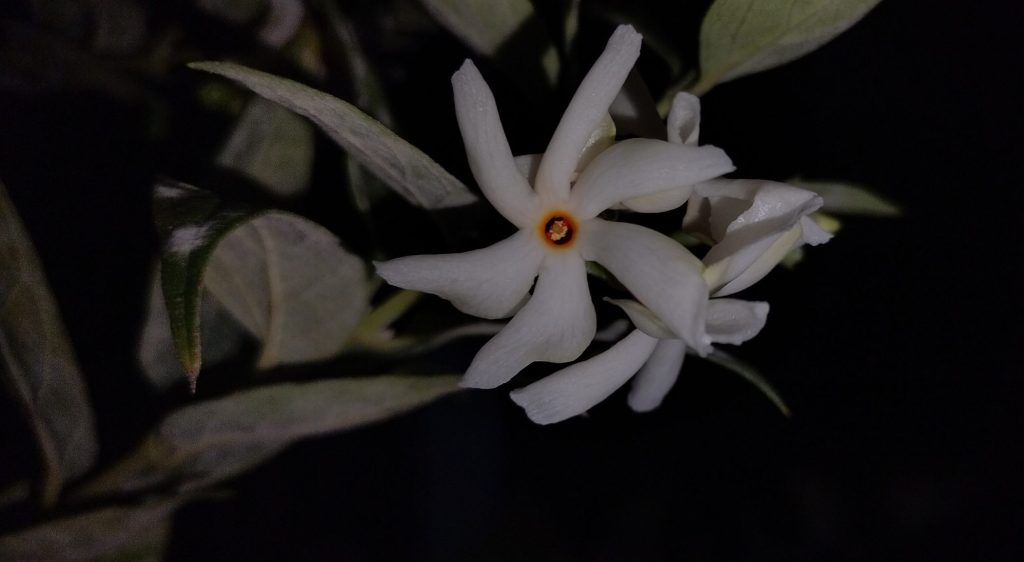
The Evening-Blooming Flowers
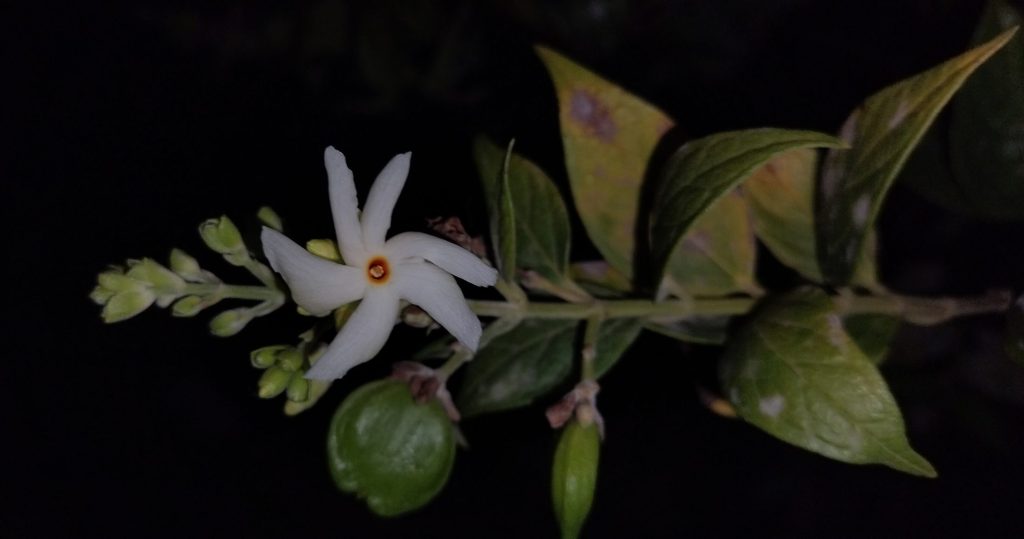
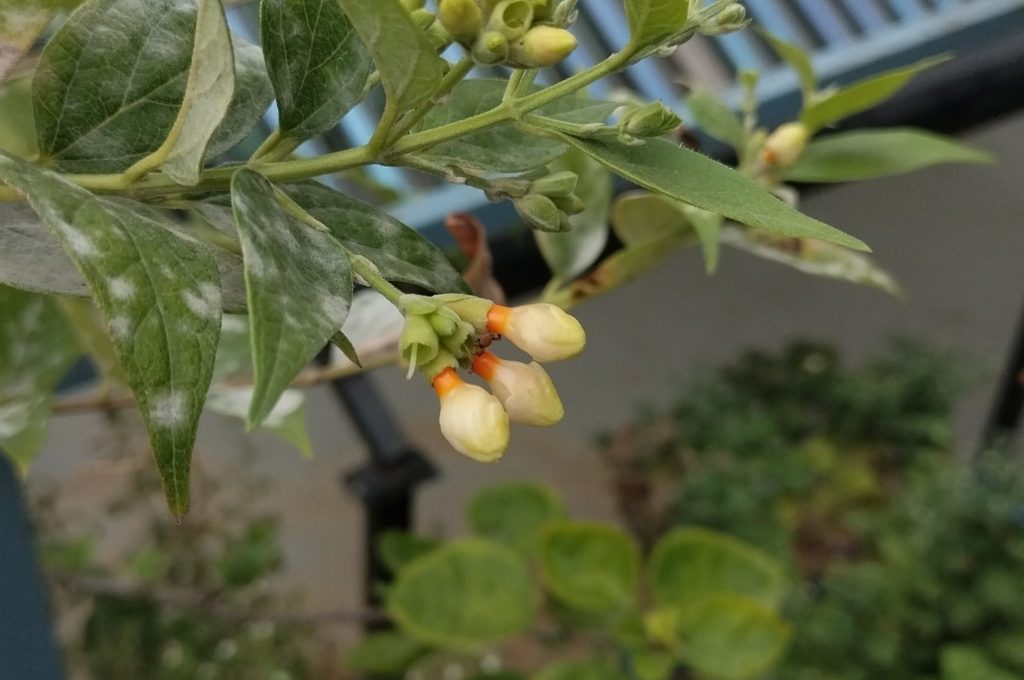
Night-flowering jasmine (Nyctanthes arbor-tristis) is a species of small deciduous tree or large shrub, known for its strongly fragrant flowers. The species is native to the Himalayas through northeast India and mainland Southeast Asia, extending toward Sumatra and Java. It can grow up to 9–10 m in height, though cultivated plants are usually pruned to be shorter. The bark is greyish and becomes rough with age. Young branches can be angular and hairy, which is a useful identification feature. Its opposite leaves are broadly ovate, rough to the touch, and usually pointed at the tip. Flowers develop in small clusters near the ends of branches and usually open around dusk. Each flower has white lobes surrounding a bright orange-to-orange-red tubular centre. The plant produces its strongest fragrance during the morning and evening.
Other Names for this Plant
The night-flowering jasmine is known by different names in other languages. Some of these are:
| Country /Region | Name |
|---|---|
| India | Parijatah, Parijat, Paarijaatham, Shiuli, Hengra bubar |
| Malay | Seri gading |
| English | Coral Jasmine, Tree of Sorrow/Sadness, Sad Tree |
| China | Nai hua, Hung mo li |
Reproductive Features
The plant prefers warm conditions, moderate moisture, and well-drained soils with sun or partial shade. Its deciduous behaviour is more pronounced during seasonal dry periods. It develops flattened, rounded to heart-shaped capsules after pollination. Each capsule divides into two sections, with each section usually containing one flattened seed. As the capsules mature, they split open and release the seeds. The plant can reproduce through seeds and can also grow from stem cuttings. Gardeners therefore use both sexual and vegetative propagation to cultivate this plant.
Fragrant Flowers and Pollination
Night-flowering jasmine grows naturally in open forests, woodland margins, hillsides, and seasonally suitable tropical environments. People also cultivate it in gardens, home compounds, and places of worship. Its sweet fragrance attracts insects, particularly moths and other night-time visitors. Daytime insects may also visit flowers that remain open during the day. These insects transfer pollen between flowers and help the plant reproduce. After pollination, it develops characteristic capsules. Through its fragrant flowers, the plant attracts pollinators while also adding ornamental and ecological value to gardens and woodland landscapes.
This Is NOT a True Jasmine
Although people commonly call it night-flowering jasmine, the plant does not belong to the true jasmine genus Jasminum. It belongs to the genus Nyctanthes in the olive family, Oleaceae. People gave it the common name “jasmine” because its flowers resemble jasmine flowers and produce a strong fragrance. The name Coral Jasmine also refers to the distinctive orange floral tube that contrasts with the white petals.
Cultural Significance
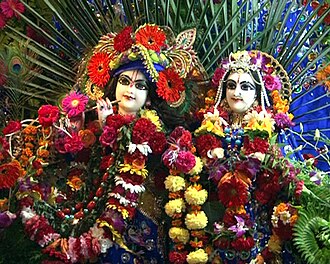
People traditionally collect its flowers and use them for worship and religious offerings. Many Hindu traditions associate Parijat with religious ceremonies. People use its flowers during Ganesh Chaturthi, although specific practices differ between regions. Some traditions also associate Parijat with Krishna Janmashtami, the celebration of Lord Krishna’s birth. In Bengal, people strongly associate the fragrant Shiuli flowers with autumn and Durga Puja. Its fragrant flowers, attractive appearance, and cultural associations make it a valued ornamental plant.
Mythological Stories Around Parijat
Hindu mythology connects the Parijata tree with the story of Samudra Manthana, or the churning of the cosmic ocean. According to Hindu scriptures and later traditions, the divine Parijata tree emerged among the treasures produced during the cosmic churning.
Another popular story describes Lord Krishna bringing the heavenly Parijata tree from Indra’s realm to Dvaraka. Different versions link the story to Krishna’s consorts, Satyabhama and Rukmini. One version says that Krishna planted the tree near Satyabhama’s residence, while its flowers fell into Rukmini’s courtyard. The story has inspired different regional interpretations involving devotion, love, and humility.
These mythological accounts describe the divine Parijata tree of Hindu tradition and should not be treated as scientific evidence about the botanical origin or identity of Nyctanthes arbor-tristis.
Traditional Uses
Traditional Indian medicine uses different parts of night-flowering jasmine, including its leaves, flowers, bark, and seeds. Practitioners have used these parts in preparations for fever, inflammation, digestive problems, arthritis, and other conditions.
Researchers have identified several groups of compounds in the plant, including iridoid glycosides, flavonoids, carotenoids, phenolic compounds, and essential oils. Laboratory and experimental studies have reported various biological activities associated with these compounds. However, current clinical evidence does not establish specific medical treatments, so traditional uses should not be confused with proven clinical therapies.
People have also used these flowers as a source of natural dye. The orange floral tubes contain nyctanthin, a carotenoid pigment that can produce yellow, orange, or golden shades. Traditional practices have used the pigment to colour materials such as silk and cotton and, in some contexts, as a saffron substitute.
Frequently Asked Questions
People call Parijat night-flowering jasmine because its fragrant flowers open in the evening and bloom through the night. However, Parijat does not belong to the true jasmine genus Jasminum. It belongs to the genus Nyctanthes in the olive family, Oleaceae.
Yes. Night-flowering jasmine can grow from seeds as well as stem cuttings. The mature capsules split open and release flattened seeds, while gardeners can use stem cuttings for vegetative propagation.