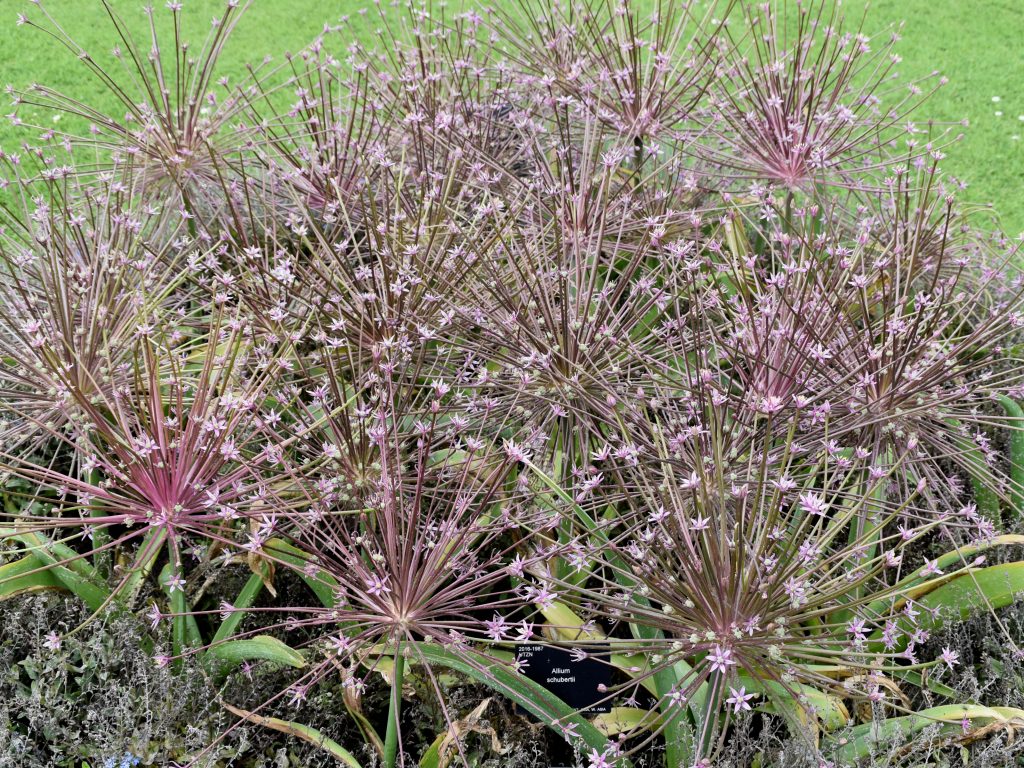
Tumbleweed onion, also known as ornamental onion, flowering onion, or Persian onion, is a herbaceous perennial native to the eastern Mediterranean and Central Asia. It is a striking addition to borders, rock gardens, and naturalized landscapes.
Remarkable Features of Firework Flower
Tumbleweed onion usually grows 30–60 cm (12–24 inches) tall and blooms in late spring. The plant produces broad, strap-like blue-green to grayish-green leaves that grow close to the ground. These leaves often begin to fade as the flowers start to appear. When crushed or cut, both the leaves and bulbs release a distinctive onion-like fragrance.
The enormous spherical flower head forms the plant’s most distinctive feature. Dozens of small, rose-purple, star-shaped flowers come together to create a bloom that resembles a bursting firework or a celestial star.
After flowering, the seed heads dry and remain attractive for many weeks. These dried flower heads can be used in floral arrangements or left in the garden. When blown by the wind, they may roll across the ground.
The Path to Healthy Growth
The Tumbleweed Onion is a low-maintenance ornamental bulb that thrives in sunny locations and well-drained soil. Plant the bulbs in autumn, about four to six weeks before the first frost, to allow them to establish roots before winter. Plant the bulbs with the pointed end facing upward. Water newly planted bulbs thoroughly to help settle the soil around the roots. During the growing season, provide moderate watering, especially during extended dry periods. Once established, Tumbleweed Onion is fairly drought-tolerant and generally requires little supplemental watering with compost or balanced fertilizer. Applying a layer of mulch around the plants helps conserve soil moisture, suppress weeds, and regulate soil temperature.
Propagation of Tumbleweed onion
Tumbleweed onion is commonly propagated by dividing established bulbs during their dormant period. Select a healthy, mature plant and carefully lift it from the soil. Separate a section with a strong root system and replant it in a sunny location with well-drained soil. Water thoroughly after planting and continue regular care until the new plant becomes established. Established bulbs may also be divided every few years during dormancy to prevent overcrowding and maintain vigorous growth.
Battling Pests and Diseases
The Tumbleweed Onion is generally resistant to most pests and diseases. Occasionally, it may attract onion flies or develop bulb rot if grown in poorly drained soil. Ensuring good drainage, proper spacing, and avoiding excessive watering are usually sufficient to keep plants healthy and productive.