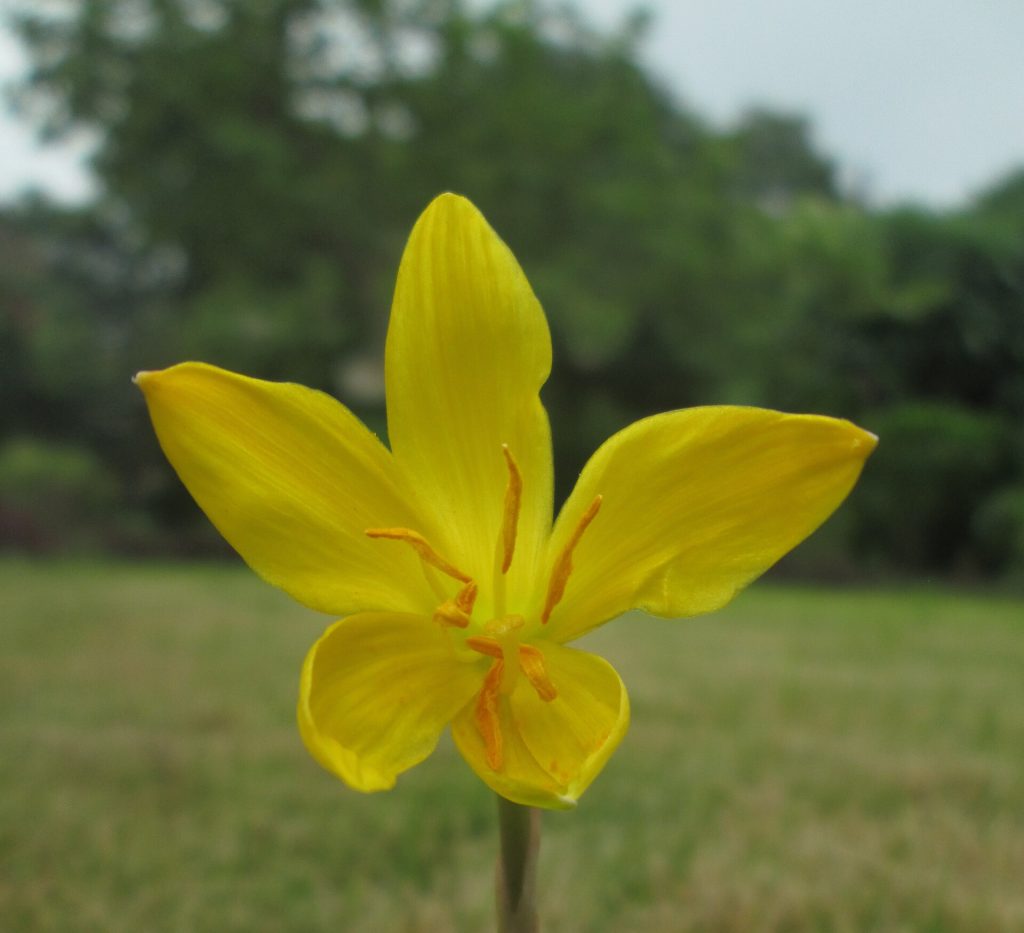
Yellow Rain Lily is a tough, bulbous perennial with narrow, grass-like leaves. Its bright, trumpet-shaped yellow flowers add a splash of color to any landscape. It is native to southeastern Mexico, Central America, and parts of the Caribbean, including Honduras, Panama, the Cayman Islands, Cuba, and Haiti.
The Unique Design of a Rain Lily
Mature Yellow Rain Lily plants remain small and form dense, attractive clumps. They spread slowly through bulb multiplication and gradually colonize garden beds. Slender, deep green leaves emerge directly from underground bulbs. Furthermore, these bulbs store water and essential nutrients, helping the plant survive periods of environmental stress. Each flower grows singly on a strong, leafless stalk. Its vivid yellow color creates a striking contrast with the surrounding plants. The species grows at a moderate rate but can live for many years under the right conditions.
The Secret Behind Its Rain-Triggered Blooms
Most importantly, this lily’s unique response to rainfall makes it scientifically fascinating. After a heavy downpour, it often blooms within days as dormant bulbs undergo rapid physiological changes that trigger flowering. As a result, this adaptation allows the plant to take advantage of favorable moisture conditions for successful reproduction.
A Life Shaped by Rain and Seasons
The Yellow Rain Lily is very valuable ecologically. The blooms provide a steady supply of nectar and pollen for bees, butterflies, hoverflies, and other pollinators. In addition, the plant grows naturally in meadows, grasslands, woodland edges, and seasonally moist habitats. It thrives in environments with periodic rainfall. During dry or unfavorable weather, it remains dormant to conserve water and energy. Later, when conditions improve, it resumes active growth and flowering. Finally, the plant reproduces through seed production and natural bulb division. New bulbs gradually establish themselves and form new plants.
A Natural Signal of Environmental Change
Habitat disturbance, invasive species, and land conversion threaten some wild populations. However, horticulturists value this species for its reliable growth and ecological benefits. Its ability to synchronize its life cycle with seasonal rainfall is an important adaptation. This trait interests both botanists and gardeners.