Monstera in Jungle
Monstera deliciosa, also known as the Swiss cheese plant, is also called the fruit salad plant, Mexican breadfruit, ceriman, monster fruit, and hojadillo, among others. Native to the rainforests of southern Mexico through Central America, Monstera deliciosa is a hemiepiphytic climbing plant admired for its enormous, glossy, heart-shaped leaves and distinctive natural splits and holes. In the wild, it can climb up to 20 m (66 ft) using aerial roots that anchor it to tree trunks. Indoor plants generally reach around 2–3 m (6.6–9.8 ft).
Description
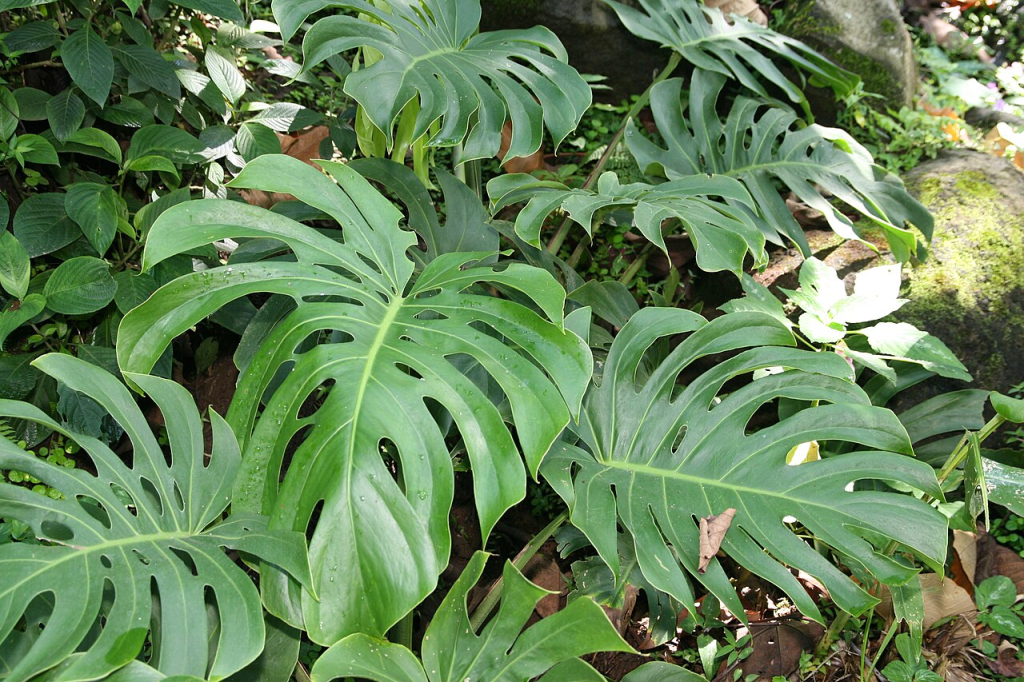
Young Monstera plants initially develop smaller, heart-shaped leaves without splits or perforations. As the plant matures, its leaves become larger and develop deep lobes and characteristic holes called fenestrations. These openings may help reduce wind resistance, manage rainfall, or protect the leaves from herbivores, although their exact purpose remains uncertain. Mature plants can produce a cream-white spathe surrounding a yellowish-white spadix.
Monstera Plant in the Wild
In the wild, beetles mainly pollinate their bisexual flowers. The plant can also produce an unusual fruit that resembles a green ear of corn. Its sweet flavor is often compared with pineapple and banana. Eat the fruit only when it is fully ripe, as unripe fruit contains calcium oxalate crystals that can irritate the mouth and throat.
Monstera in Rainforest
Monstera grows upwards with the help of aerial roots. Initially, Monstera plants grow along the tropical forest floor until they encounter a tree they can latch onto. They use their brown aerial roots to grab onto the trees around them and climb towards the canopy for light. This also helps in absorbing moisture and humidity from the air. As the plant climbs and grows, the leaves get enormous.
Pothos, Philodendrons, Ivy, and Banyan are some other plants/trees that also sprout aerial roots.
Growing and Care
Monstera deliciosa grows best in bright, indirect light, warm temperatures, and moderate to high humidity. Use rich, loose, well-draining soil and water when the upper layer becomes dry. A moss pole, trellis, or sturdy support encourages its natural climbing habit. Gardeners can propagate the plant through stem cuttings, division, air layering, or seeds. It also benefits from repotting when it outgrows its container.
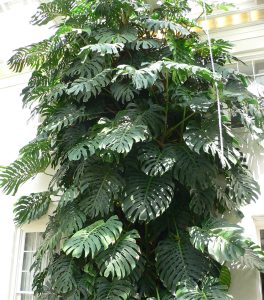
Low Maintenance Outdoor Plants (& Indoors, too)
Monstera deliciosa is an easy-to-grow plant that thrives both indoors and outdoors. It adapts well to typical indoor environments with bright, indirect light, occasional watering, and a sturdy support for climbing. In tropical, frost-free climates, it also makes one of the best low maintenance outdoor plants, where it grows vigorously in shaded or partially shaded locations. Because of its large size and climbing habit, it needs adequate space and support to grow well. Its resilience and simple care requirements make it a popular choice for both first-time and experienced plant owners.
Varieties
Popular forms include variegated Monstera, which display attractive white or cream markings across their green leaves. Collectors particularly seek cultivars such as ‘Albo Variegata’ and ‘Thai Constellation’ for their unique foliage patterns.
Common Issues
Common problems include yellowing leaves from excessive sunlight or overwatering, brown leaf edges caused by low humidity, and poor fenestration due to inadequate light. Spider mites, scale insects, and mealybugs may occasionally affect the plant. Excessive watering and poor drainage can also lead to root rot.
Uses
People primarily value Monstera deliciosa as an ornamental houseplant and widely use it to add a tropical, jungle-like appearance to homes, offices, and indoor gardens. Its dramatic foliage also makes it popular in interior decoration, botanical displays, and plant collections. In suitable tropical climates, people can grow it outdoors as a striking landscape or climbing plant. Its ripe fruit is edible and considered a rare tropical delicacy when properly matured.
Frequently Asked Questions
Monstera is a massive tropical climbing vine, native to the tropical rainforests of southern Mexico and Central America.
Monstera grow with the help of aerial roots, climbing and attaching themselves to a support to help with their huge leaves. At home, you can guide these aerial roots to grow around a moss pole or wooden plank for support. You can also put some of the aerial roots into the soil to absorb extra nutrients.
Mature Monstera leaves develop holes in them. This is known as Fenestration. These holes and splits in the leaf allow heavy tropical rains and strong winds to pass through them without damaging or knocking down the vine.