Botanical Features
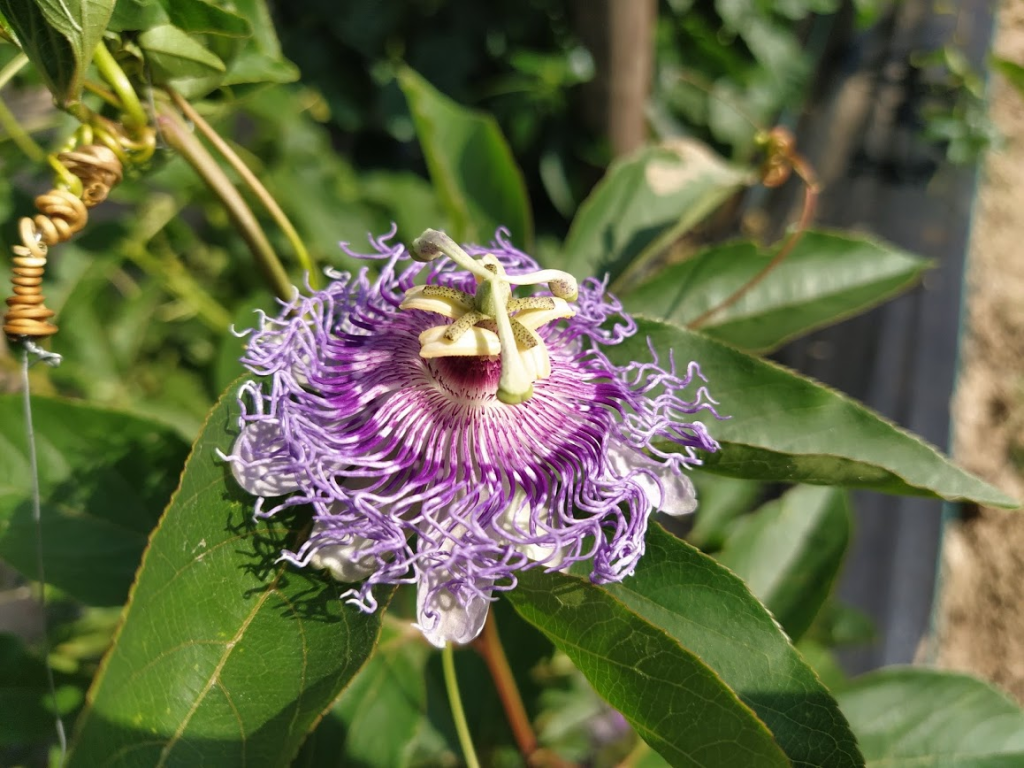
Purple Passionflower is a herbaceous perennial vine that climbs or trails through vegetation. Its thin stems have coiled tendrils to fix the plant to neighboring supports. The plant develops alternate leaves that usually divide into three deep lobes, with small glands on the leaf stalks. The flowers are large, intricate, and usually about 7 cm across. Pale to bluish-white petals and sepals surround a prominent purple-and-white corona made of numerous filaments. Five stamens and three styles rise above the flower’s center and provide distinctive identifying features. The plant also produces rounded to egg-shaped fruits that change from green to yellowish as they ripen. Each juicy fruit contains numerous seeds.
Different Names
It has several common names across different regions.
| Country /Region | Name |
|---|---|
| India | Krishna Kamal, Jhumkalata, Krishna Kamalam, Gadiyaarada hoo |
| English | Passionflower, Maypop, Maypop Passionflower, Apricot Vine, or Wild Passion Vine |
| French | Fleur de la passion, Passiflore officinale |
| Germany | Passionsblume |
| Czech | Mučenka pletní |
Habitat and Seasonal Flowering
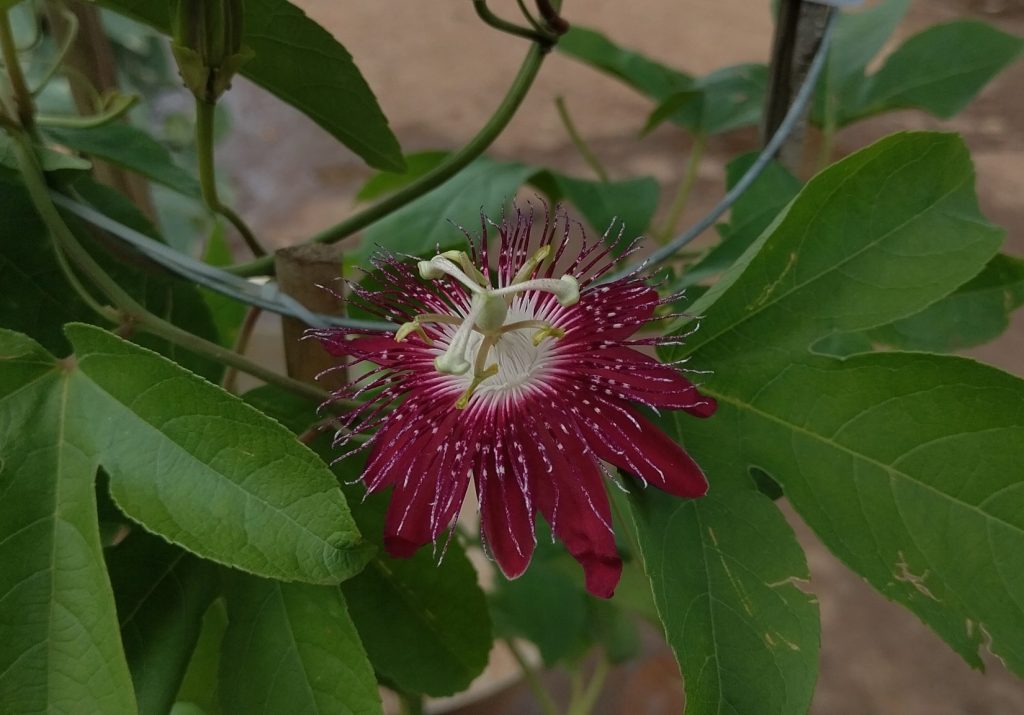
Purple Passionflower naturally grows in the Central and Eastern United States and Bermuda. It inhabits open woods, woodland edges, prairies, roadsides, fields, thickets, and other sunny or partly open areas. The vine grows best in well-drained soils that retain adequate moisture and receive bright sunlight. Established plants can tolerate periods of dryness, although prolonged drought can reduce their growth and flowering. The plant develops most of its aboveground growth during the warm season and generally flowers from summer through early fall. There is also a red color variant of this flower, called Passiflora racemosa.
Pollination and Insect Relationships
Flowers attract large bees, such as bumblebees and carpenter bees, which may touch the reproductive structures while foraging. Certain butterfly species also rely on passionflowers as their caterpillars eat the leaves. The leaf glands produce nectar-like substances, which may influence interactions with insects visiting the leaves. Through these relationships, the plant provides resources for both adult pollinators and developing butterfly larvae, thereby connecting two stages of insect life. Its ecology is an example of how a single native vine can provide resources at multiple levels of a terrestrial food web.
Reproduction
It usually cannot produce seeds through self-pollination because its flowers are self-incompatible. Instead, the plant generally requires pollen from another compatible individual for successful fertilization. After pollination, the ovary grows into a fleshy berry with numerous seeds embedded in the pulp. Animals can eat the fruits and potentially disperse the seeds across different areas. Established plants may also reproduce vegetatively by producing new shoots from underground rhizomatous growth.
Cultural Significance
The plant has strong cultural and religious associations in several parts of the world.
The Christian Connection
In Christian traditions, the flower became associated with the Passion of Jesus Christ after Spanish missionaries encountered passionflowers in the Americas. They interpreted features of the flower as symbols of the crucifixion, including the corona as the crown of thorns, the tendrils as whips, and the three styles as the nails used in the crucifixion.
The Krishna Connection
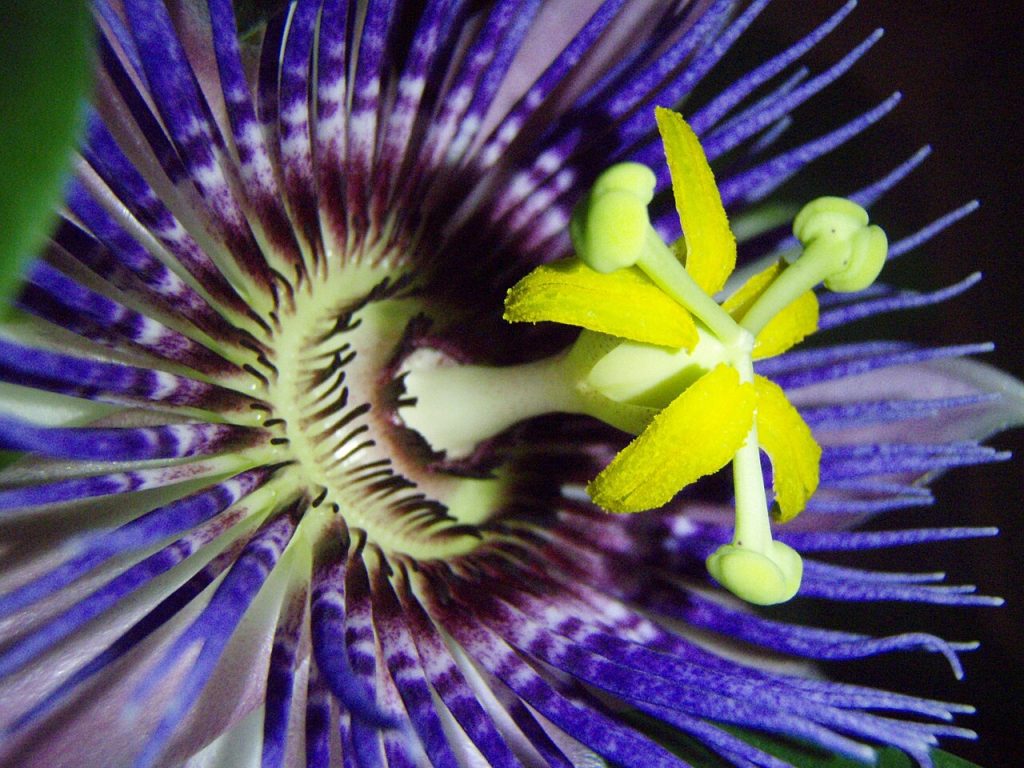
In India, people popularly call the passionflower Krishna Kamal, meaning “Krishna’s lotus” or “Krishna’s flower”. Its unusual floral structure has inspired associations with Lord Krishna and the Mahabharata, and people often grow the plant as an ornamental flower with spiritual significance. The flower is interpreted by many as:
- 5 Anthers are the Pandavas
- The many radiating purple and white filaments (petals) are the Kauravas
- The green bulb in the center is Draupadi, wife of the Pandavas
- The overall radial arrangement is said to represent the Sudarshan Chakra, Lord Krishna’s weapon
- The purple color of the flower is associated with Lord Krishna’s complexion.
The plant also has vastu-related benefits when kept in the east or south-east corner of the home.
Latin America Connection
Across Latin America, where Passiflora species are native, Indigenous communities have incorporated these plants into traditional food, medicine, and local practices. European gardeners later introduced passionflowers as ornamental plants, appreciating their unusual floral structures and distinctive appearance.
Culinary Uses
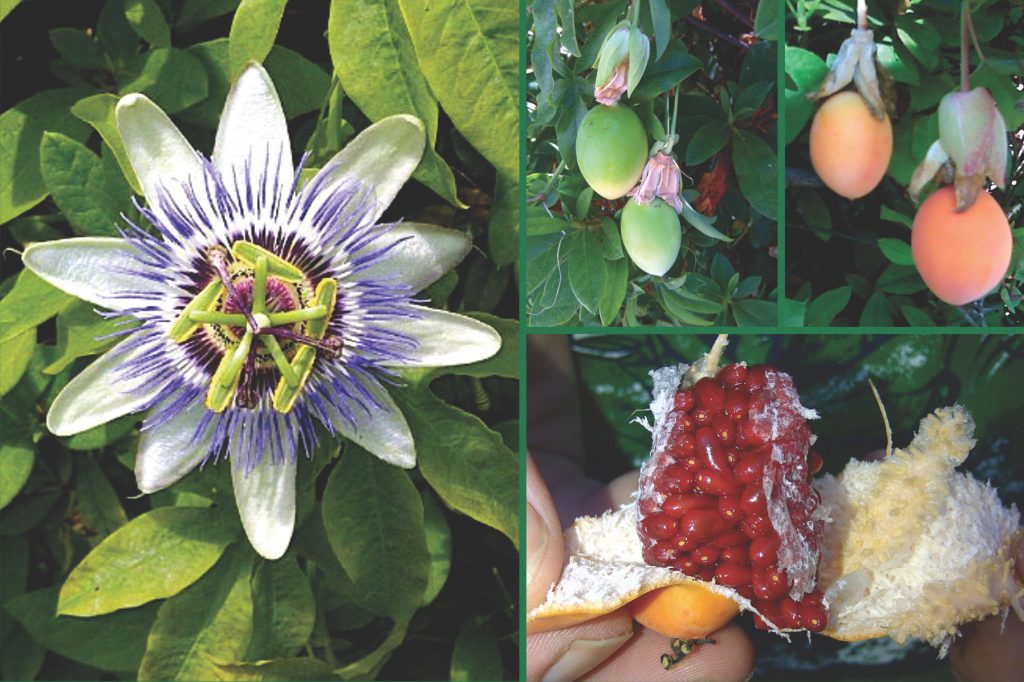
The ripe fruit of this plant is edible. The fruit contains numerous seeds surrounded by juicy, gelatinous pulp and edible juice. People can consume the pulp fresh or use its juice to add flavor to drinks, jams, jellies, desserts, and other processed foods. The ripe fruit has a mildly sweet-tart flavor with an aroma that resembles apricot.
Medicinal Effects
The purple Passionflower has a long history of use in traditional medicine. Native Americans used parts of the plant medicinally, and European settlers later adopted some of these practices. People have traditionally prepared fresh or dried leaves, stems, and flowers as teas or extracts for their calming and mild sedative effects, particularly for nervousness, anxiety, and insomnia. Modern research has also investigated its potential effects on anxiety and sleep, with some small studies suggesting possible benefits, although current evidence remains limited and does not establish P. incarnata as an effective treatment for any specific medical condition. Passionflower may cause drowsiness, dizziness, or confusion and can interact with certain medicines, especially sedatives and drugs used during anesthesia. Therefore, people should use it medicinally only with appropriate professional guidance.
Ecology
It is ecologically valuable in providing floral resources and serving a specialized role as a larval food plant. Habitat destruction, intensive land management, herbicide use, and changes in natural disturbance may reduce local suitable populations. Conservation of native meadows, field margins, and woodland edges can help maintain its habitat and associated insects. People also cultivate Purple Passionflower as an ornamental vine because of its unusual flowers and vigorous seasonal growth.
Frequently Asked Questions
Purple Passionflower produces large, intricate flowers with a distinctive purple-and-white corona surrounding the reproductive organs.
The plant typically blooms from summer to early fall, with flowering increasing during the warm season.
It naturally grows in the central and eastern United States and Bermuda, particularly in fields, prairies, woodland edges, thickets, and other sunny or partly open habitats.