Built for Silent Night Hunting
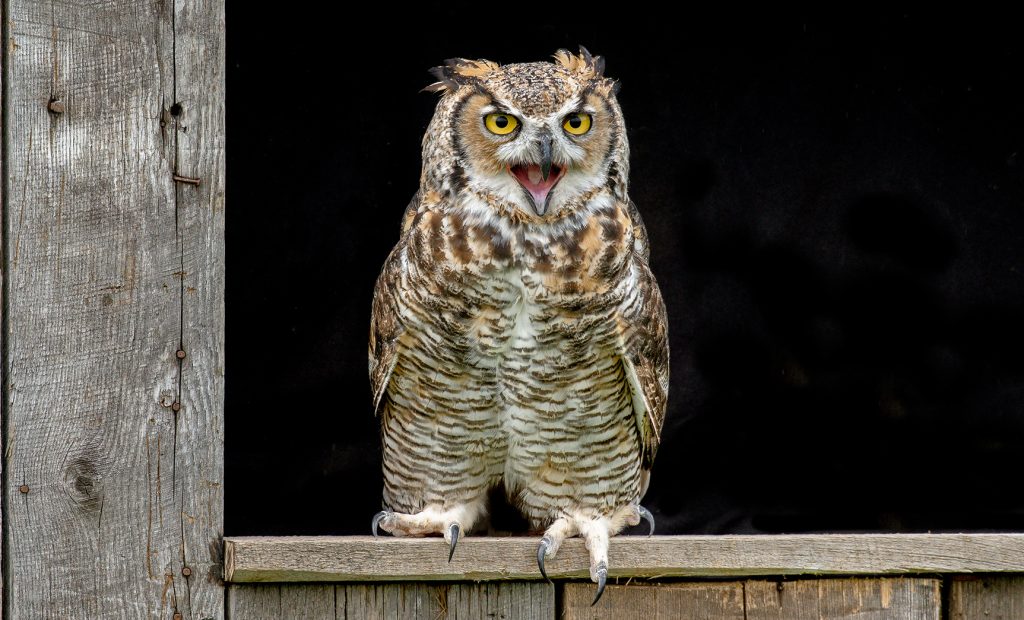
The Great Horned Owl is a large, powerful, nocturnal bird that has distinctive tufts of feathers, wide wings, and bright yellow eyes. Its feathers are a mixture of brown, gray, black, and white, perfect for blending in among trees and rocky terrain. Powerful talons and a deeply curved bill make it one of North America’s most formidable bird predators. Its acute hearing can detect prey even in total darkness, and its facial discs help funnel sound to its ears, enhancing its hunting ability. Silent flight allows it to approach prey unseen.
Versatile Diet, Thriving Everywhere
The species feeds on mammals, birds, reptiles, amphibians, and occasionally large insects. Rabbits, rodents, and other medium-sized animals form important dietary components. Few predators have the versatility of prey choice that the Great Horned Owl does.
Great Horned Owls inhabit forests, deserts, wetlands, grasslands, agricultural areas, and urban environments. Because of the ability to occupy such a variety of habitats, it goes far in explaining the owl’s wide distribution throughout the Americas.
Life Beyond the Hunt
Most Great Horned Owls are year-round residents. However, they may move locally if food becomes scarce. Instead of building their own nests, they usually occupy abandoned nests made by other birds or nest in tree cavities, cliffs, or even man-made structures. Females typically lay eggs in late winter or early spring, and both parents care for the young. While the male provides most of the food, the female protects the nest, and the owlets remain dependent on their parents for several months as they grow.
AKA The Big Horned Owl?
Did You Know? The Great Horned Owl was once also called the “Big Horned Owl” or “Big Horned-Owl” in some historical and regional sources. The name likely referred to the bird’s impressive size and distinctive ear tufts. Although you may still encounter these older names, the Great Horned Owl is the standard common name used today.
Surviving Against the Odds
Natural threats affect mainly eggs and nestlings, rather than healthy adults. Raccoons, crows, and larger predators will sometimes feed on exposed young birds. Strong defensive behavior helps minimize these threats.
The Great Horned Owl possesses remarkable adaptations that make it a highly effective predator. Its formidable grip strength helps overpower large or struggling prey, while its ability to rotate its head significantly while maintaining visual awareness. Researchers have observed successful hunting in an incredible array of environments. This flexibility is one of the hallmarks of great behavioral adaptability.
The Ultimate Nocturnal Predator
The Great Horned Owl is one of the most recognizable birds of prey. Its striking appearance and exceptional hunting ability make it easy to identify. Moreover, its power, stealth, and adaptability make it one of the Western Hemisphere’s dominant nocturnal predators.