A Splash of Sunshine
The American Goldfinch is a small, colorful North American songbird, easily recognized by its bright yellow plumage and cheerful calls. Food availability largely influences its migration, with some birds remaining in northern areas during mild winters. Most migration occurs during mid-fall and early spring, primarily during the day.
Changing Colors Through the Seasons
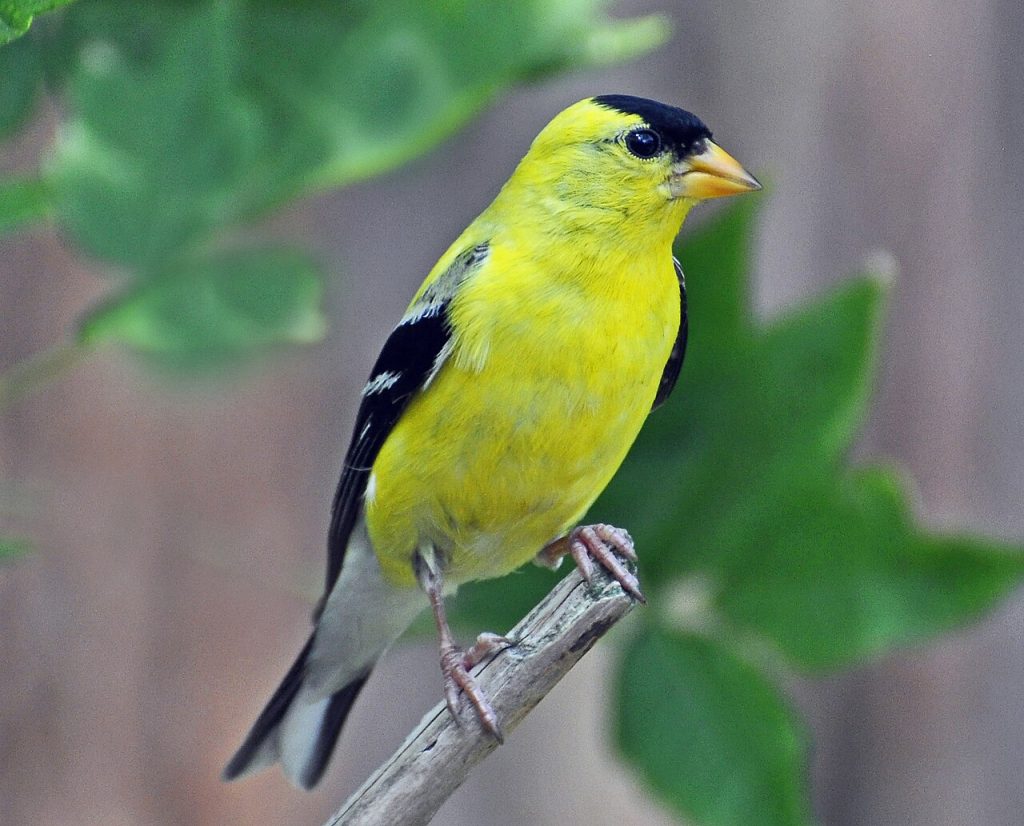
The American Goldfinch has rounded wings and a slightly notched tail. Although both sexes share a similar body shape, their plumage differs by sex and season. Breeding males display bright yellow plumage with black wings, tail, and forehead, while females appear duller yellow-green. In winter, both sexes change to yellowish-brown or gray with distinct pale wing bars and white tail spots. They have small black eyes, agile reddish-orange feet, and a short, strong, cone-shaped bill that becomes brighter orange during the breeding season.
Life Among Fields and Gardens
The American Goldfinch inhabits open and semi-open areas with abundant weeds and flowering plants, including woodland edges, roadsides, fields, orchards, streambanks, and suburban gardens. During winter, it also frequents more open fields. It is known for its wave-like flight and distinctive musical calls, often described as “per-chick-o-ree” or “potato-chip.”
Seeds on the Menu
The American Goldfinch feeds mainly on seeds, particularly those of daisies, thistles, grasses, weeds, and trees such as birch, elm, and alder. It also eats buds, young bark, and maple sap, while it occasionally consumes insects during summer.
Raising the Next Generation
During courtship, males perform fluttering flight displays while singing. The female builds a compact cup-shaped nest, lays 4–6 pale bluish-white eggs, and incubates them for 12–14 days while the male feeds her. After hatching, both parents care for the chicks, which leave the nest 11–17 days later. The parents feed the nestlings softened seeds.
Surviving in a Changing World
The American Goldfinch remains widespread and common across much of its range, although some local populations have declined. Major threats include habitat loss, window collisions, severe storms, and predators such as hawks, snakes, and domestic cats. Its adaptability to backyard feeders, flocking behavior, and use of dense vegetation for shelter help support its survival.