Tiny Bird With a Distinctive Look
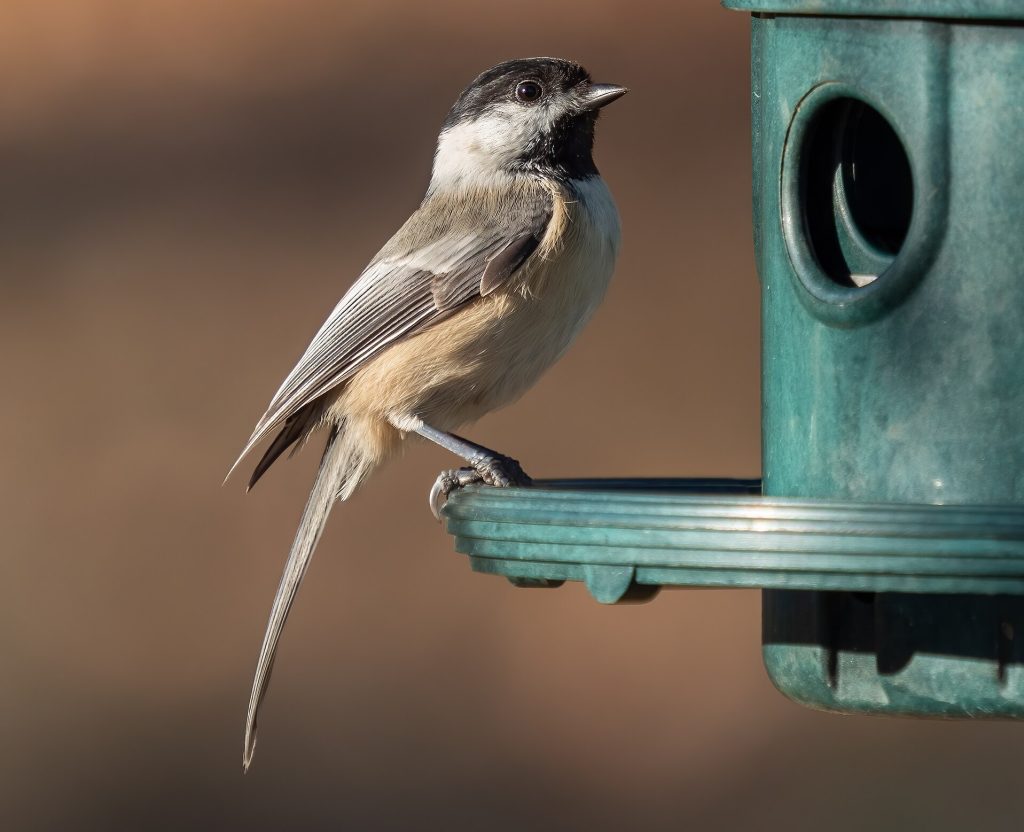
The black-capped chickadee is a small energetic songbird with a black cap and throat, bright white cheeks, soft gray back, buffy flanks, and a short black bill. Adults usually measure between 12 and 15 centimeters in length. They have a compact body, rounded wings, and a relatively long tail. It has strong feet to grip branches while it hunts for food.
The Secret Behind “Chick-a-dee” Call
Like many birds, the Black-capped Chickadee’s famous “chick-a-dee-dee-dee” call serves several purposes, including communication, flock coordination, and warning others about predators. Scientists have discovered that the bird increases the number of “dee” notes as the level of danger rises, providing more detailed information about the threat. Many bird species that join chickadee flocks recognize and respond to these alarm calls, even if their own species uses different warning signals.
Memory That Defies Its Size
Black-capped Chickadees eat insects, caterpillars, spiders, seeds, and small nuts throughout the year. In the fall, they store thousands of food items under bark, tree crevices, and in vegetation, remembering scores of cache locations for months. This incredible memory helps them survive the harsh winters when food is scarce.
Thriving Through Every Season
The species inhabits deciduous forests, mixed woodlands, parks, gardens, riparian habitats, and suburban neighborhoods across much of North America. However, unlike many other small birds, Black-capped Chickadees do not migrate long distances. Instead, they remain in the same area throughout the year. In winter, Black-capped Chickadees join mixed feeding flocks to improve predator detection and increase foraging success.
Life Begins in a Tree Cavity
Pairs establish their nesting territories following singing, aerial displays, and food offerings. Black-capped Chickadees usually build their nests in natural tree cavities or abandoned woodpecker holes. They line the nests with moss, fur, feathers, and fine plant fibers. The female usually lays six to eight white eggs with reddish-brown specks. The female does most of the incubation, and both parents feed the nestlings until they leave the cavity.
Surviving Predators and Human Impacts
Hawks, owls, squirrels, snakes, weasels, and domestic cats prey on Black-capped Chickadee adults, eggs, and chicks. Protection is provided by rapid movement, flock communication, and thick vegetation. The species is widespread, but habitat fragmentation, pesticide use, invasive competitors, and a shortage of nest cavities can affect local populations. Efforts to conserve include protecting mature forests and dead trees with nesting cavities and establishing bird-friendly landscapes.
Why the Black-capped Chickadee Stands Out
The Black-capped Chickadee continues to intrigue birdwatchers with its intelligence, remarkable memory, fearless curiosity, and year-round presence, making it one of North America’s most beloved woodland songbirds.