Purple Pitcher Plant: The Wetland Insect Hunter
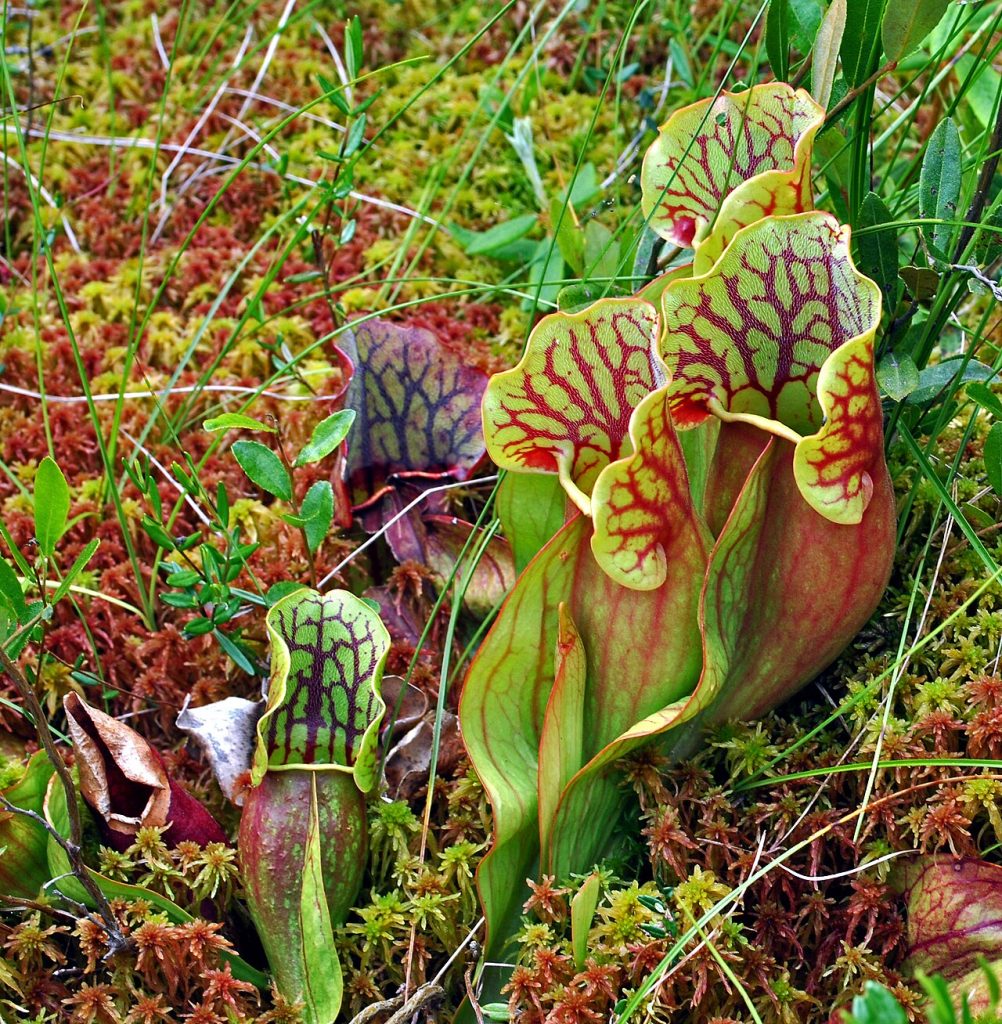
The Purple Pitcher Plant is a carnivorous wetland plant that traps and digests insects for nutrients and is known for its pitcher-shaped leaves.

Scientific Name
Sarracenia purpurea
Location
North America
Habitat
Ponds, Rain Garden, Streams, Wetland
Season
Spring, Summer

Overview

The Purple Pitcher Plant is a cold-hardy, carnivorous perennial native to the bogs, fens, and swamps of North America. Renowned for its distinctive pitcher-shaped leaves and striking purple-red flowers, it survives in nutrient-poor wetlands by capturing and digesting insects.

Plant Description

The plant forms a low-growing rosette of tubular, pitcher-shaped leaves that measure 3–12 inches (8–30 cm) long. The pitchers range from green to reddish and often display prominent purple or burgundy veins and hooded open lids. Moreover, they become deeper in color with bright sunlight or during autumn.

Stiff, downward-pointing hairs line the inner surface and prevent trapped insects from escaping. In late spring to early summer, a solitary, nodding flower appears on a tall, leafless stalk above the pitchers. Each flower has five reddish-purple petals beneath a distinctive umbrella-shaped style. It later develops into a rounded capsule containing numerous small brown seeds.

Carnivorous Mechanism

The Purple Pitcher Plant attracts insects with nectar, bright coloration, and contrasting veins. Once insects slip into the pitcher, the downward-pointing hairs prevent escape, while rainwater, digestive enzymes, and microorganisms gradually break down the prey. The plant then absorbs the released nutrients through the pitcher walls.

Life Cycle

The Purple Pitcher Plant is a long-lived perennial that enters a dormant period during autumn and winter. In spring, new pitchers and flowers emerge from its underground rhizome.

Flowering occurs before or alongside the development of new pitchers, thereby reducing the chance of trapping pollinators. After pollination, seed capsules release numerous seeds that wind and water disperse. Additionally, the plant spreads slowly through underground rhizomes, forming small colonies over time.

Cultivation

The Purple Pitcher Plant grows best in full sun to partial shade in consistently moist, acidic soil. Water it with rainwater or other lime-free water, as fertilizers and mineral-rich water can harm the plant. You can propagate it through seeds or by dividing mature rhizomes.

Uses

The Purple Pitcher Plant is widely grown as an ornamental for its unusual foliage and attractive flowers. Traditionally, some Indigenous North American communities used it in herbal medicine for certain ailments and minor wounds. In addition, it supports wetland biodiversity by providing habitat for microorganisms and aquatic insects. It also remains an important subject of research into carnivorous plants and their bioactive compounds.