The Chicken is one of the world’s most widely kept domesticated birds, raised primarily for its meat and eggs. It is descended from the Red Junglefowl (Gallus gallus) of Southeast Asia. Today, there are more than 150 recognized breeds, varying in size, color, feather patterns, and purpose.
Colorful Plumage and Unique Combs
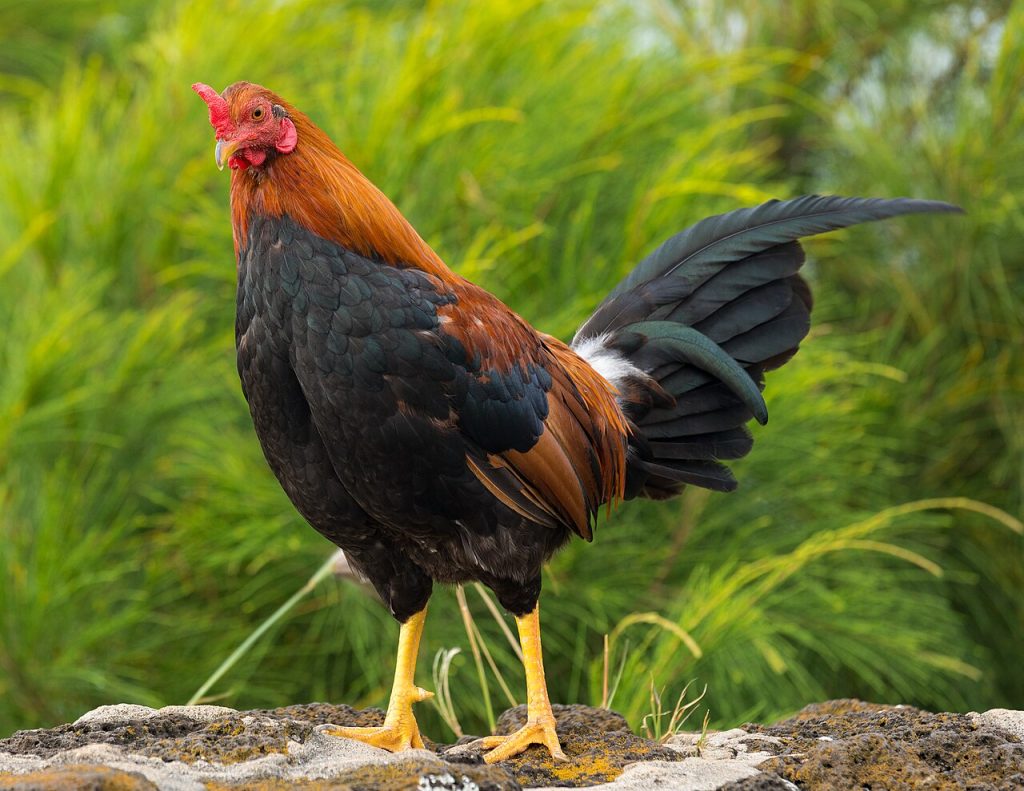
Male chickens (roosters) are generally larger and more brightly colored than females (hens). Roosters have prominent combs and wattles, long curved tail feathers, pointed neck and saddle feathers, and sharp leg spurs used for defense and competition. Hens are typically smaller, with shorter tails, smaller combs and wattles, and less elaborate plumage. Domestic chickens display remarkable diversity in appearance, with plumage ranging from white, black, brown, red, gold, cream, and gray to a variety of striped, spotted, and mixed patterns. Some breeds possess unique features such as feathered legs, crests, beards, or distinctive comb shapes. Their short, sturdy bill varies from yellow to horn or black, while their eyes are usually orange, red, or brown. Strong, scaly legs with four toes are well adapted for scratching the ground in search of food.
Omnivorous Backyard Birds: Habitat and Feeding
Domestic chickens are found on farms, in backyards, and as companion animals worldwide. They adapt well to a wide range of habitats, including rural and urban environments, provided they have access to food, water, shelter, and suitable space. Chickens are omnivorous, feeding on seeds, grains, grasses, leaves, insects, worms, grubs, and other small invertebrates. They may also eat small vertebrates, such as mice, when the opportunity arises. Domestic birds are commonly fed nutritionally balanced poultry feed supplemented with grains, vegetables, and other healthy foods.
The Pecking Order and Communication
Highly social by nature, chickens live in groups called flocks and establish a dominance hierarchy known as the pecking order, which determines access to food, water, and nesting sites. Although poor long-distance fliers, they can fly short distances to escape predators or reach elevated roosts. Roosters communicate by crowing and defending their territory, while hens use a variety of clucks and calls to communicate with chicks and other flock members.
Polygynous Mating Habits
Chickens are polygynous, with one rooster often mating with several hens. A healthy hen typically lays one egg every 24–26 hours. When a hen becomes broody, she stops laying eggs and incubates a clutch for about 21 days, regularly turning the eggs and leaving the nest only briefly. After hatching, she protects, warms, and guides the chicks until they are independent.
Dangers Around Them
In the wild and around human settlements, chickens are vulnerable to predators such as foxes, hawks, owls, snakes, raccoons, opossums, skunks, bobcats, feral cats, and dogs. Eggs and chicks are especially susceptible, making secure housing essential.
Domestication of the Species
Domesticated for thousands of years, chickens are kept for egg production, meat, breeding, exhibitions, pest control, and companionship. Many breeds are calm, friendly, and easily accustomed to human interaction. With proper nutrition, clean water, secure housing, and regular care, chickens remain healthy and productive.
The chicken continues to be one of the world’s most important domesticated birds, valued for its adaptability, resilience, and essential role in global agriculture and food production.
Peppa’s Feathered Friends
In the children’s cartoon, Peppa Pig, Granny Pig’s chickens keep her garden lively. While laying eggs and terrorising Grandpa Pig’s produce, the chickens- Jemima, Sarah, Vanessa, and Neville- teach children about garden/farm life.