Built for Coastal Life
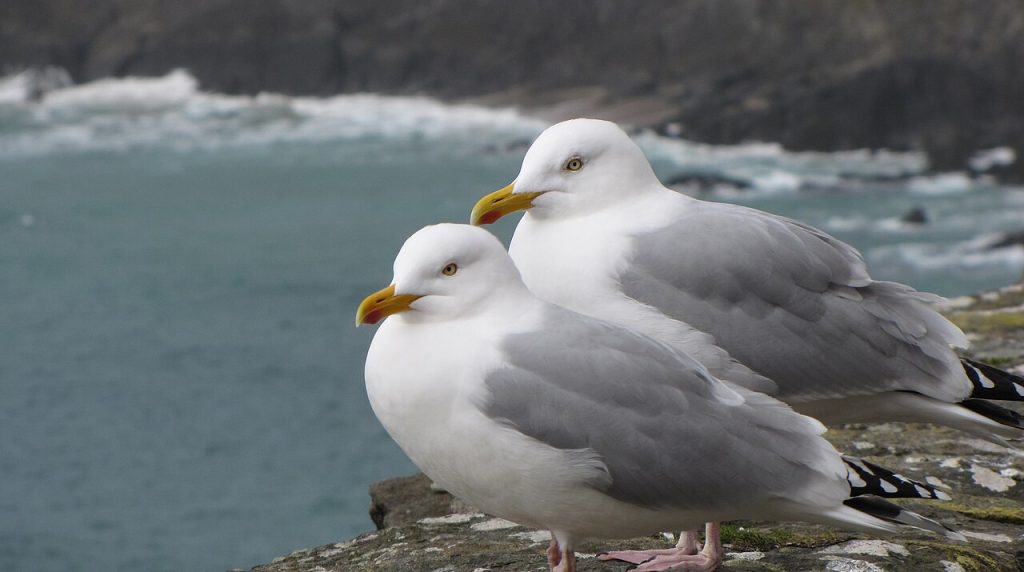
The Herring Gull is a large coastal seabird. It has broad wings, a stout yellow bill with a red spot, a pale gray back, white head and underparts, pink legs, and piercing yellow eyes. Adults measure about 54 to 60 centimeters in length and have a considerable wingspan. This enables them to soar efficiently over land and sea. Juveniles are mottled brown, changing to the familiar adult coloration over a period of several years. Their large webbed feet allow them to walk confidently on beaches, rocky shores, and shallow coastal waters.
Smarter Than You Think
An interesting scientific fact is that the Herring Gull shows advanced visual learning skills. They can be taught to recognize individual human faces after repeated exposure. Also, they are good problem solvers and learn to feed successfully by watching other individuals.
An Opportunistic Feeder
The Herring Gull’s diet is very adaptable. They eat fish, crustaceans, molluscs, insects, worms, small mammals, bird eggs, carrion, and discarded human food. This flexible mode of feeding enables the species to occupy a wide range of coastal and inland environments, contributing to nutrient recycling through scavenging.
Where Herring Gulls Live
Across Europe, Asia, and North America, Herring Gulls inhabit coastlines, estuaries, harbours, islands, wetlands, lakes, rivers, farmland, and increasingly urban areas. Many northern populations move south in winter, but in less severe areas, the birds are often sedentary year-round.
Family Life and Nesting
Courtship includes head-tossing displays and synchronized calling and mutual feeding before the establishment of nesting territories by breeding pairs. Herring Gulls frequently construct their nests from seaweed, grasses, feathers, and any available vegetation on cliffs, rocky islands, sand dunes, rooftops, or grassy coastal areas. The female usually lays two or three olive-brown eggs with darker spots. Both parents incubate the eggs and fiercely defend the chicks from potential predators until they fledge.
Surviving Natural Threats
Predators such as foxes, eagles, ravens, large gulls, raccoons, and introduced mammals threaten the eggs or young birds. Adults defend colonies by loud alarm calls and aggressive aerial attacks on potential nest site intruders.
Protecting Coastal Populations
Ongoing conservation problems in some areas include coastal development, oil spills, plastic pollution, overfishing, and habitat disturbance. Conservation efforts emphasize protecting breeding colonies, restoring the health of marine environments, and reducing pollution.
Animated Appearance
This bird is one of several real-life species featured in Peppa Pig. The seagulls flying over Peppa’s seaside adventures closely resemble the Herring Gull.
A Master of Adaptation
The herring gull continues to be one of the world’s most adaptable seabirds. Its intelligence, diverse feeding habits, and importance in the ecosystem are all examples of the remarkable resiliency of coastal bird species.