Overview
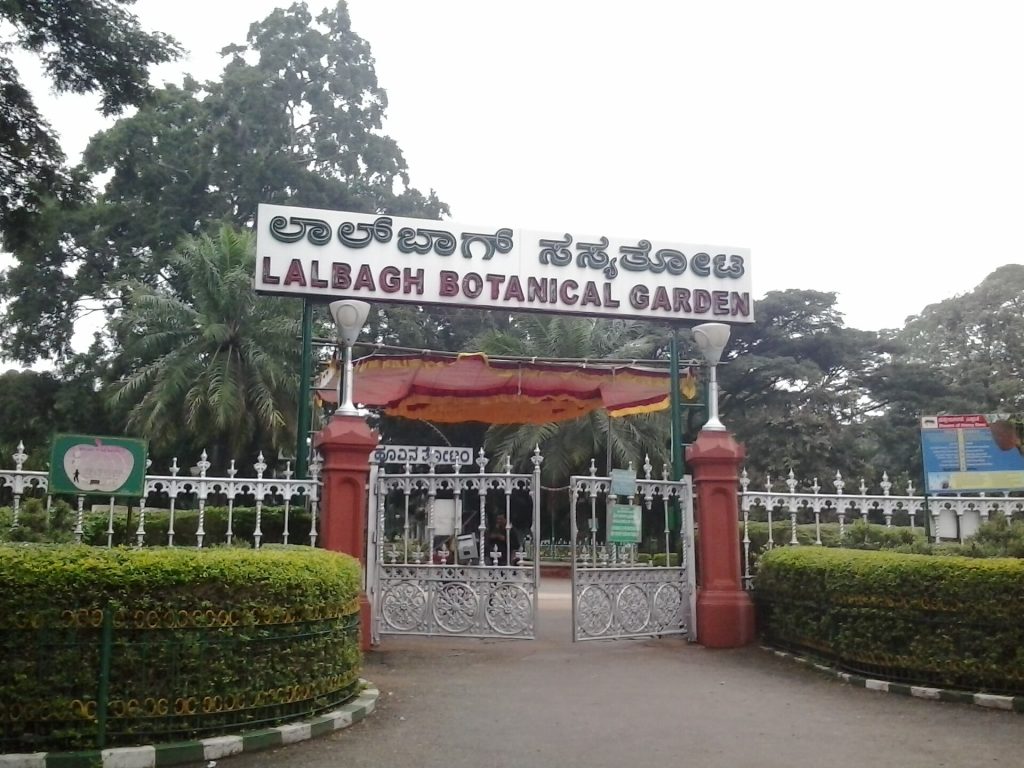
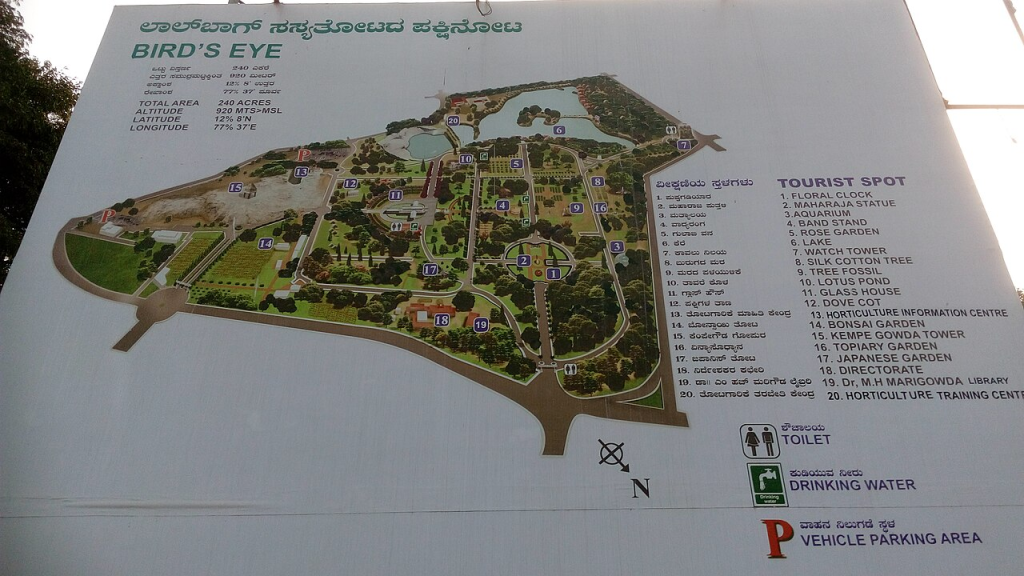
Lalbagh is located in the southern part of Bengaluru, Karnataka. It is spread over 240 acres, which cuts out the noise and hustle-bustle of the city. This garden is currently being maintained by the Department of Horticulture, Government of Karnataka. Apart from historic and exotic plants, this garden also houses the Glass House, a Bandstand, and the Lalbagh Lake, Peninsular Gneiss Rock & Kempegowda Watchtower, Bonsai Garden, Floral clock, a nursery, and more.
Lalbagh: History and Development
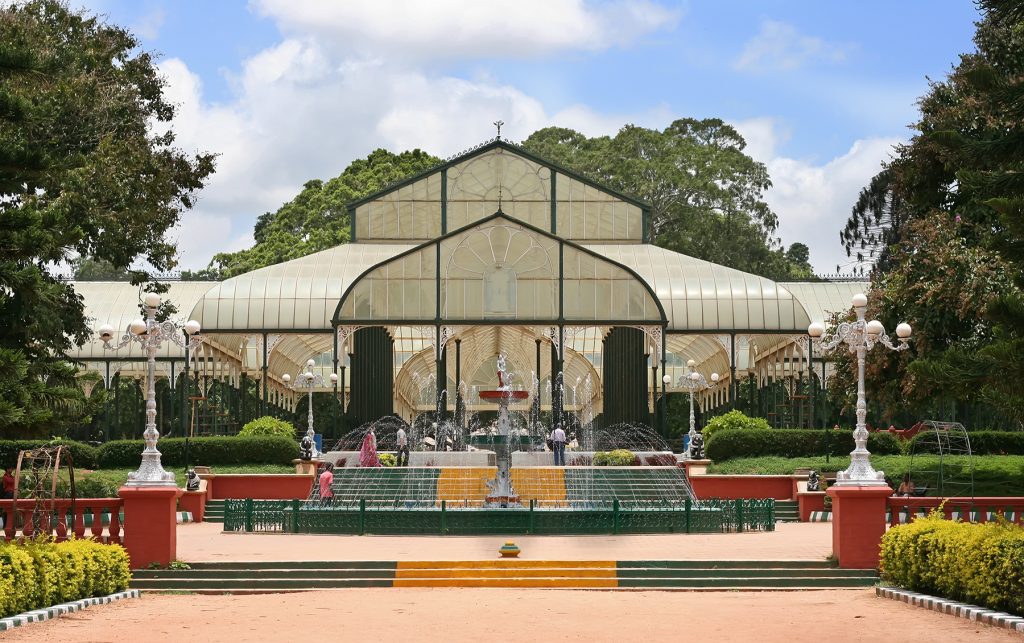
Lalbagh is one of the oldest gardens in India. It was started by the then ruler of Mysore, Hyder Ali, in 1760, who sought to establish a royal garden with Mughal-style landscapes. It was later expanded by his son, Tipu Sultan, who turned it into a major botanical collection. The garden saw further development under British rule. Inspired by London’s Crystal Palace, they constructed the Lalbagh Glass House, which is the centrepiece attraction of this beautiful garden.
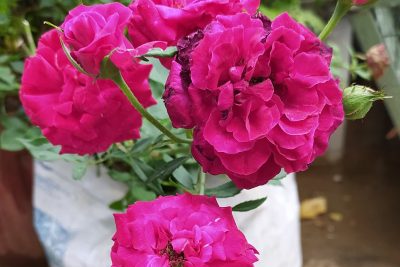
The name ‘Lalbagh’ comes from the Urdu word for ‘Red Garden’. This is in reference to the lush red roses that once dominated its landscape. To date, there is an exclusive Rose garden near the Lalbagh Lake.
Lalbagh Flower Show History
Under Tipu Sultan, and later, the British, Lalbagh became an important centre for gardening and plant cultivation. It also provided a setting for early horticultural activities and flower exhibitions. Records point to flower shows at Lalbagh as early as 1869–1870. English flower shows influenced the idea, particularly the Great Spring Show organised by the Royal Horticultural Society.
The early exhibitions did more than display beautiful flowers. They also encouraged people to grow flowers, fruits, and vegetables and develop an interest in gardening. Initially, the shows took place near Lalbagh’s bandstand. In 1890, the iconic Glass House transformed the exhibitions. Inspired by London’s Crystal Palace, it gradually became the main venue and eventually became closely associated with the identity of the Lalbagh Flower Show.
Evolution of the Flower Show
By 1912, the tradition had developed into regular biannual flower shows. The shows originally followed seasonal flower availability rather than today’s national celebrations. The exhibitions also developed a strong educational and competitive spirit. Gardeners and growers improved plant quality, explored different varieties, and learned horticultural techniques. Floral arrangements, potted plants, bonsai, and other displays showcased gardening skills and creativity. In 1912, horticulturist G. H. Krumbiegel organised a floral bicycle parade featuring young girls. This event showed how the exhibitions combined horticulture with visual presentation and public entertainment.
Modern Tradition and Legacy
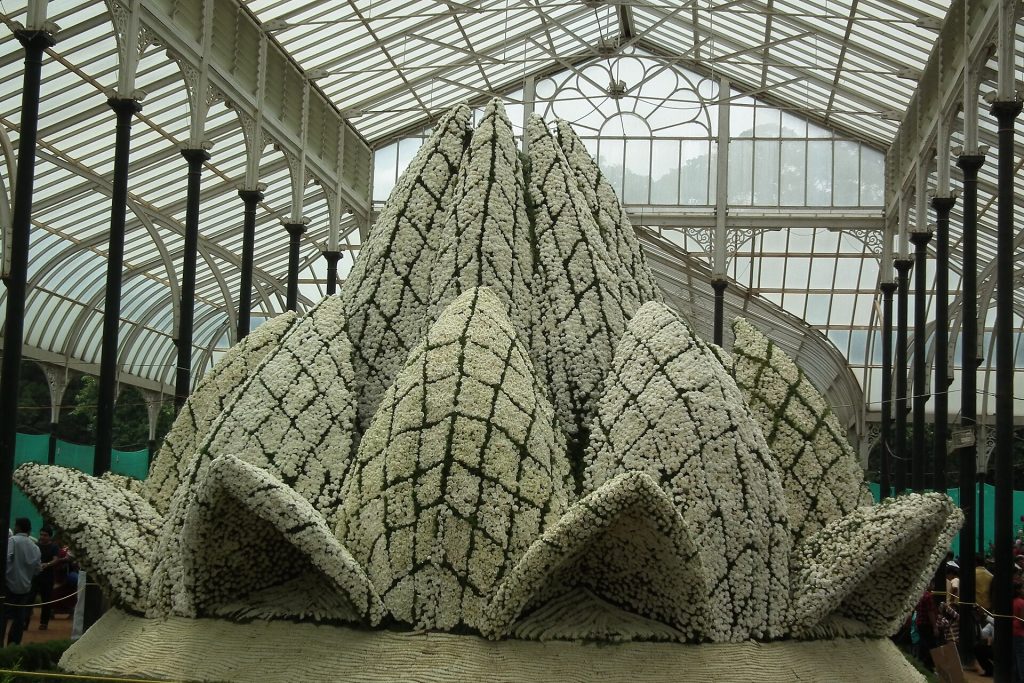
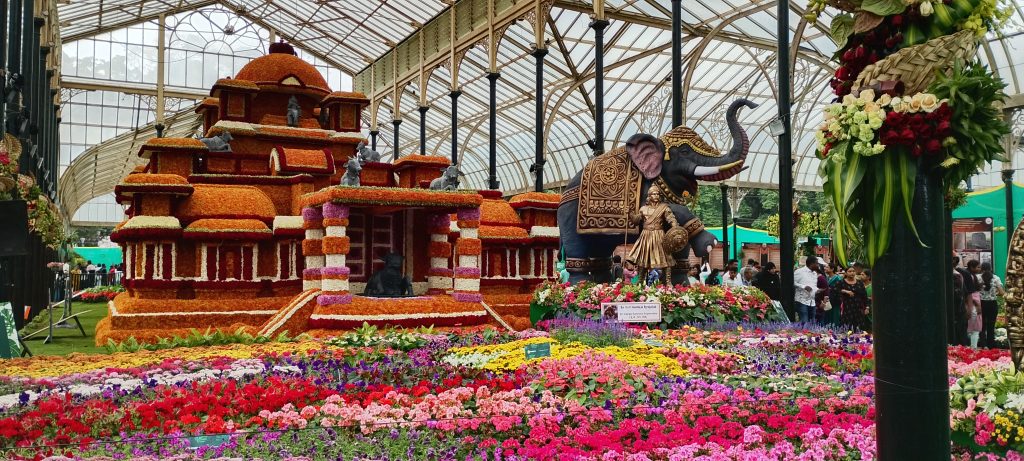
Over the decades, the Flower Show continued to evolve. Traditional displays gradually expanded into elaborate themed exhibitions featuring large floral structures, artistic arrangements, and representations of important landmarks, historical events, and cultural subjects. Since 1951, the major shows have been associated with Republic Day (26th January) and Independence Day (15th August) of India. This connection gave the exhibitions a stronger national and cultural character.
The tradition faced interruptions during the Second World War and the COVID-19 pandemic. However, the Flower Show repeatedly returned to Bengaluru’s calendar. Today, the Lalbagh Flower Show remains a living horticultural tradition. Its historic Glass House connects exhibitions of the past with the creative floral displays of the present.
The theme of the August 2026 edition of the Lalbagh Flower Show was “The Glory of Ganga Empire” and depicted floral replicas of Begur temple, Bahubali statue construction, Talakadu Temple, among others, depicting the rich history and legacy of Karnataka.
Frequently Asked Questions
The flower shows are held twice a year in Lal Bagh, Bengaluru, India- once as a part of Republic Day Celebrations (26th January) and the other as a part of Independence Day Celebrations (15th August).
Roughly 2150 species of plants belonging to 140 families can be seen in Lalbagh.
Both spellings are correct and widely used. But the official spelling used by the Government of Karnataka and the Department of Horticulture is 'Lalbagh' (as a single word)
'Lalbagh' means 'Red Garden' in Urdu.