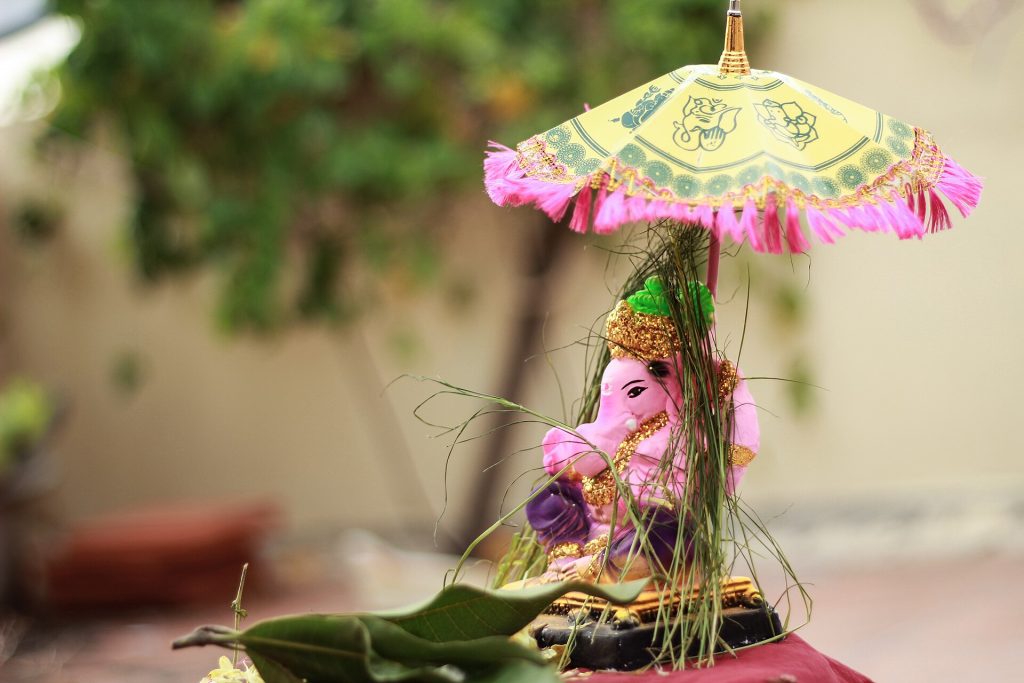
Ganesh Chaturthi is a Hindu festival celebrating the birth of Lord Ganesha, the son of Lord Shiva and Goddess Parvati. Lord Ganesha is the god of new beginnings, the remover of obstacles, and the god of wisdom, fortune, prosperity, and intelligence. This celebration begins with installing an idol of the Lord and ends with immersing the idol in a body of water. This festival is a sign of unity and devotion among people.
Celebration: When and Where
The festival begins on the 4th day (chaturthi) of the Bhadrapada month (Hindu lunar month) and ends on the 14th day (Anantha chaturdashi) of the same month. It may be celebrated for 1.5, 3, 5, 7, or all 11 days.
Ganesh Chaturthi is celebrated all over India and also by the Indian communities living in other nations. This is a major festival in the state of Maharashtra, closely followed by Karnataka and Andhra Pradesh. Devotees may celebrate it in the privacy of their homes or join in the festivities organised by local youth groups and others. The most famous celebrations to watch out for are Lalbaugcha Raja (Mumbai), Dagdusheth Halwai Ganpati (Pune), Khairatabad Ganesh (Hyderabad) and Siddhivinayak Temple (Mumbai).
Celebration: Know-How in Brief
The festival preparation begins months in advance. Ganesha Clay idols are prepared and painted in varying sizes. Some communities order custom Ganesha idols in large sizes or unique poses. People set up small stages (pandals) and decorate them before bringing the idol. On the 1st day, people cover the idol’s face and bring it to the stage amid much fanfare. A priest performs the Prana Pratishtha ceremony to invite Ganesh as a guest and manifest the idol. Devotees worship the idol daily for the next few days and distribute prasada among everyone present. Families prepare delicious food in every home. They especially make the sweet modak, known to be Lord Ganesha’s favorite.
People organise music, dance, and drama events at the pandals, and these events are open to the general public to participate and/or witness.
When the last day rolls around, the final aarti is performed, and a procession is held to parade the idol. This is accompanied by musicians playing the dhol, tamate, and other instruments. The procession moves towards a nearby body of water for the immersion, or visarjan, with devotees hoping and praying for his return the next year.
Ganesh Chaturthi Flowers
The devotoess / priest places the Ganesh idol on a small peetha (seat or pedestal). Devotees decorate the idol with garlands and flowers and place food offerings in front of it. They adorn the space with beautiful lights and backdrops. People light deepas (ghee/oil lamps) throughout the day, especially during puja and aarti.
Various plants and flowers symbolize Lord Ganesh and the Ganesh Chaturthi festival. Here, we will be covering these flowers and more, which you can use for the festival.
Hibiscus
Among the various flowers offered to Ganesh, the red hibiscus is known to be quite close to him. The red hibiscus is often linked to Shakti (divine feminine energy), vitality, energy, and enthusiasm. These are all qualities associated with Ganesh. The shape of the flower resembles that of the modak, Ganesh’s favourite food.
Common Hibiscus | One-Day Blooms
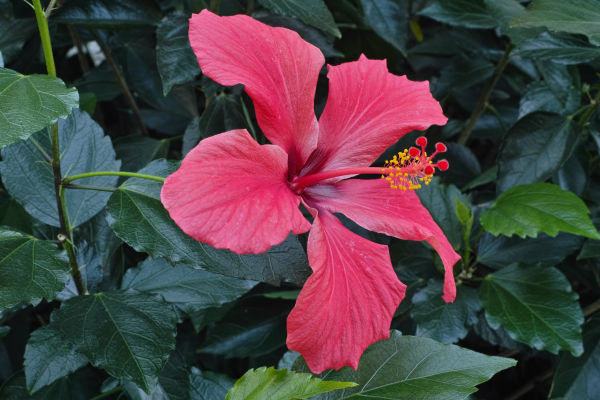
Common Hibiscus is an ornamental shrub with large, vibrant flowers. Its nectar attracts butterflies, bees, and birds, supporting pollinators.
Read moreBermuda grass
The story goes that Ganesh swallowed the demon Analasura whole to stop him. This caused intense burning and pain in Ganesh’s stomach, which only eased when devotees offered 21 stems of Durva. Hence, no Ganesh puja is complete without this.
People widely recognize hibiscus as his favorite flower, but Bermuda grass is actually his true favorite.
Bermuda Grass | Rapid Regeneration
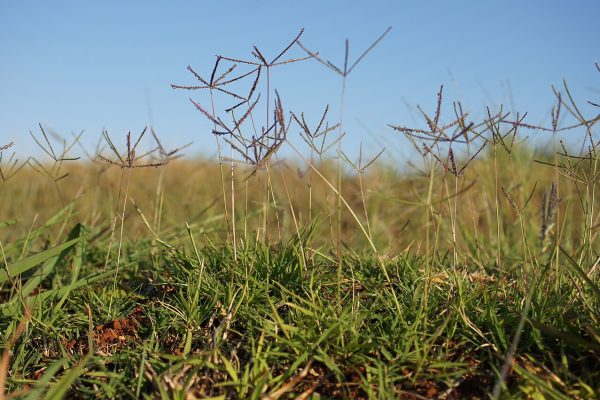
Bermuda grass' underground stems help it spread rapidly, form dense lawns, reproduce, & persist through repeated disturbance in changing environments.
Read moreBael
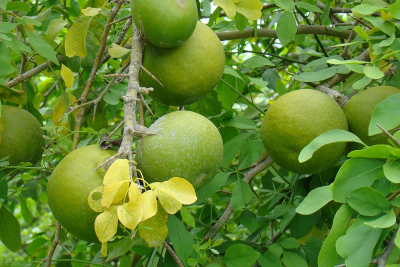
The Bael, or Bilva Patra, is a trifoliate leaf tree, connecting it to the trinity of Gods. Devotees believe that offering this to Ganesha removes obstacles and attracts positive energy.
Bael | The Trifoliate Leaves of the Bael Tree
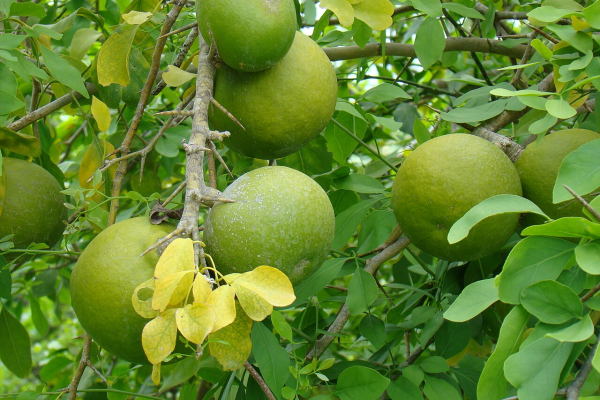
Bael, a deciduous tree with characteristic trifoliate leaves, holds a special place in South Asian food and culture. It belongs to the citrus family.
Read moreBetel Vine
This leaf symbolizes purity, devotion, and the surrender of the ego during rituals. Devotees offer these as Tambula to Lord Ganesha and to the women guests invited to see the idol.
Betel Vine | An Evergreen Climber of Tradition
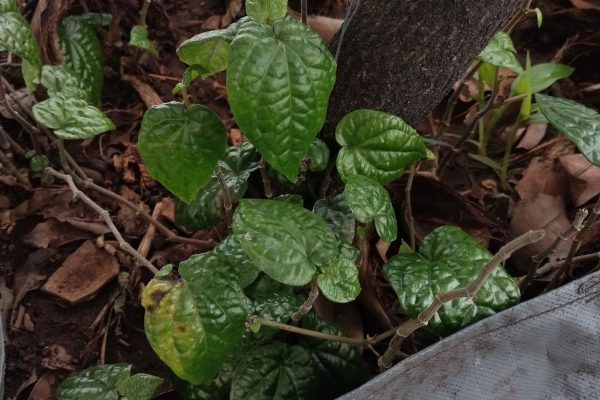
Betel vine is an evergreen climber known for its aromatic, heart-shaped leaves. It is used in paan, cooking, traditional practices, & religious ceremonies.
Read moreOleander
The red oleander is specifically considered auspicious to offer. They also regard oleander leaves as sacred and include them among the sacred leaves offered during puja. It symbolizes inner courage and dedication. Since all parts of the plant are toxic, people should handle it carefully.
Oleander | The Plant Built for Dry Conditions
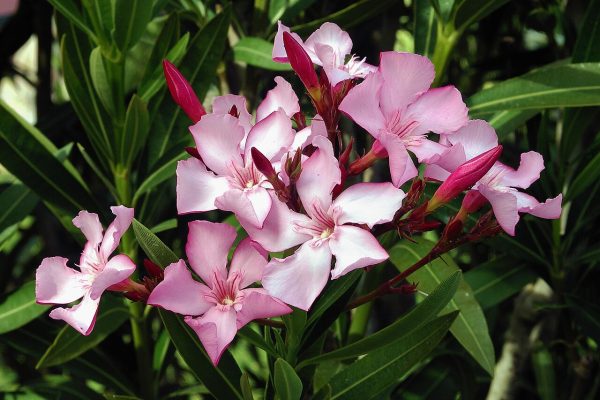
Oleander adapts to intense sunlight, seasonal drought, and coastal exposure. Its narrow, leathery leaves and deep roots help it withstand drought.
Read moreChampak
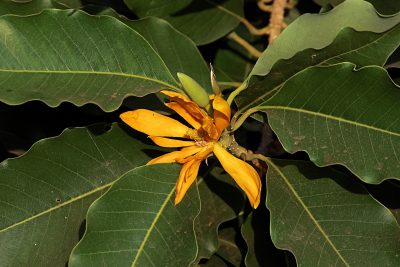
Many believe that offering the champak flower to Ganesha can fulfill heartfelt prayers about love and marriage.
Champak | The Fragrant Golden Flower
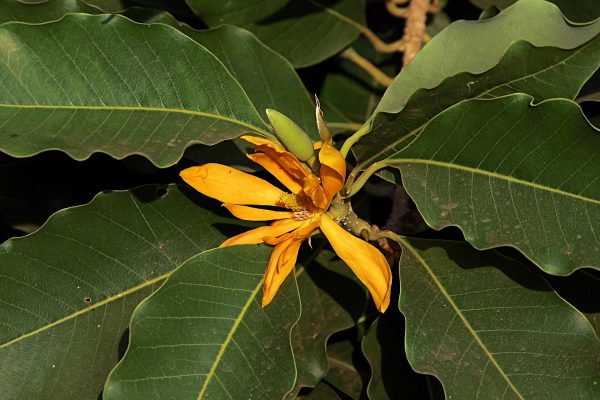
Champak is an evergreen tree known for its strongly fragrant flowers. It is valued for perfumery, ornamental planting, and cultural traditions.
Read moreGarden Balsam
Devotees consider the leaves and flowers of Garden Balsam sacred offerings. The flowers are especially used during Gowri Puja. They are a symbol of deep devotion and purity.
Garden Balsam | The Touch-Me-Not Flower
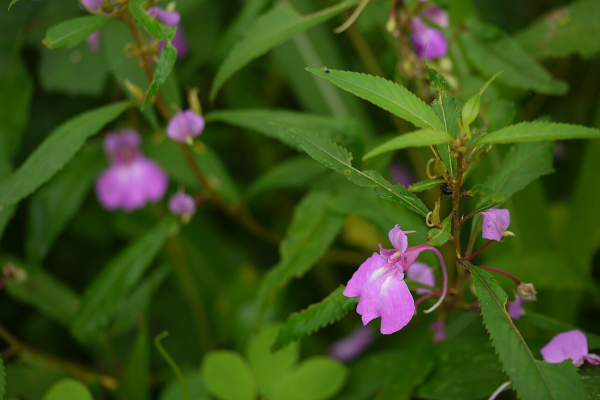
Garden Balsam is a colourful annual herb with bright flowers and explosive seed capsules. It thrives in warm, moist conditions and partial shade.
Read moreDatura
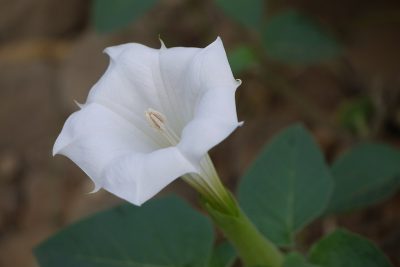
People believe offering Datura leaves and flowers helps remove obstacles and curses, as both parts of the plant are sacred.
Downy Thorn-Apple | The Fragrant Night Bloomer
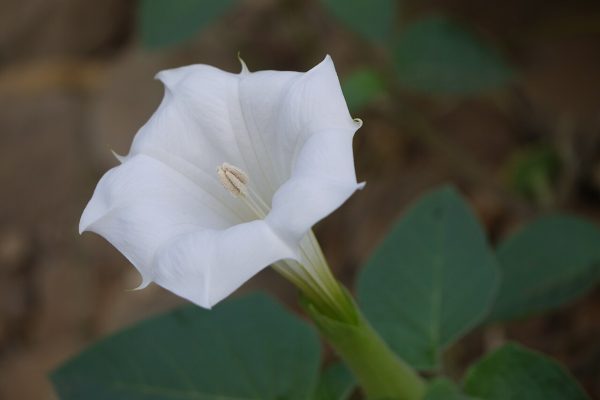
Downy thorn-apple is a bushy plant with white trumpet-shaped flowers. It has a long ethnobotanical history but is highly poisonous and unsafe to use.
Read morePomegranate
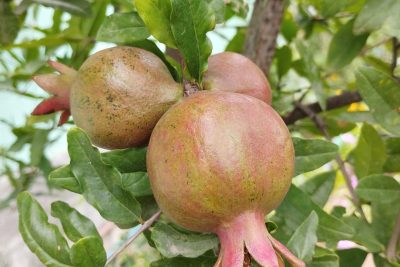
Pomegranate symbolises continuity and strength. This red flower also replaces the red hibiscus, in case the latter is unavailable. People keep pomegranate trees at home to bring prosperity and good health.
Pomegranate | Fruit With A Jewel-Like Interior
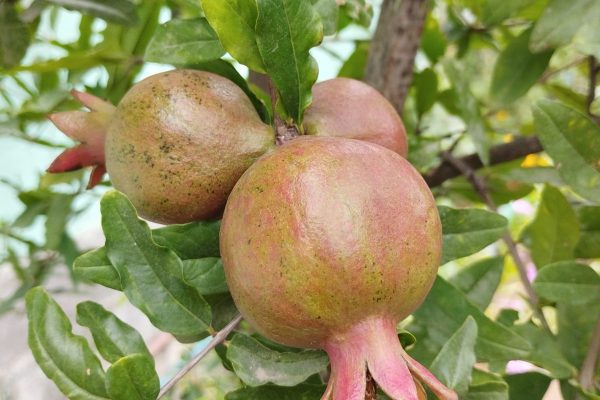
Pomegranate has complex fruit architecture- many compartments & jewel-like arils. Its flowers support insects & fruits provide food for birds & mammals.
Read moreParijata
According to tradition, devotees treat this as a “fallen offering,” meaning they should offer only flowers that have naturally fallen to the ground and not pick directly from the plant. Offering this flower is thought to bring prosperity, harmony, and success.
Night-flowering Jasmine | Parijat Flowers That Bloom After Dusk
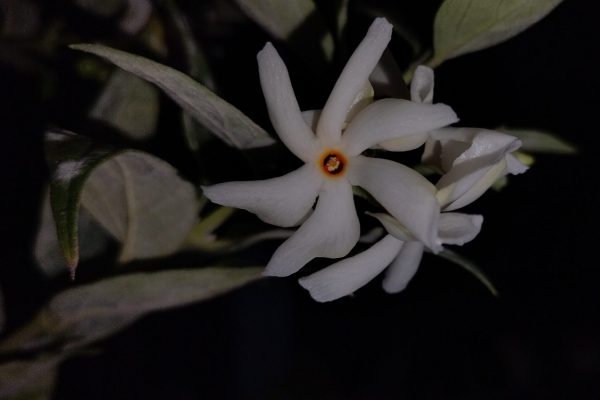
Night-flowering Jasmine/Parijat has a unique botanical rhythm- it flowers after dusk. Its white petals & orange floral tubes make it easily recognizable.
Read more