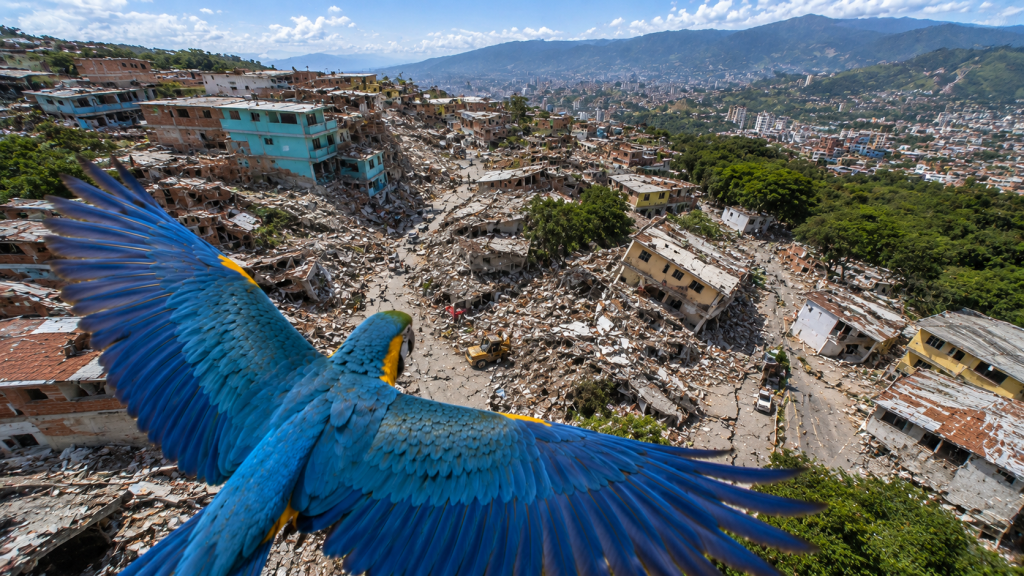
In June 2026, two powerful earthquakes struck north-central Venezuela, impacting Caracas, La Guaira, Carabobo, Aragua, and Yaracuy. As rescue teams worked to help affected communities, a new question arose. What happened to the wildlife that inhabits these landscapes?
As of today, there have been no reports of any birds being harmed or injured due to the Venezuela earthquake; however, many have likely faced some disturbances due to changes in their environment. Let us now try to discuss the effect of the twin earthquakes on the bird population in the stricken area.
How Can Earthquakes Affect Birds?
Birds have an advantage over humans as they are capable of escaping from dangerous situations by flying away to safe places. Nonetheless, birds will still need suitable environments for food, nesting, and shelter. Severe shaking can dislodge birds from their nests in trees, damage the trees, alter coastlines, and even disrupt breeding grounds.
Possible Impact on Venezuelan Birds
-
Tropical Mockingbird
The Tropical Mockingbird is one of the most common birds in northern Venezuela. It inhabits parks, gardens, farmlands, and suburban areas around Caracas, Valencia, and Maracay. Since its nests can be located in bushes and small trees, damage to the foliage might have contributed to the destruction of nests. Repeated aftershocks could also have disturbed breeding birds.
-
Ruddy Ground Dove
Found across north-central Venezuela, the Ruddy Ground Dove subsists mainly on seeds found at ground level in gardens, roadsides, and clearings. Following the earthquake, debris, dust, and human activities may have resulted in a temporary scarcity of feeding grounds. However, recovery in such situations is swift because this species is known to be adaptable.
-
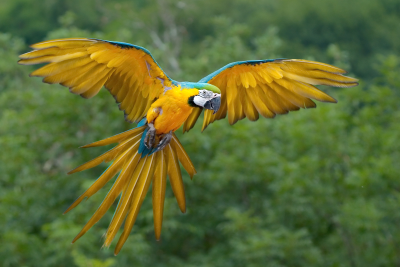
Blue-and-yellow Macaw
The Blue-and-yellow Macaw occurs naturally in northern Venezuela and is common around Caracas. This macaw requires mature trees for nesting and roosting. Earthquakes and landslides may have resulted in the destruction of such nesting and roosting spots, leading some individuals to seek alternative nesting and roosting spots.
-
Barn Swallow
The Barn Swallow migrates to northern Venezuela and commonly roosts under bridges and other man-made structures.
They catch insects while flying. Damage to their roosts may have displaced local populations until they found new places to roost. -
Glittering-throated Emerald
This small hummingbird breeds in gardens, forest edges, and coastal forests near Caracas and La Guaira.
This species makes small cup-like nests, mounted to thin branches, and as a result, is highly vulnerable to strong tremors. Furthermore, any damage to flowering plants would lead to a temporary shortage of food sources.
Other Bird Species That May Have Been Affected
The Rock Pigeon, which lives on buildings and bridges, could also be subject to temporary habitat loss. Another species that may have suffered displacement due to the destruction of their habitats includes the Blue-gray Tanager (usually found in parks and gardens), the Carib Grackle (often found in towns and clearings), the Black Vulture (which roosts in buildings, cliffs, and big trees), and the Tropical Kingbird (usually lives in cities, farmlands, and wood edges).
The earthquake may also have affected other birds. Many live in the coastal areas of La Guaira, where the earthquake damaged vegetation.
What We Know So Far
At present, no scientific surveys have documented how individual bird species responded to the 2026 Venezuela earthquake. Most of what we know comes from reports of habitat damage rather than direct observations of birds.
As wildlife surveys continue, researchers may gain a better understanding of how Venezuela’s birds coped with the disaster. Until then, the earthquake serves as a reminder that natural disasters affect not only people but also the wildlife that depends on these ecosystems.
*Editor’s Note*: At the time of writing, no scientific studies or wildlife surveys have documented the direct effects of the June 2026 Venezuela earthquake on wild bird populations. The species-specific impacts discussed in this article are informed ecological predictions based on the documented habitat damage in the affected regions and each species’ known habitat, nesting behaviour, and ecology.