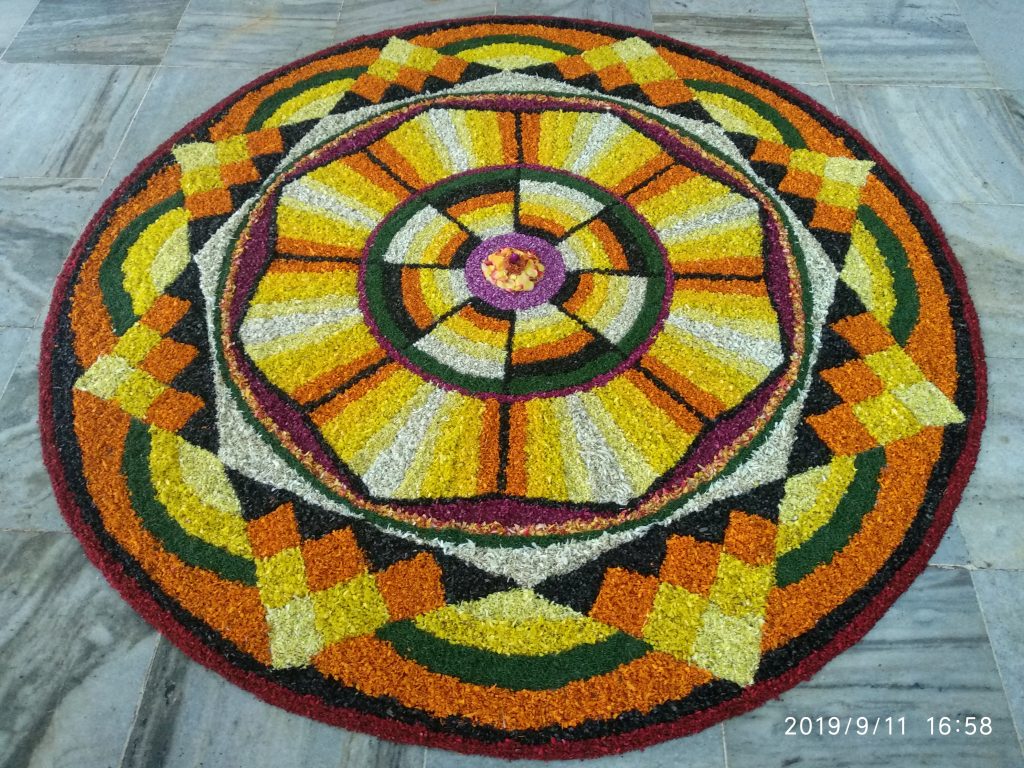
Onam is one of Kerala’s most loved festivals. It spans 10 days and marks the season of a bountiful harvest. People also believe that benevolent King Mahabali returns from the netherworld for one day to meet his subjects. They decorate pookkalams with fresh flowers and petals to welcome King Mahabali.
What is a Pookalam?
The word pookalam comes from the amalgamation of two Malayalam words:. ‘poo’, meaning flower, and kalam’, meaning a design or arrangement. People make colourful floral patterns at the entrance of homes, temples, and other spaces during Onam, called Pookkalam.
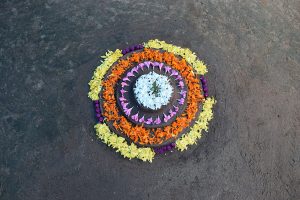
Did you know? Traditionally, the design will start small – with just 2-3 concentric layers. A fresh layer of flowers/petals adds to the design every day. The pattern becomes more elaborate as the festival progresses. They are beautiful, and making a pookalam is about togetherness, prosperity, and celebrating the spirit of Onam.
What flowers are used in Pookalam?
Different types of flowers (and sometimes, leaves) make up a pookalam. These come in different sizes, shapes, and colors. People pick flowers from their garden or source them locally for the design. The choice of flowers depends on tradition, availability, and region. People mostly pick wildflowers growing in the region for this purpose.
1. Holy Basil
Usually, the first plant added to the design is Holy Basil (Tulsi). Apart from being auspicious, this brings a touch of much-needed green to the design.
Holy Basil | A Plant with Deep Cultural Roots
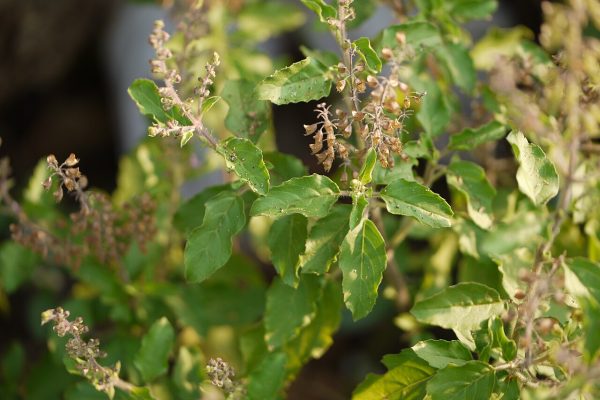
Holy Basil is deeply rooted in South Asian culture, growing in gardens, courtyards, & religious spaces, while remaining valued for its traditional uses.
Read more2. Ceylon Slitwort (aka thumbapoovu)
These little white flowers hold sacred significance during the festival. They come next in the pookkalam after Holy Basil.
Ceylon Slitwort | The Little White Wildflower
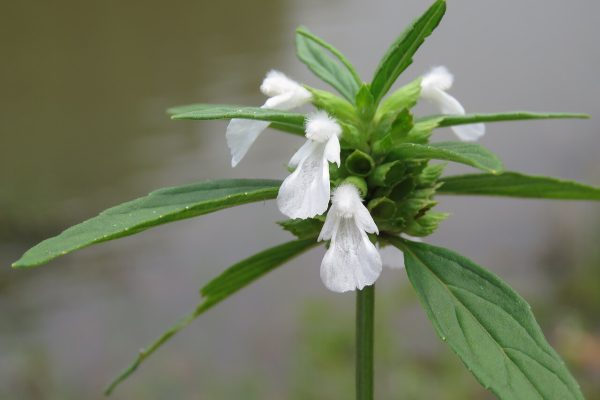
Ceylon Slitwort, a hardy annual herb, has fragrant leaves & small white flowers. It is valued for its adaptability, traditional uses & cultural importance.
Read more3. Little tree plant
The Malayalam name for the Little Tree plant is Mukkutti. This plant responds to touch and produces tiny yellow flowers, which people use whole in pookkalams.
Little Tree Plant | The Miniature Tree With Moving Leaves
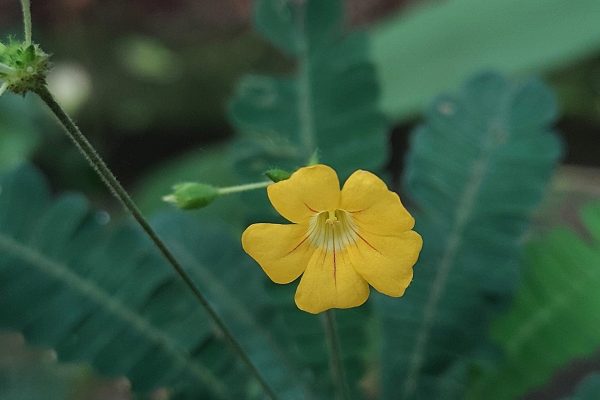
Little Tree Plant is known for its touch-sensitive leaves & miniature tree-like form, offering insight into how plants develop unique forms & responses.
Read more4. Golden Trumpet
In Kerala, the Golden Trumpet is known as ‘Kolambi’. This beautiful plant produces yellow, bell-shaped flowers and makes a lovely addition to pookkalams.
Golden Trumpet | Yellow Bells of the Garden
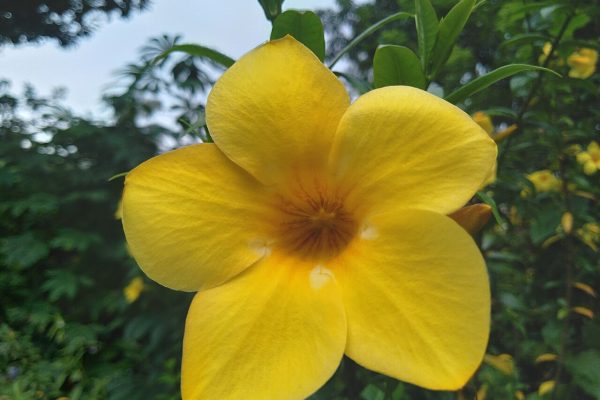
Golden Trumpet is a tropical evergreen with glossy foliage and striking trumpet-shaped blooms. Native to South America, it thrives in warm climates.
Read more5. Hibiscus
Separated petals of Chembarathi, or hibiscus, are added to the design. A whole flower may also be used sometimes.
Common Hibiscus | One-Day Blooms
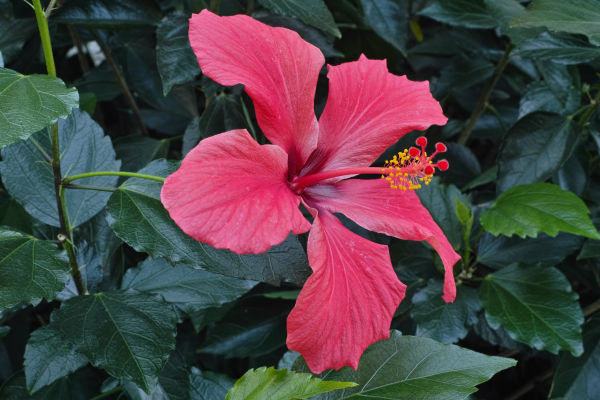
Common Hibiscus is an ornamental shrub with large, vibrant flowers. Its nectar attracts butterflies, bees, and birds, supporting pollinators.
Read more6. Peacock Flower
The Peacock flower, or Rajamalli, adds vibrancy to the pookkalam with its bright orange hues and elegant long stamen.
Peacock Flower | Changing Botanical Identity
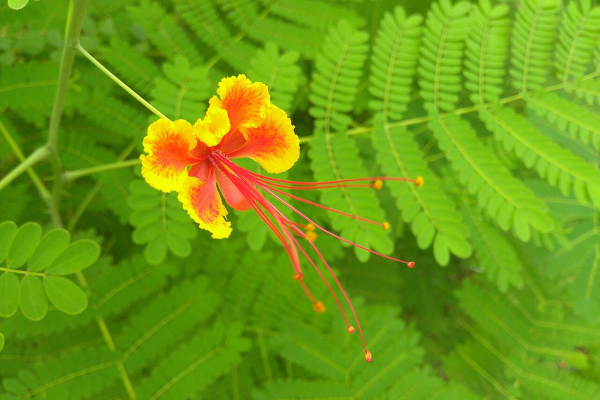
Peacock Flower's colorful blooms and adaptability reflect the influence of seasonal climates, cultivation, and evolving botanical knowledge.
Read more7. Butterfly Pea
Along with the Gomphrena, Butterfly Pea, or Shankupushpam, breaks the monotony of the usual reds and yellows with its bright purple shade and lovely shape.
Butterfly Pea | Where Beauty Meets Colour Chemistry
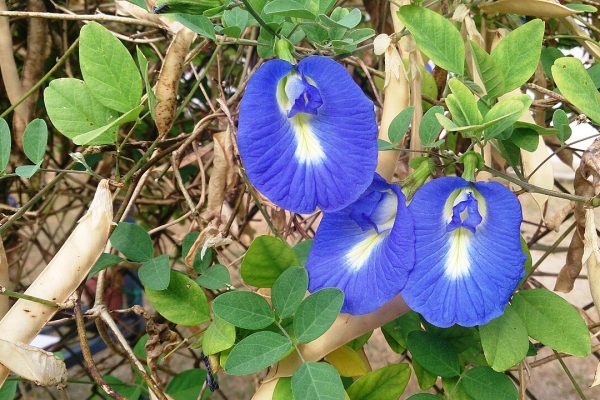
Butterfly Pea is a tropical climbing vine with vibrant blue flowers, edible pods, and herbal uses, thriving in warm climates with long blooms.
Read more8. White Orchid-Tree
Commonly known as Mandaram in Kerala, these beautiful orchid-like blooms bring a touch of elegance to the pookkalam. This flower can be used as a whole, or just its petals are plucked.
White Orchid Tree: White Flowers, Distinctive Leaves
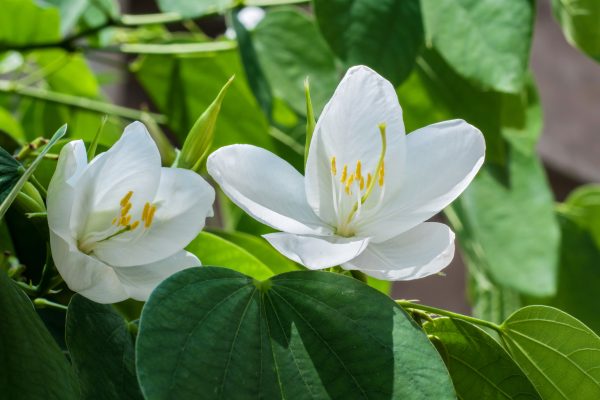
White Orchid Tree is a small tree with fragrant white flowers. Native to Asia, it grows in warm climates, & is valued for its beauty and cultural value.
Read more9. Marigold
The petals of Marigold, or Jamanthi, are usually plucked and used. Traditional pookkalams excluded this flower, but modern designs use it for a fuller look. Sometimes, the whole flower forms the border.
Marigold | Journey From Mexico to India
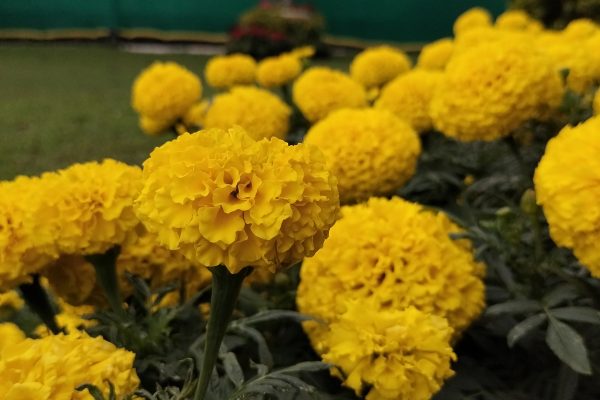
Marigold's many varieties differ in flower size, shape, color and plant height, reflecting its evolving roles in gardens, festivals and horticulture.
Read more10. Globe Amaranth
Also known as Vadamalli in Malayalam, this plant adds a vivid burst of purple color to the pookkalam. Some cultivars also come in shades of pink and white.
Globe Amaranth: Blooms That Hold Its Colour
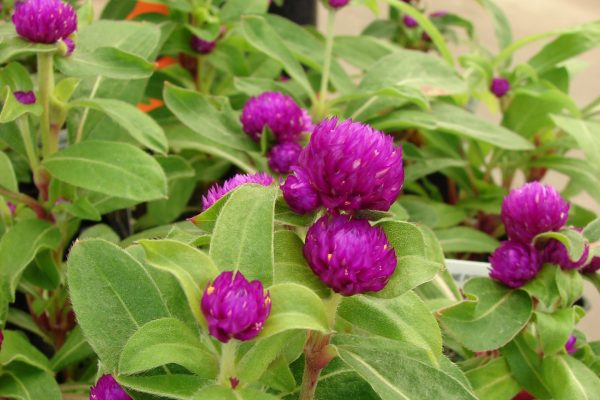
Globe Amaranth is a colorful, long-blooming annual with rounded, papery flower heads. It is popular in gardens, dried arrangements, and Onam Pookalam.
Read more11. Lantana
People sometimes use Aripoo, or Lantana, in pookkalams. This invasive species grows in most places, and people can break the flower clusters into individual flowers to add to the pookkalam.
Lantana | Double Life in Gardens and Wildlands
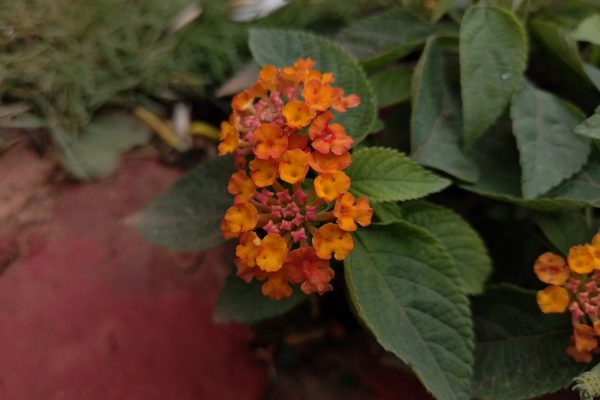
Lantana is a multicolored cluster flower. It shows how traits that make a plant desirable in gardens can also make it invasive beyond its native range
Read more12. Pagoda Flower
For the final day’s pookkalam, people mostly keep Pagoda Flower, or Hanuman Kireedam. They keep the entire cluster upright in the center and decorate the pookkalam around it.
Pagoda Flower | The Tropical Floral Tower
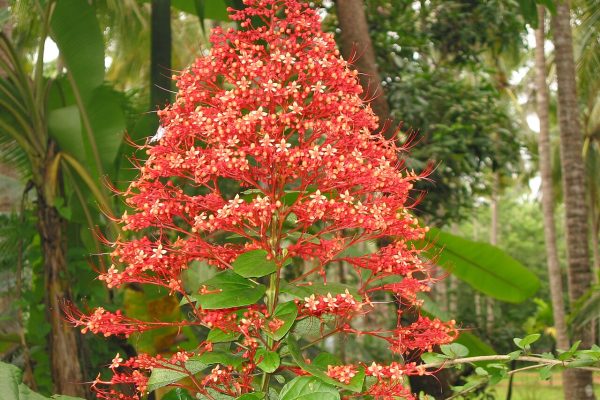
Pagoda Flower is a fast-growing tropical shrub with pyramid-shaped flower clusters. It thrives in warm, moist conditions and attracts butterflies.
Read moreHow long does Pookalam last?
A pookkalam may last a couple of days, sometimes fresh for only a few hours. But the entire process of picking the flowers, preparing the floor, and laying out the design, with your family, is an experience to be cherished.
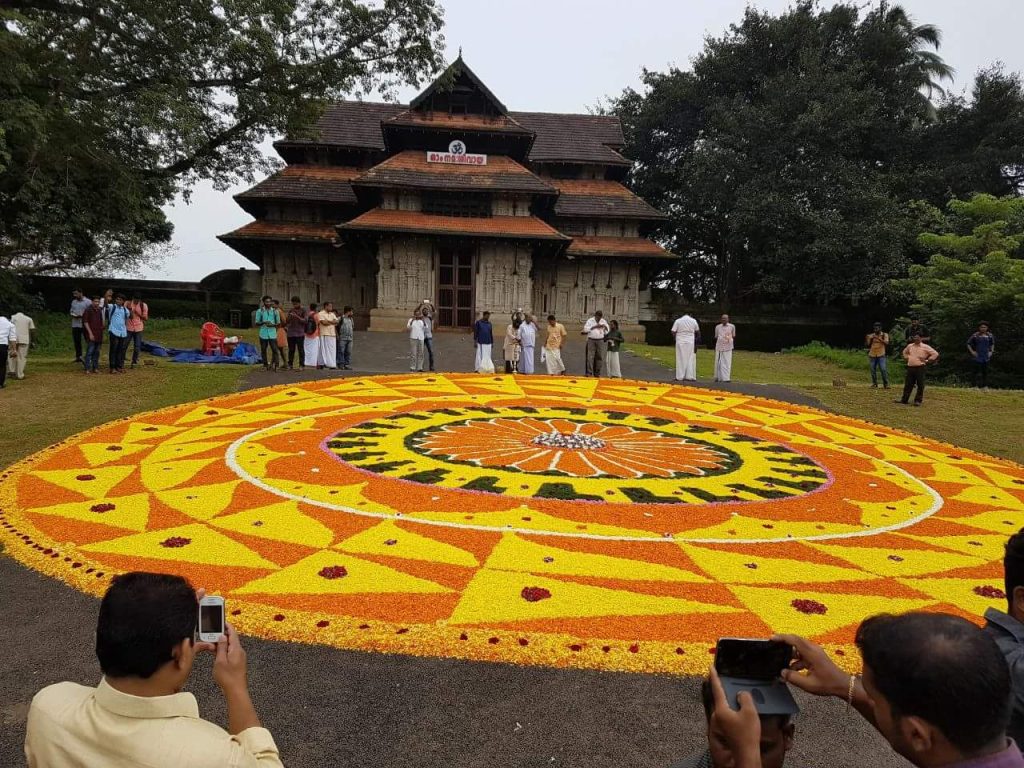
They may be simple designs or elaborate ones (like those at temples), but the celebration of flowers is the same. The eagerness and anticipation to welcome their King Mahabali, in the most beautiful way, shines through. This Onam, take a closer look at the blooms around you. Maybe pick a few and prepare your own pookkalam at home.
More questions people ask about Onam Pookalam -
No. There is no specific way to design the pookalam. You can add any flowers and petals as you wish.
Flowers and petals are organic material. You can sprinkle it on your backyard soil. If you have a composting bin/container, you can add it to the bin and prepare compost for your garden.
Pookalam is usually prepared at the entrance of your homes. Volunteers and devotees also participate in preparing massive pookalams outside temple.
Nowadays, some also host pookalam competitions and give away prizes.